Apple Rosemary Mint Jam
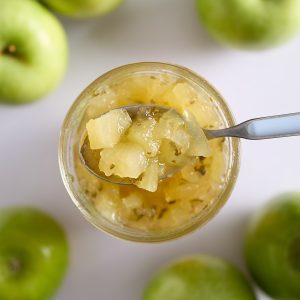
I’ve written this recipe up for my ‘the way I cook lamb’ series ahead of Australia Day 2026, because this is absolutely my go-to Australia Day lamb sauce. That said, it’s not a once-a-year thing in our house. It turns up with roast chicken, cold leftovers, sandwiches—anything that benefits from a bit of herb-and-vinegar lift. Call it a low sugar rosemary mint jam, call it a mint sauce alternative—either way, it’s built on three things: fresh mint for that classic note, rosemary for depth, and Granny Smith apples for sweetness and a jammy, spoonable texture that actually clings to food.
Equipment
- 4–5 litre heavy-based stainless-steel pot
- Ladle
- Wide-mouth jam funnel
- Jar tongs
- 6 x 250ml preserving jars with lids
Ingredients
- 600 ml cloudy pure apple juice
- 400 ml apple cider vinegar
- 600 g diced granny smith apples (5-6 large apples)
- 500 g white sugar
- 3/4 teaspoon table salt
- 4 medium lemons
- Large bunch fresh mint
- 6-8 sprigs fresh rosemary
- 1 tablespoon low methoxyl pectin
- 4 teaspoons calcium water
Instructions
Make the calcium water:
- In a clean jar or sealed 250ml container, measure 125ml boiled and cooled water and add ½ teaspoon calcium powder (from your low methoxyl pectin pack).
- Seal and shake well to combine.
- Set aside, then shake again right before you measure out the calcium water, because it settles.
Prep the sugars:
- In a small bowl, mix 1 tablespoon low methoxyl pectin into 200g of the sugar (Sugar No.1) until it’s evenly distributed.
- This prevents clumping later. In a second bowl, combine the remaining 300g sugar (Sugar No.2) with ¾ teaspoon table salt.
- Juice the lemons: Juice 4 medium lemons and set the juice aside. You’ll need 4 tablespoons of lemon juice during cooking.
Steep the herbs:
- Strip the leaves from 1 large bunch fresh mint and 6–8 sprigs fresh rosemary.
- Set aside roughly half of the mint and rosemary leaves for later, because you’ll add them fresh at the end.
- Put the remaining herbs into a medium heatproof container.
- Combine 600ml cloudy pure apple juice and 400ml apple cider vinegar, then bring it just to the boil in the microwave or on the stovetop.
- Pour the hot liquid over the herbs and leave to steep while you prep the apples.
Prep the Granny Smith apples:
- Peel and core 5–6 large Granny Smith apples, then dice to make 600g chopped apple.
- Keep the lemon juice nearby and drizzle up to 2 tablespoons over the apples as you go, tossing gently to coat. This slows browning and keeps the flavour fresh.
Strain and soften the apples:
- Strain the steeped herbs through a fine mesh sieve into a 4–5 litre heavy-based stainless-steel pot with a lid, then discard the herbs.
- Add the 600g diced Granny Smith apples to the pot.
- Cover with the lid and cook over medium heat until the liquid comes to the boil and the apple just starts to soften, stirring occasionally with a wooden spoon or silicone spatula.
Chop the fresh herbs for finishing:
- While the apples soften, finely chop the reserved mint and rosemary leaves and set aside.
Add Sugar No.1 (pectin sugar):
- Once the apples have started to soften, remove the lid and increase the heat to high.
- Gradually add Sugar No.1 (the 200g sugar mixed with 1 tablespoon LM pectin), stirring continuously so the pectin disperses evenly and doesn’t clump.
Add calcium, lemon juice, then Sugar No.2:
- Measure and add 4 teaspoons calcium water, then add 4 tablespoons lemon juice, stirring to combine.
- Keep stirring as you add Sugar No.2 (the remaining 300g sugar mixed with ¾ teaspoon salt).
- Bring the low sugar apple rosemary mint jam to a rolling boil, meaning it keeps boiling even while you stir.
Boil for 90 seconds, then add the fresh herbs:
- Once the jam is at a rolling boil, start a timer for 90 seconds and keep stirring so it doesn’t catch on the base of the pot.
- After 30 seconds, stir in the chopped rosemary.
- At the end of the 90 seconds, stir in the chopped mint, then remove the pot from the heat.
Skim the foam and fill your jars:
- A light foam will form on the surface. Skim it off with a spoon before ladling the jam into jars, or stir in 1 teaspoon butter to disperse it (note this makes the jam non-vegan).
- Ladle the hot jam into clean jars or containers using a ladle, leaving 5–10mm headspace.
- Wipe the rims with a damp cloth and seal the lids until just tight.
- If you’re storing in the fridge, cool the jars on a tea towel, then refrigerate and use within two weeks.
Freezer storage:
- For freezing, let the jam cool until just warm, then portion into freezer-safe containers or freezer bags.
- If using bags, sit each bag in a large cup, fold the edge over the rim, spoon in the jam, seal and press out air, then freeze flat on a rimmed baking tray before stacking.
Just before you cook with abandon…
Why keep the apples from going brown?
Granny Smith apples oxidise quickly once cut, which is why they start to go brown before you’ve even finished the last apple. It’s harmless, but it does dull the fresh apple flavour and can make the finished jam look murkier. Drizzling the diced apple with lemon juice as you go slows that oxidation, keeps the apple tasting bright, and gives you a cleaner-looking low sugar apple rosemary mint jam.
Why use fresh mint and rosemary?
If you’re wondering whether dried rosemary will do—don’t. Use fresh rosemary sprigs. The essential oils in the leaves are what carry its aromatic character, and those oils are the key to how that savoury herbal note weaves through the jam. For this low sugar rosemary mint jam, I use the herbs in two ways. First, I steep a portion of the rosemary and mint in the warmed apple juice and apple cider vinegar, then strain them out so you get a clean, infused base without tough bits of stem floating through the finished jam. Later, I add freshly chopped mint and rosemary directly into the pot so the final flavour still reads bright and green—not cooked-out and dull. Fresh mint matters for the same reason: it holds its clean, lively flavour against the vinegar and lemon, whereas dried mint can tip into a slightly dusty “tea” note.
Low methoxyl pectin with calcium
My low sugar apple rosemary mint jam recipe does have one specialty product that you’re not going to find on supermarket shelves—the low methoxyl (LM) pectin. The best known brand is Pomona’s Universal Pectin, which comes from the USA and is available on Amazon in Australia. But we also have a local supplier here in Queensland—Green Living. They import LM pectin from Europe and create their own low methoxyl pectin with calcium. It’s available in a variety of sizes and has an impressively long shelf life (which I generally ignore). They’re a great option if you’re planning to explore more home preserving.
What makes low methoxyl pectin different?
Unlike high methoxyl (HM) pectin, LM pectin doesn’t rely on sugar or temperature to set—it relies on calcium. That’s why this jam works with far less sugar. LM pectin gels between 50°C and 70°C, triggered by the calcium reaction rather than the sugar concentration. So you don’t have to worry about thermometers—it’s more forgiving and flavour-friendly.
Preparing calcium water
To activate the LM pectin, you’ll need calcium water. Most LM pectin is sold with calcium powder in a separate packet. Combine ½ teaspoon calcium powder with 125ml boiled and cooled water in a clean jar with a lid. Shake well and store in the fridge for up to two months. Shake again before each use—calcium settles easily at the bottom.
Exactly how low sugar can I go?
The LM pectin method of making low sugar rosemary mint jam leaves it up to you to decide how much sugar to add. The recipe does need some sugar (or a granulated substitute like xylitol) to help the pectin distribute evenly through the fruit and avoid clumping. And, as the recipe uses both apple cider vinegar and lemon juice to help it set and keep it a savoury jam, you will need some sugar to balance that acidic component in the recipe. Traditional jams use a 1:1 ratio of fruit to sugar. In this recipe, I’ve adopted around a 1:0.4 ratio of fruit to sugar (approximately 1200g apples and apple juice to 500g sugar).
Can I use sugar substitutes?
You can experiment with other sweeteners like xylitol, coconut sugar, honey, or maple syrup, though you’ll need to adjust the quantities to suit your preferred sweetness.
What is a rolling boil?
A ‘rolling boil’ is a technical term when you’re making jam! You’ve achieved a rolling boil at the point when the jam keeps boiling even though you’re stirring it. You want the heat on high to achieve a full rolling boil and you need to keep stirring to ensure the jam does not catch.
Foam or no foam
A light foam forms naturally as the jam boils. You can skim it off before ladling into jars, or stir in 1 teaspoon butter to disperse the foam (if you don’t need the jam to stay vegan). The butter helps the foam disappear and gives the surface of the jam a beautiful gloss.
Do I need to sterilise everything?
You don’t need to sterilise your pot or utensils during cooking, but they must be very clean—especially your ladle, funnel, and jug. If they’re glass or stainless steel and you have the means, sterilising them is a smart move. Whether you need to sterilise your jars depends on how you plan to store the low sugar rosemary mint jam. If it’s going straight into the fridge for use within two weeks, or into the freezer, a thorough clean and hot rinse is plenty. If you’re storing it longer, sterilise your jars and process the filled jars in a boiling water bath.
Sterilising methods
You can sterilise jars using the steaming, boiling water, or oven methods. Have them ready before you start cooking—jam moves fast once it reaches gel stage. Steaming method: If you have a steam oven, this is the easiest option. Steam the clean jars, lids, and sealing rings (if using) at 100°C for 5–10 minutes. Remove carefully (don’t touch the rims or inside) and cool on a clean tea towel. Boiling water method: Fill clean jars with boiling water, then leave to cool on a clean tea towel. Place metal lids in a heatproof bowl, pour boiling water over them, and let them cool in the water. Oven method: Preheat your oven to 135°C. Place clean jars and lids on a baking tray and heat for 20 minutes. Turn off the oven and leave them to cool inside. Don’t put rubber sealing rings in the oven—use the boiling water method for those.
Boiling water bath processing method
Assemble the equipment
Bring water to boil in large, deep pot with a lid. The pot needs to be large enough to hold the jars and enough boiling water to cover the jars by at least 3cm once they’re submerged. Find a rack for the bottom of the pot (or a folded tea towel) to prevent the jars from rattling and bumping each other. You can use a cake rack. I use a stainless-steel steamer insert from a rice cooker.
Fill the pot with enough water to cover the jars by at least 2.5 cm (1 inch) once they’re submerged. Cover and bring the water to a boil before you start your jam, keep it simmering. Bring it to a full rolling boil as you finish the jam.
Have a clean tea towel on the kitchen bench ready for the finished jars.
Keep the kettle boiled in case you need to top up the pot of boiling water.
Process the jars
Lower the jars filled with apple rosemary mint jam into the simmering water, using a jar lifter or jar tongs. Make sure they are fully submerged and that the water is back to a rolling boil once all jars are in. Process for 5 minutes for 250ml jars and 10 minutes for 500ml jars.
The processing time may need to be adjusted for altitude as the temperature at which water boils changes with altitude. I live at sea level and I am not a scientist! May I suggest Googling this question if needed?
Cool jars and check seals
Use the jar tongs to lift the jars out and carefully set them upright on the clean tea towel. Leave them undisturbed for 12–24 hours. As they cool, you should hear the lids ‘pop,’ indicating the lid has sealed. After cooling, check the seals by pressing the centre of each lid—it should not flex up and down. Any jars that haven't sealed properly should be refrigerated and eaten first.
Label and store
Once sealed, label and the date jars of low sugar homemade mint jam. Store them in a cool, dark place.
Freezer friendly
If you want a longer shelf life and don’t want the trouble of the water bath processing, this jam freezes beautifully. Once completely cool, spoon into freezer-safe containers or Ziplock bags and freeze flat for easy stacking. Defrost overnight in the fridge before use.
Vegan and plant-based
All pectins—HM or LM—are naturally plant-derived and vegan. And this easy low sugar mint sauce alternative is vegan and gluten free.