Easy Homemade Egg Pasta
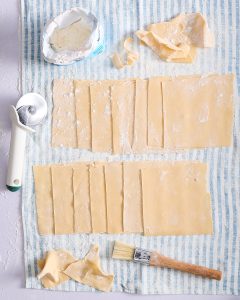
I was pretty enthusiastic about homemade egg pasta dough back when hosting a great dinner party was my biggest concern. That enthusiasm faded pretty quickly once I had three kids and decent fresh egg pasta started showing up at the supermarket. Eventually, my benchtop pasta roller found its way to the thrift store. But lately, I’ve been revisiting my egg pasta dough recipe—not for nostalgia’s sake, but because I needed a silky, elastic dough that could handle being rolled whisper-thin. I wanted pasta sheets delicate enough for truffled mushroom cannelloni [LINK] I’ve been working on, and thin enough to squeeze an extra layer into my My Best Lasagna Yet [LINK] recipe.
Equipment
- Food processor with dough blade
- Pasta roller (stand mixer attachment or hand roller)
- Bench scraper
- Plastic wrap or airtight container
- Tea towel
Ingredients
- 400 g ‘00’ flour
- 200 g whole eggs (approx. 5 large eggs)
- Pinch of salt
Instructions
- Assemble ingredients and equipment.
- Bring the dough together: Add the ‘00’ flour and eggs to a food processor with dough blade and pulse until the mixture resembles coarse crumbs. It may clump into a ball or stay crumbly—either is fine.
- Form and press: Tip the crumbly dough onto a floured bench. Use a bench scraper to gather and press the dough into a mound. Cut the mound in half, stack the halves, and press together again. Repeat until the dough looks more uniform. Don’t worry if it still looks rough—it will smooth out later.
- Rest the dough: Wrap the dough tightly in plastic wrap or place it in an airtight container. Let it rest at room temperature for at least 30 minutes to allow the gluten to relax and the dough to hydrate fully.
- Roll the dough: Cut the rested dough in half. Keep one half wrapped while you work with the other. Flatten into a slab and roll it through the widest setting of your pasta roller.
- Fold and repeat: Fold the sheet taking both short ends and to meet in the middle, making a ‘book fold,’ and run it through the widest setting again. Continue just folding the dough in half lengthwise. Repeat 3–4 times until the dough looks smooth and well combined. This step helps build strength and even out the sheet.
- Thin it out: Once smooth, reduce the roller setting one notch at a time, rolling the dough through after each adjustment. For lasagna and cannelloni, roll to setting 6 (on the KitchenAid pasta roller attachment) or until the sheet is very thin but still intact. It should be no more than 2-3mm thick.
- Cut or shape as needed: Cut the pasta into sheets or ribbons depending on how you’re using it. For lasagna, layer straight into your dish—no need to precook. For cannelloni, blanch the sheets for 1 minute and rinse under cold water before rolling the cannelloni.
Just before you cook with abandon…
Portions: This makes approximately 600g of pasta dough – enough for one large lasagna, 12 cannelloni, or 6 portions of pasta.
Cutting and shaping:
- Lasagna: No precooking needed. Cut sheets to fit your baking dish and layer directly with sauce.
- Cannelloni: Blanch sheets briefly (about 1 minute), rinse, and spray with flavourless oil to prevent sticking before filling and rolling.
- Tagliatelle or fettuccine: Lightly flour and cut into ribbons. Toss with more flour to prevent sticking and cook within a few hours.
- Wrap unrolled dough tightly in plastic wrap and store in the fridge for up to 24 hours.
- Rolled and cut pasta can be floured and stored on a tray, covered with a tea towel, for several hours before use. It can also be stored in a sealed container in the fridge but should be used the next day.
- Pasta sheets can also be frozen between sheets of baking paper. Allow to thaw at room temp before using.