Whole Lemon Poppy Seed Cake
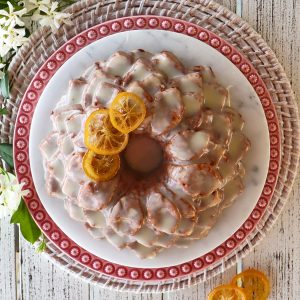
If you are looking for a lemon poppy seed cake with the biggest lemon flavour, this recipe is for you! It’s inspired by the Sicilian boiled lemon cake, Torta alle Mandorle e Limoni.
Equipment
- 10 cup Bundt pan (optional)
- 5cm x 25cm x 23cm baking pan
- Medium sized pot
- Food processor or blender
- Stand mixer or hand mixer
Ingredients
Whole lemon cake:
- 4 large eggs + 1 yolk (room temperature)
- 1 ½ teaspoon vanilla essence
- 450 g white sugar
- 415 g all-purpose flour
- 18 g baking powder (1 tablespoon + ¾ teaspoon)
- ¾ teaspoon salt
- 150 g unsalted butter (room temperature)
- 150 g Greek full fat yoghurt (room temperature)
- 450 g whole lemons (4 medium lemons)
- 1 tablespoon + 1 teaspoon poppy seeds
Olive oil glaze:
- 240 g sifted pure icing sugar
- 30 ml olive oil
- 30 g Greek full fat yoghurt (room temperature)
- 1-2 tablespoons lemon juice
- Pinch salt
Instructions
Whole lemon cake
Preparing the lemons:
- Wash whole lemons and place in a tight-fitting pan and cover with cold water.
- Cut a piece of baking paper slightly larger than the pan, crumple it up, smooth a bit and tuck it over the lemons with any extra paper facing upwards.
- Place a heat proof bowl on the baking paper to weigh the lemons down. You want them entirely submerged.
- Bring to boil slowly and then reduce to low so that the water is just simmering. If you boil the lemons too vigorously, they will split open and lose all their juice.
- Simmer 40-50 minutes until the lemons are soft and the skin indents easily if you prod it.
- Gently transfer lemons to a plate cool to room temperature. Discard cooking water.
- Meanwhile preheat the oven to 155°C fan forced (175°C conventional).
- Break up the lemons, removing all seeds and the toughest central pith.
- Process in a food processor or blender, scraping down as you go. You want as pretty smooth puree with no big chunks of peel.
- Measure out 320g of pureed lemon and discard any leftover puree.
Making the cake:
- Prepare Bundt pan or rectangular baking pan (see notes).
- Sift the flour, baking powder and salt into a small bowl.
- In the bowl of the stand mixer add the butter and sugar. Beat on medium high until super fluffy and a pale-yellow colour. Scrape the bowl down.
- Beat the eggs, yoghurt and vanilla together in a small jug and to the butter and sugar mix slowly on medium speed. Beat until egg fully incorporated and then scrape the bowl down.
- Add poppy seeds and beat on medium until just distributed through the mix.
- With the mixer on low, add flour in 3 batches, alternating with lemon puree. Mix until just combined each time.
- Then beat the batter on medium speed for a maximum of 30 seconds until batter is fully combined.
- Bake at 155°C fan forced (175°C conventional). The Bundt will take 45-50 minutes, and the sheet cake will take 35-40 minutes. Use a cake tester or skewer and if it comes away with just a few crumbs of cake, it’s done.
Olive oil glaze:
- Chill the cake before glazing it.
- Sift icing sugar and salt into a bowl.
- Using a stand or hand mixer beat in oil and yoghurt.
- Add lemon juice a teaspoon at a time to form the glaze. The glaze should be thick but still fall off the spoon in a steady slow stream.
Just before you cook with abandon…
Make the cake a day ahead. On the day you bake this whole boiled lemon cake it will have a nice tender crumb. But I actually prefer making it a day in advance. After it sits overnight in the fridge, the cake becomes much moister and slightly denser. It’s also a good idea to glaze it after a night in the fridge, as the glaze adheres better to a cold cake. The glaze will absorb into the cake with time, which isn’t an issue as you still get all the flavour. But for presentation you may wish to glaze it just before serving it.
Room temperature: When making cake, all your ingredients should be at room temperature as it ensures that your batter does not split. This increases the chances of you getting a perfectly baked cake. I get the butter and eggs out the night before. And, if I forget, I put the weighed-out butter in a warm oven - no higher than 30°C for a few minutes. Set a timer - you don’t want melted butter. And you can put the eggs (shell on) in a bowl and pour hot water over them and they will come to room temperature in a few minutes.
Eggs: Large eggs weigh about 52g each in the shell.
Kitchen scale: If you are going to bake, you need a kitchen scale. It’s really in the necessity column not the optional column. You don’t need to spend a fortune on them, decent ones can be bought for about $70. I find the expensive ones break down just as quickly as the cheaper versions. But I would recommend you go for a known brand from a reputable kitchen shop.
Tablespoons – there are two sizes: Yes, there are two sizes of tablespoons found in recipes. It appears that Australia is the outlier with the bigger version at 20ml. While North Americans (and most countries) measure a tablespoon at 15ml. I use the 15ml version in all my baking recipes where small deviations can change the result dramatically.
Preparing the Bundt pan: For the Bundt pan, careful preparation is required to avoid cake being left behind in the pan. I use a baking spray for Bundts that combines flavourless oil with flour in the spray can. The brand you can source in Australia is ‘Sprinks’ and you can purchase it at your local cake decorating store. Otherwise, you can use plain spray oil or use a brush to cover the inside of the pan with oil. Make sure you do double coverage. You can lightly sift some flour into the pan over the oil and shake the excess out.
Preparing the Rectangular pan: For the rectangular sheet pan, I use a spray oil or butter to grease the pan well. Then I measure out a length of baking paper to go across the pan lengthwise and up both sides. This ensures that you can always get the cake out of the pan.
Oven temperatures: Cakes are supposed to be baked in a conventional oven (top and bottom heat), as a fan forced oven (convection) dries the cake out. All well and good if your oven maintains an even temperature on that setting, mine does not. I use the fan forced setting on a lower temperature, as this gives me a more even heat distribution in my oven. I don’t believe in oven thermometers as they are notoriously inaccurate. But you will know there’s a problem when two cakes on the same rack (on the conventional setting) bake at very different rates. The only way you can accurately test your oven temperature is with a laser temperature gun (and, yes, I have one!).
Stand mixer versus hand mixer: I love my stand mixer, but most batters can be made with a good quality hand mixer. The one exception is kneading bread or pizza dough, the stand mixer doesn’t have enough power to knead dough. If using a hand mixer with my recipes, I recommend generally following the speed instructions. You may need to increase the time you beat the batter a bit before you add the flour. But be careful when incorporating the flour as if you overbeat it, you will over activate the gluten and have a much denser cake as a result.
Testing for doneness: Making the cake can feel easy compared to knowing when to open the oven to see if the cake is done. Open it too early and your cake batter will collapse, wait until the cake has pulled away from the sides of the pan and your cake will be overbaked. You want to start testing when the cake is forming is crumb. It’s dense cake, so don’t open the door before 30 minutes. The cake is done when your tester comes out with a few cake crumbs attached. And if you are like me and own a Thermapen, the cake will be done when its internal temperature is 93-94°C.