Recipes

Salsa Verde Sauce

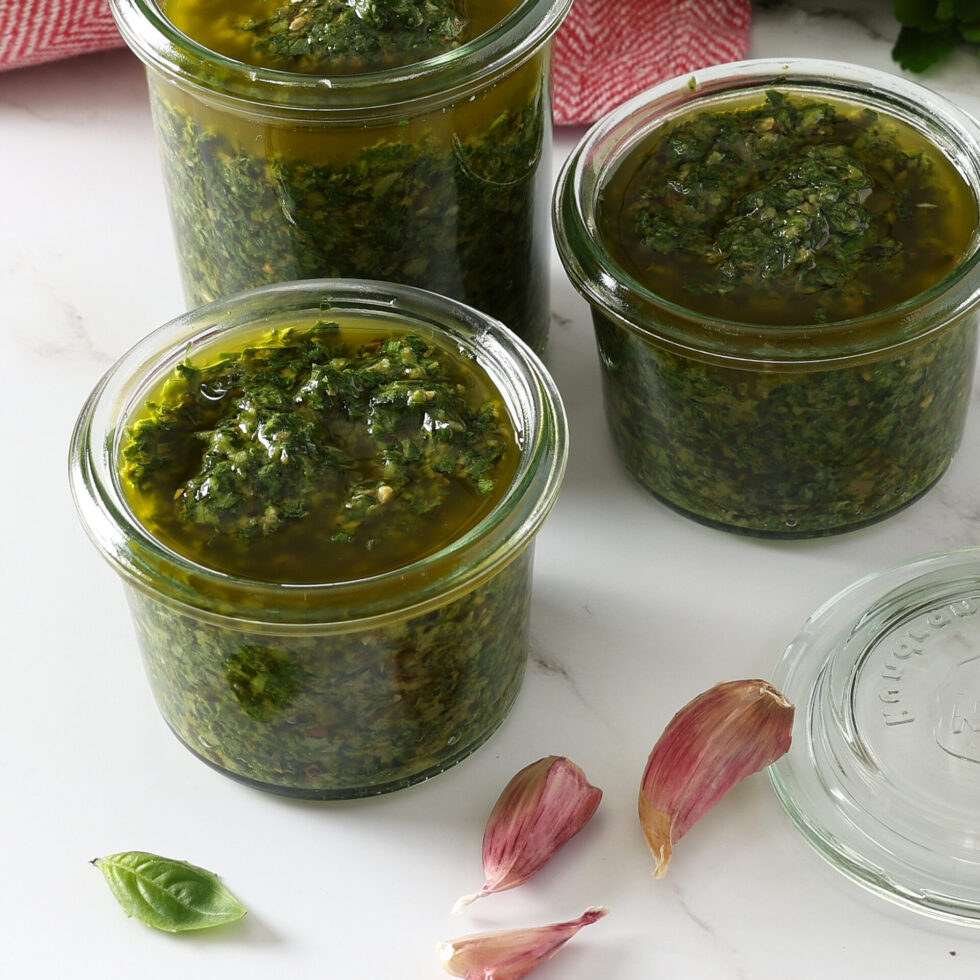
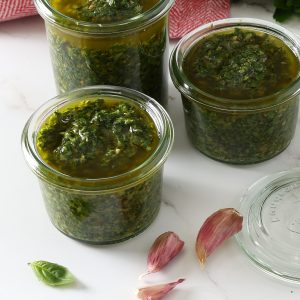
Vibrant green salsa verde sauce in three small jars on a marble bench with three cloves of garlic in front of the jars.

This salsa verde recipe is my take on the classic Italian recipe for ‘green sauce.’ It’s a close cousin to the Spanish mojo verde sauce and the Mexican chimichurri sauce. Capers and anchovies are distinct to the Italian green sauce. 

An easy salsa verde sauce recipe that’s best made when sweet basil is plentiful. Continental parsley also plays an important supporting role. And for me, the sauce is defined by the sharp acidity of red wine vinegar. Though, if I’m planning to use it with seafood, I will swap in lemon juice.   

Most of the prep work is in washing and picking through the herbs. The rest of the steps are super quick in a food processor or Thermomix.   

I use salsa verde as a condiment to spoon over all manner of BBQ, grilled, and roasted meats, including chicken, fish, seafood, and steak. It’s super fresh and can brighten up any simply cooked protein. And I certainly wouldn’t hesitate to spoon it over steamed or roasted vegetables.  

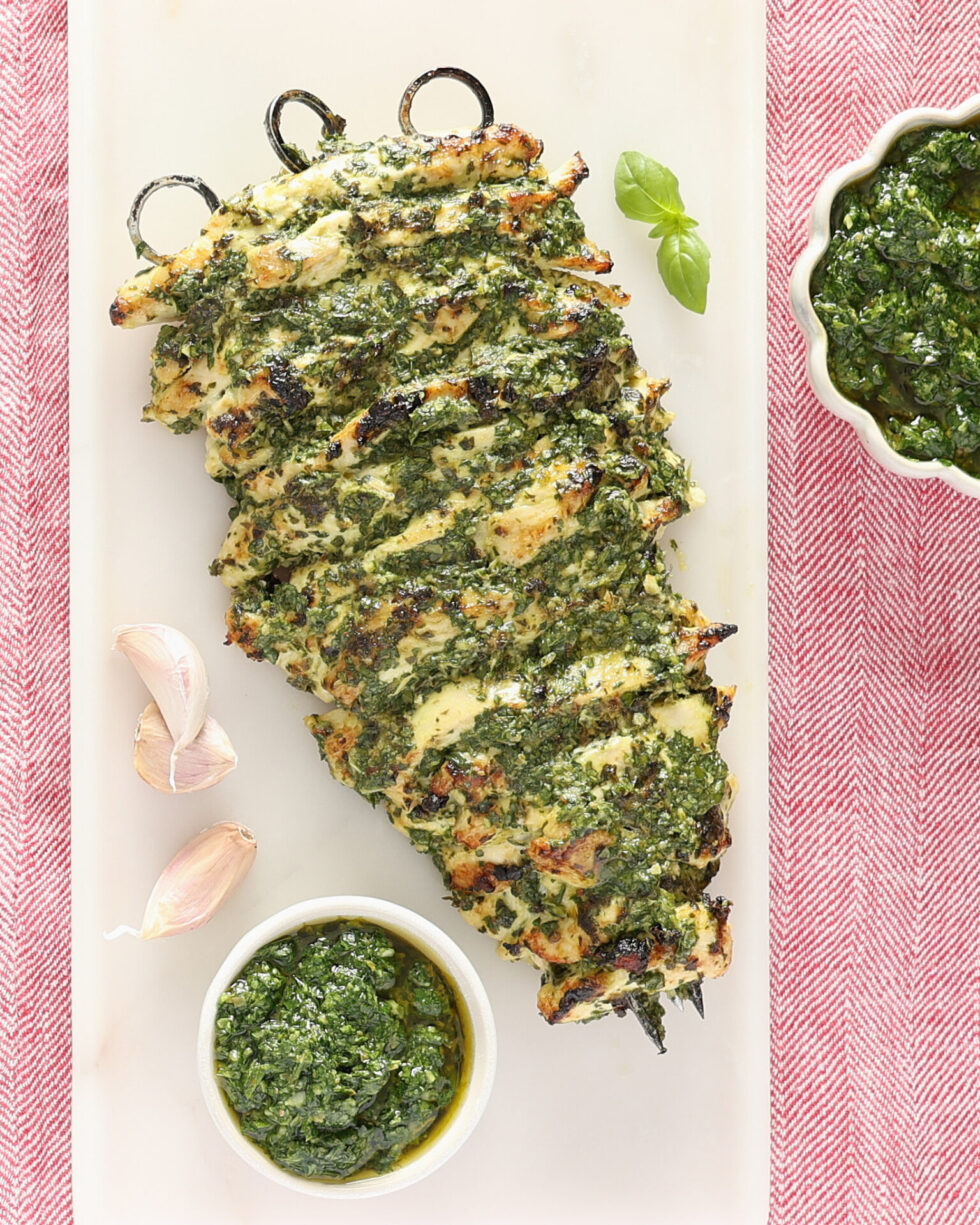
I am partial to bathing my roast chicken in this Italian green sauce, so check out my recipe for Spatchcocked (Butterflied) Roast Chicken. And, when folded through mayonnaise, this basil green sauce turns into a marinade of all things! You can learn this mayo marinade method in my recipe for Salsa Verde Mayo Chicken Kebab.    

Salsa verde ingredients

Ingredients for a basil salsa verde sauce on a marble bench top. Ingredients include basil, continental parsley, capers, anchovies, garlic, Dijon mustard, white sugar, red wine vinegar, extra virgin olive oil, salt and pepper.

I think the trickiest part of an herb-based recipe is getting ‘how much’ right when it comes to the herbs. A lot of recipes talk about ‘a bunch’ of basil or parsley. I have found there is a huge variation between what constitutes a bunch at different green grocers.   

Even though I am specifying the herbs in both ‘cups’ and ‘grams’ please don’t fret too much about exact proportions. While the recipe provides measurements for each ingredient, they’re really a guide only.   

I recommend holding back some of the vinegar and olive oil, so that you only add enough to balance with the amount of herbs you have ended up with. Once you get familiar with the recipe, you’ll be able to build the sauce using the technique and your judgement.  

Food process method

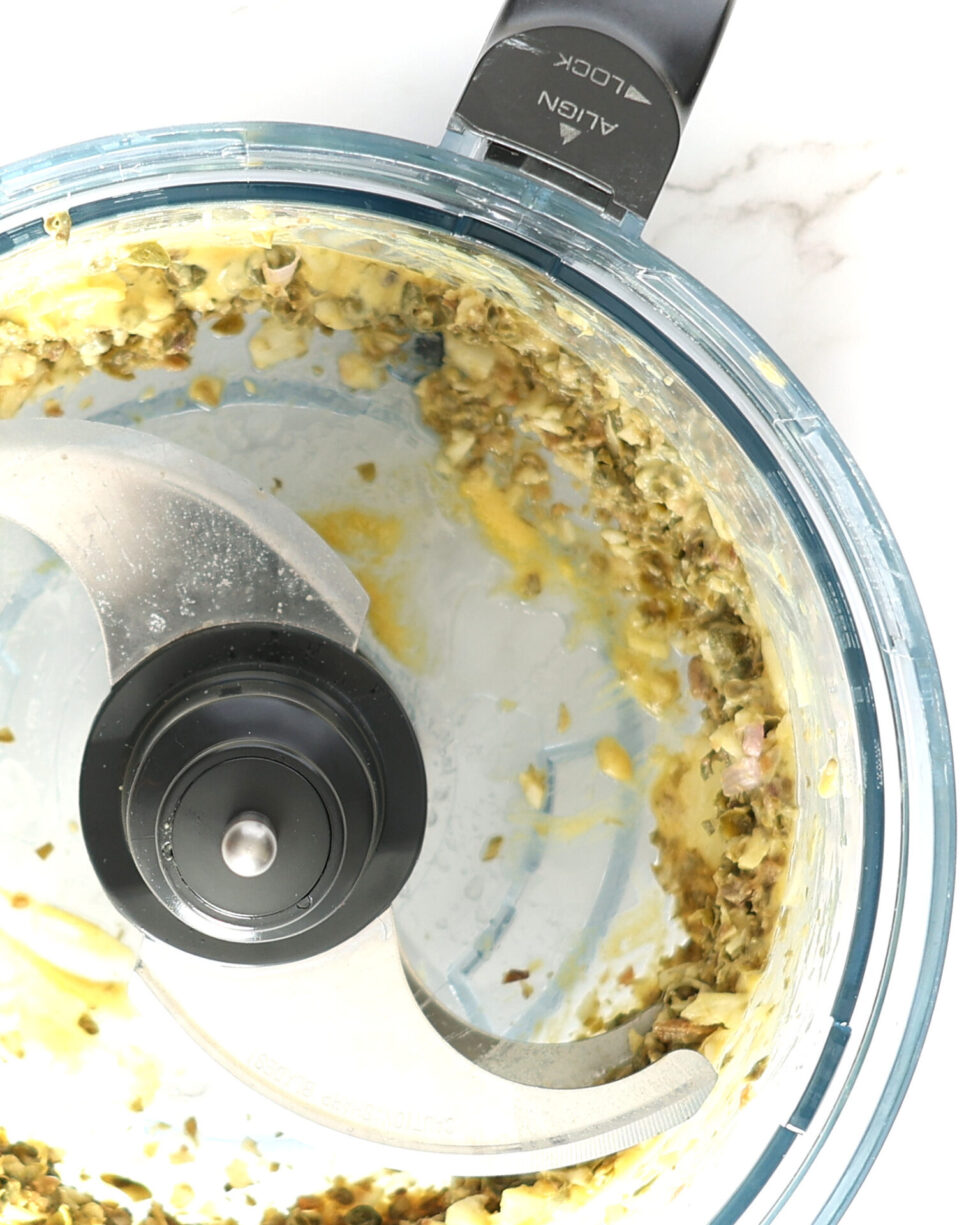
A close-up of the food processor bowl with a chopping blade. Capers, garlic, and anchovies are finely chopped with Dijon mustard and white sugar.

I can’t say I have met anyone who makes this recipe by hand. In theory the hand chopped method is going to respect your soft herbs a lot more than a food processor or a Thermomix.   

My salsa verde in the food processor recipe steps out the process so the herbs are added at the last minute. Start by pulsing the capers, garlic, and anchovies along with the Dijon mustard and white sugar until you get a nice fine chop. You’re going to need to scrape down the bowl a couple of times.   

Adding the parsley and basil

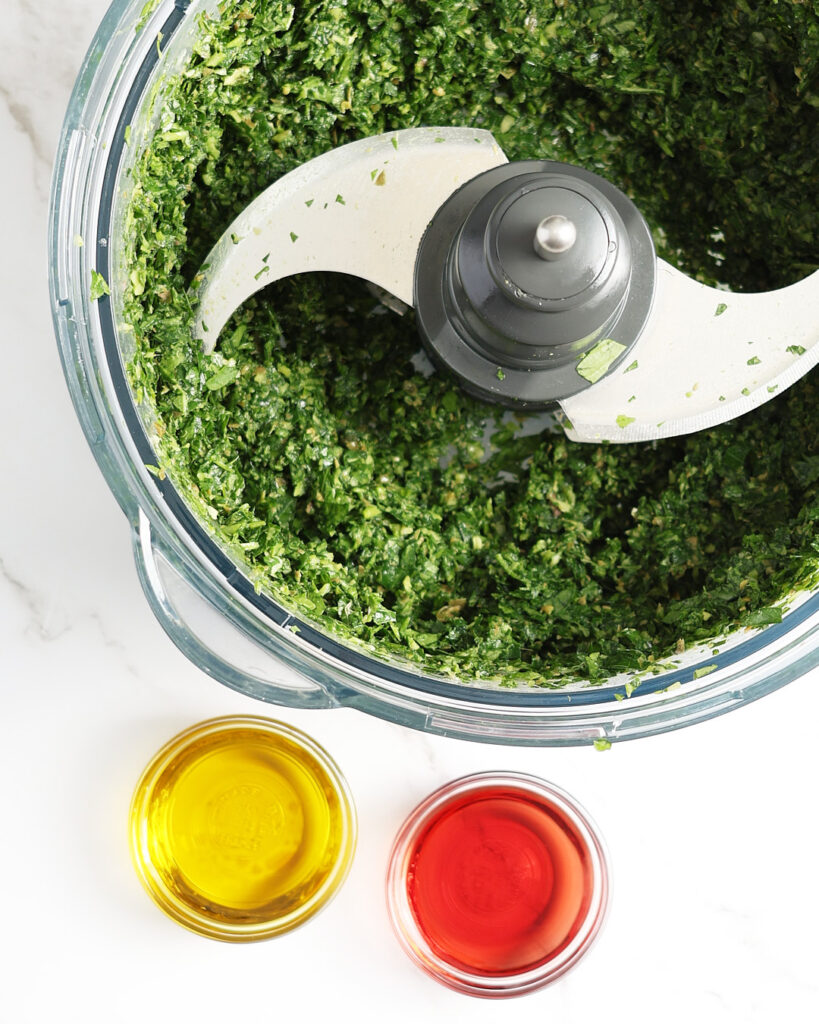
A close-up of salsa verde in the food processor bowl with the chopping blade. The basil and flat parsley are finely chopped in the bowl. Olive oil and red wine vinegar sit in mini glass bowls beside the food processor.

You’re going to want to pick your herbs to get rid of the thick stems. The finer stems don’t need to be removed.   

You want about 100g of picked leaves of each herb. 100g of parsley or basil leaves equates to about 6 cups each of loosely packed leaves.    

The parsley is a lot more robust than basil, so I add the parsley first and give it a couple of pulses before adding the basil leaves. A splash of olive oil and red wine vinegar helps with the process. And the vinegar slows down the oxidation process so your sauces will keep its vibrant green colour.   

If you’re going to use the sauce in my Salsa Verde Mayo Chicken Kebab recipe, don’t keep adding the olive oil and vinegar. Scoop out the chopped herb mix you need for the marinade and set aside. Then proceed with adding the remaining olive oil, vinegar, salt and pepper to taste.   

The sauce is best used the day it’s made but it will keep in the fridge for a few days. Place it in a clean jar or plastic container with a lid. Top it with some more olive oil to help keep it from oxidising. 

Salsa verde mayo chicken kebab

A cooked salsa verde mayonnaise chicken breast kebab sits on a rectangular marble plate and red cloth. The kebab is made with strips of chicken that have been skewered onto 3 metal skewers. The kebab has been basted with salsa verde there are two small bowls of salsa verde, one above the kebab and one below. Three garlic cloves are on the plate beside the kebab.

Salsa Verde Sauce

This salsa verde recipe is my take on the classic Italian recipe for ‘green sauce.’ It’s a close cousin to the Spanish mojo verde sauce and the Mexican chimichurri sauce. Capers and anchovies are distinct to the Italian green sauce.
Prep Time 30 minutes
Course Condiment, Herbs, Marinade, Sauce
Cuisine Australian, Italian
Servings 375 ml of sauce

Equipment

  • Food processor
  • Salad spinner
  • 500ml plastic or glass jar with lid

Ingredients  

  • 100 g fresh basil (6 cups loosely packed leaves)
  • 100 g continental parsley (6 cups loosely packed leaves)
  • 4 small garlic cloves
  • 2 tablespoons capers (drained)
  • 4 anchovies
  • 1 tablespoon Dijon mustard
  • 1 teaspoon white sugar
  • 1 teaspoon sea salt
  • 2 – 4 tablespoons red wine vinegar
  • 200 – 300ml extra virgin olive oil

Instructions 

  • Wash the parsley and basil in cold water. Spin dry and roll up between paper towels to absorb any extra water. Alternative, dry between multiple layers of paper towels or a clean tea towel.
  • Pick basil and parsley leaves, discarding the large stems (small stems are fine) and refrigerate until required.
  • Peel garlic cloves and crush them into the bowl of the food processor.
  • Press anchovy fillets between paper towels lightly to remove excess oil.
  • Add the capers, anchovies, mustard, 1 tablespoon of vinegar and 1 tablespoon of olive oil and pulse until chopped finely. Scrape down the bowl several times to ensure even chopping.
  • Add parsley, pulse a couple of times and scrape down the bowl. Then add the basil and pulse until herbs are finely chopped (not too fine you don’t want a puree).
  • If using for a marinade remove two tablespoons of the herb mix for the marinade at this stage.
  • Whisk in remaining vinegar and olive oil (you may not need it all – taste as you go – I like a good bit of vinegar myself).
  • Add salt and pepper to taste.
  • Pour sauce into a clean 500ml container, level out, and top with some olive oil to prevent oxidation.
  • Store in the refrigerator.

Just before you cook with abandon…

A technique not a recipe: I’ve given pretty exact measurements for all the ingredients but it’s almost impossible to eye up a bunch of basil and decide if it’ll yield 100g or six cups of leaves. I do err on buying more rather than less and then portion up the amount of sauce based on how what amount of leaves I end up with. But try not to sweat it too much. I recommend holding back some of the vinegar and olive oil, so that you only add enough to balance with the amount of herbs in your sauce. Once you get familiar with the recipe, you’ll be able to build the sauce using the technique and your judgement.
Quality ingredients: The golden rule in cooking and baking is to always use the best ingredients you can afford. This is an even more important ‘rule’ when you are making a dish that does not involve cooking. Each ingredient needs to shine and can’t hide through cooking process. In this recipe it’s the red wine vinegar and extra virgin olive oil, and to a lesser degree the Dijon mustard and anchovies, that are going to be your star ingredients.
Oxidation: Parsley is pretty resistant to oxidation but fresh basil can be a challenge as it is so fragile. As soon as you start chopping fresh basil the oxidation process will start. Then it’s a race against time to try and slow the oxidation process. The acid in the vinegar will help, as will covering the finished sauce with olive oil. Another culprit is thought to be  overprocessing, so follow the steps and leave the basil to last. I find that if the basil looks old, dry and tough, you’re probably best not using it in a fresh sauce. It will not give you any joy and go brown almost immediately.
Kitchen scale: If you are going to bake, you need a kitchen scale. It’s really in the necessity column not the optional column. You don’t need to spend a fortune on them, decent ones can be bought for about $70. The expensive ones break down just as quickly as the cheaper versions. But I would recommend you go for a known brand from a reputable kitchen shop.

Keyword basil green sauce, basil salsa verde, easy salsa verde, Italian green sauce, salsa verde in the food processor, salsa verde Italian green sauce, salsa verde recipe, salsa verde sauce

One Response

Leave a Reply

Your email address will not be published. Required fields are marked *

Recipe Rating


Hi, I'm Sandra!

I live by the words of Harriet Van Horne and I will be exploring every possible way to bring Harriet’s words to life in my kitchen.

Recipes

Discover delicious featured food recipes! From quick meals to gourmet delights, Sandra offer inspiring dishes for every occasion. Explore, cook, and enjoy flavorful creations today.

You might also like..

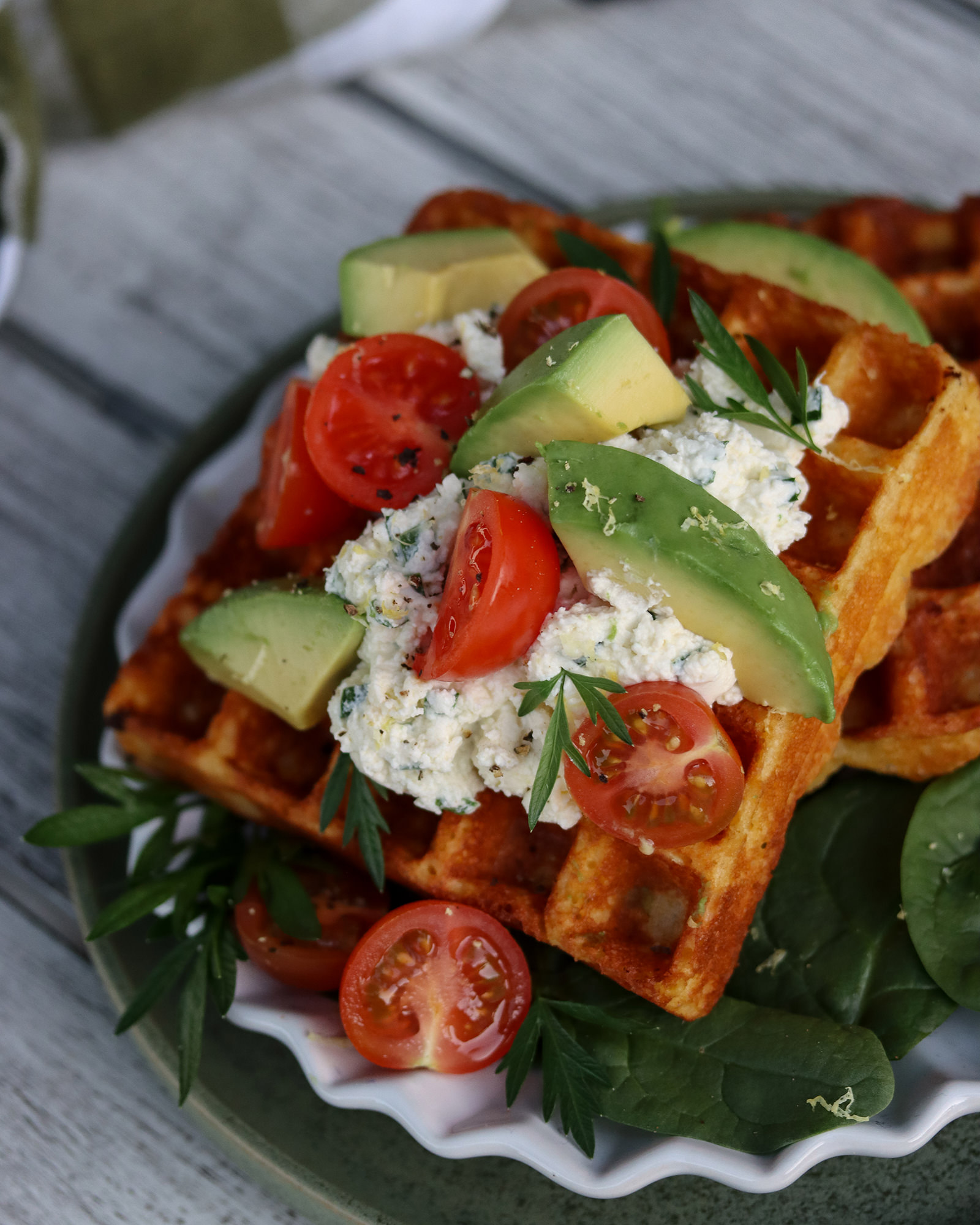
Belgian Style Cornmeal Waffles

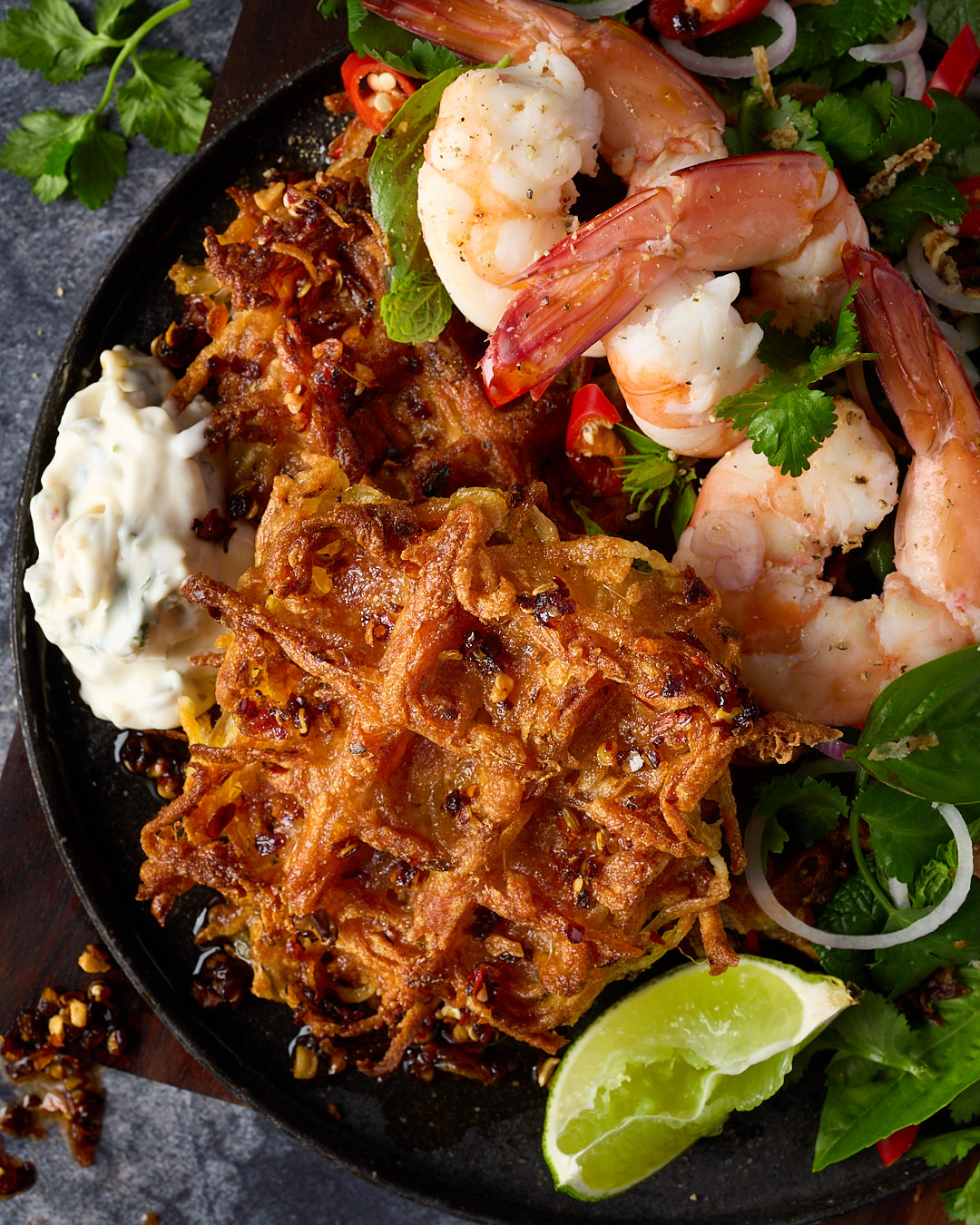
Thai-style Crispy Potato Waffles with Prawns and Maple Chilli Oil

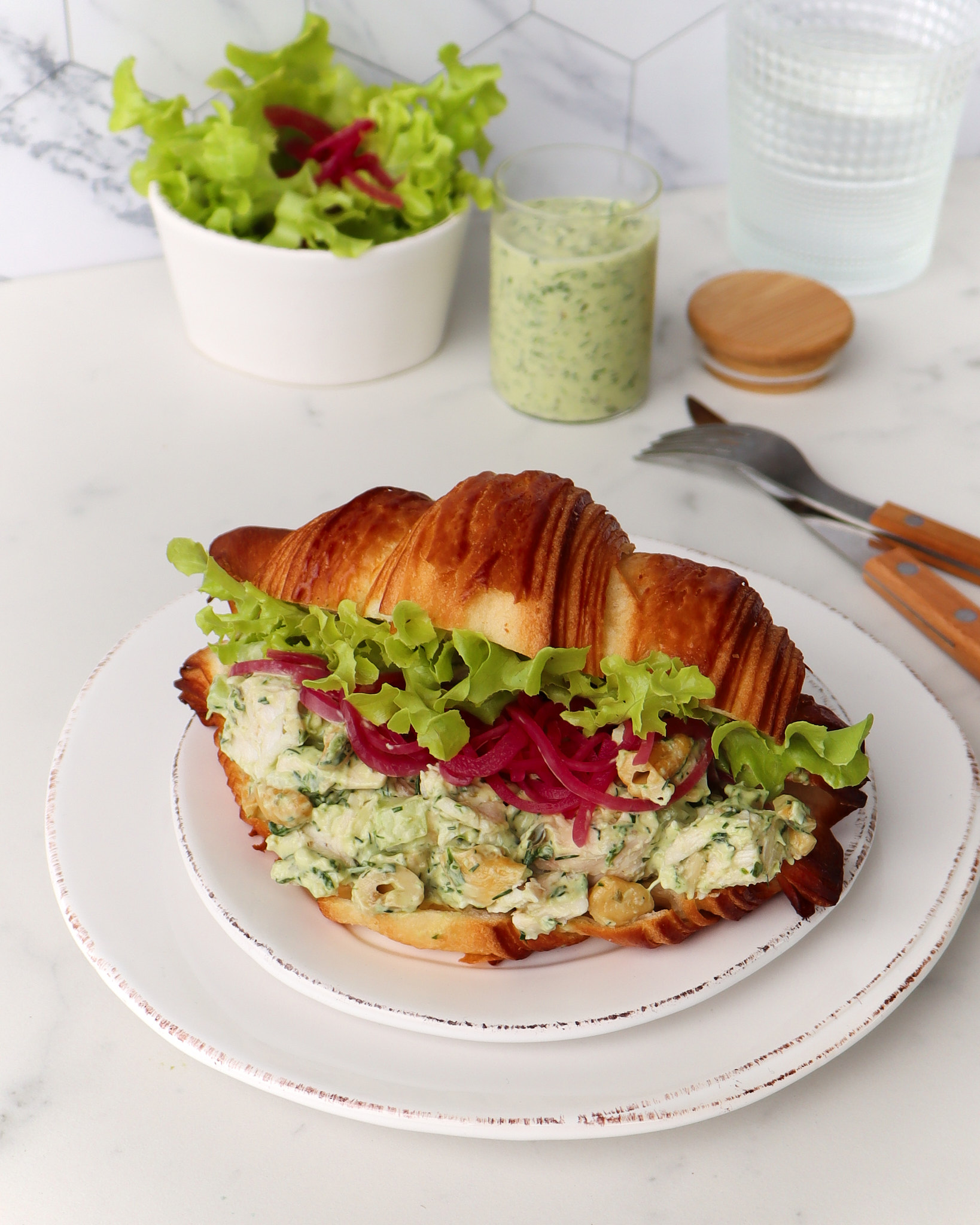
Green Goddess Chicken Croissant

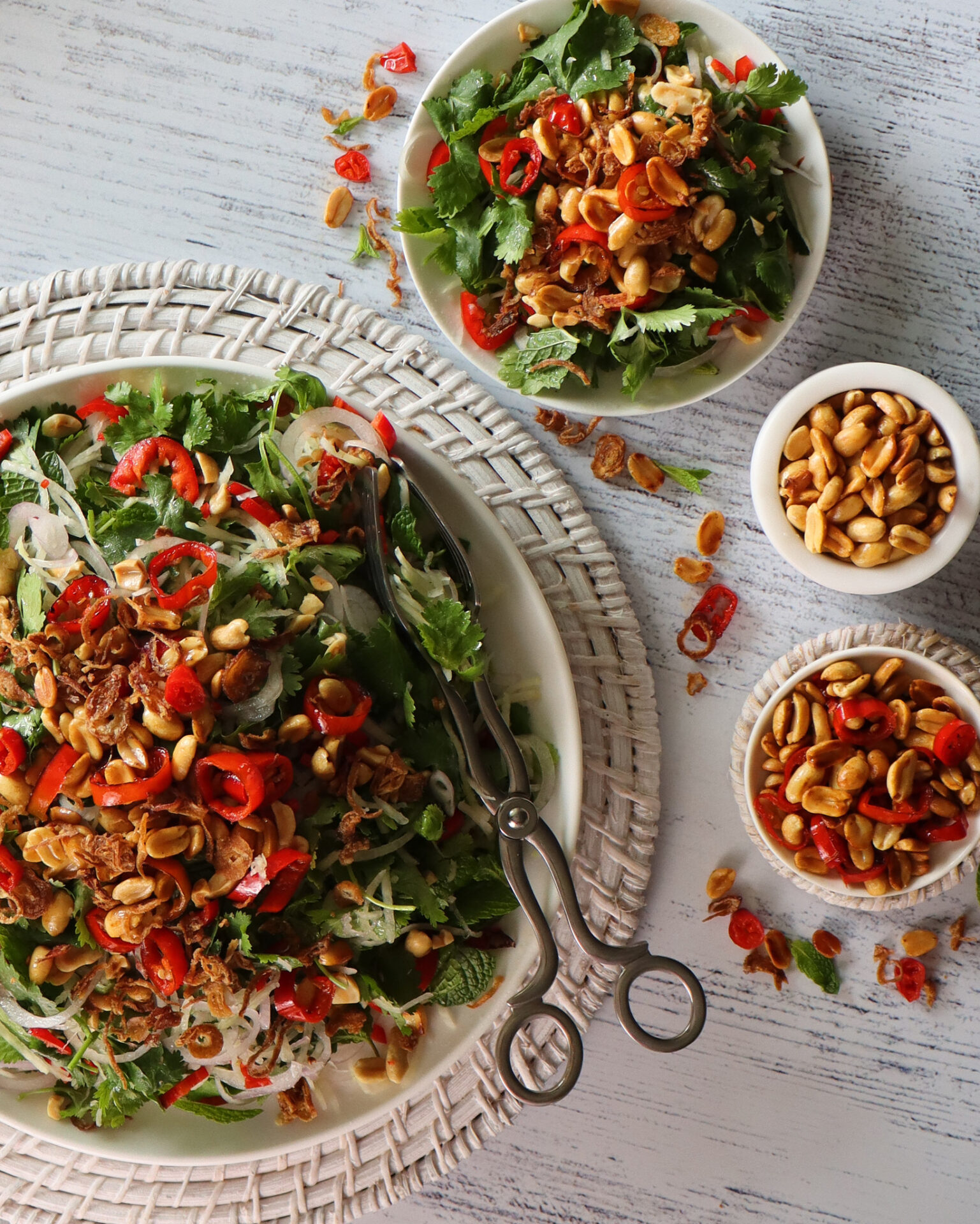
Thai Green Pawpaw Salad

Subscribe

Subscribe to my newsletter for a chance to win a FREE APRON (drawn monthly) as well as cooking tips, recipes, offers and exclusive content.

"*" indicates required fields