Foundation Sweet Dough
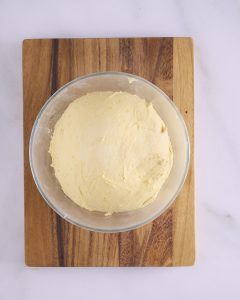
I came to Australia with the sweet dough recipe from my Mom's Encyclopedic Cookbook: Culinary Arts Institute (Berolzheimer, Ruth (ed), G P Putnam's Sons, New York, 1976). The cookbook she bought from the door-to-door salesman – the Amazon of my youth! And yes, my Mom's 1976 edition is still available on Amazon. This was the recipe that produced hundreds of cinnamon rolls in our household. It was a basic enriched dough, using eggs, milk and shortening. I'm not sure if shortening was specified by the Institute but, in our house, butter was too expensive for Mom to waste hidden in a dough!
Equipment
- Stand mixer (with paddle and dough hook attachments)
- Microplane
- Digital kitchen scales
Ingredients
Tangzhong:
- 35 g all-purpose flour
- 120 g full cream milk
- ½ teaspoon table salt
Dough:
- 60 g white sugar
- 2 oranges
- 350 g full cream milk
- 1 large egg
- 575 g all-purpose flour
- 1 tablespoon instant yeast
- 115 g unsalted butter
Instructions
Make the tangzhong:
- Weigh 35g all-purpose flour and 120g full cream milk into a small pan and add ½ teaspoon table salt.
- Heat over medium low heat while whisking until the mixture forms a thick paste.
- Remove from the heat, transfer to a small bowl or container and chill until slightly cold.
Make and knead the foundation sweet dough:
- Weigh 60g white sugar into the bowl of a stand mixer and zest 2 oranges over the bowl using a Microplane.
- Using the paddle attachment, mix on medium for 2 minutes until zest is well incorporated into the sugar.
- Add the tangzhong, 350g full cream milk, 1 large egg, 575g all-purpose flour, and 1 tablespoon instant yeast.
- Mix on low with the dough hook until combined.
- Increase speed to medium and knead for at least 5 minutes to develop the gluten. You want it to stretch and not tear immediately if you test a small piece of the dough.
- Turn the speed back to low and add 115g slightly chilled unsalted butter, cut into tablespoon sized pieces, a couple of pieces at a time. Wait until each addition is incorporated before adding more. This can take up to 10 minutes.
Forming the dough ball:
- Tip the dough onto the bench. Pick a side to be the top of the dough ball and keep it that way.
- Lift the dough off the bench, stretch it out and drop it back down, gathering it back into a ball with a dough scraper.
- Repeat until the dough becomes less sticky and more resistant.
- Then lift the dough about 30cm off the bench, letting it stretch into a tail, flip the tail forward as you land it, roll the dough over and tuck it in, keeping the top facing up. Tuck in around the base with the scraper and repeat a couple of times.
- The dough is ready when it releases cleanly from the bench and springs back when pressed.
- Lift into a greased bowl, cover with an oiled sealed lid or oiled plastic wrap.
- Refrigerate overnight, up to 12 hours.
Just before you cook with abandon…
Digital scales: If you are going to bake, you need a kitchen scale. It's really in the necessity column not the optional column. You don't need to spend a fortune on them; decent ones can be bought for about $70. I find the expensive ones break down just as quickly as the cheaper versions. But I would recommend you go for a known brand from a reputable kitchen shop.
Tablespoons: I use 15ml tablespoons in my baking recipes.
Make ahead: The foundation sweet dough is the make-ahead component here—mix and knead it the night before, then let it rest in the fridge overnight. That leaves your dough ready to shape into whichever recipe you've chosen the next day.
Freezing: You can freeze the dough once it's shaped, before its final proof, rather than at any other stage—that's the point in the process where enriched dough freezes most reliably. Freeze the shaped pieces on a tray until solid, then transfer to an airtight container so they don't pick up freezer burn. To use, thaw overnight in the fridge, then let the pieces come up to room temperature and finish proving as normal before baking—this will take longer than an unfrozen prove, so build in extra time.