Mixed Herb Walnut Pesto
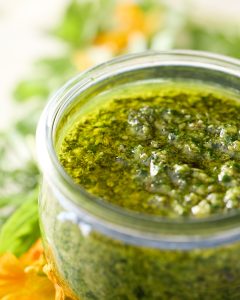
I first developed this mixed herb walnut pesto out of necessity, then kept making it because it turned out to be the kind of recipe that quietly has your back. Not flashy. Not precious. Just reliably good at making dinner taste like you had a plan. Pesto and I go a long way back to my days of making fresh pasta, gelato, and yes—pesto alla Genovese at a trendy bistro in suburban Brisbane in the 1980s. The pesto at ‘Pasta Pasta’ was probably the only remotely authentic Italian recipe we served. We made it by hand from the original ingredients: basil, garlic, pine nuts, Parmigiano Reggiano, extra virgin olive oil, and salt. I do remember the cheese arriving pre-grated in large plastic bags though. So, OK—pretty authentic.
Equipment
- 500ml glass jar with lid
- Digital scales
- KitchenAid stand mixer with food grinder attachment (medium grinding plate)
- Salad spinner (optional)
- Microplane (for lemon zest)
- Optional (if not using the grinder): Food processor
Ingredients
- 30 g parsley leaves 1 cup packed
- 25 g baby spinach 3/4 cup packed
- 20 g sweet basil leaves 1/2 cup packed
- 8 g oregano leaves 1/4 cup packed
- 5 g thyme leaves 2 tablespoons
- 5 g rosemary leaves 2 tablespoons
- 1 large lemon
- 2 large garlic cloves
- 50 g walnuts 1/2 cup
- 60 g Parmigiano-Reggiano
- ½ teaspoon honey
- 6 tablespoons extra virgin olive oil plus extra to cover pesto
- ½ - 1 teaspoon sea salt
Instructions
Prep the ingredients:
- Wash and spin-dry the herbs in a salad spinner. Spread the herbs over two layers of paper towel and loosely roll up to absorb any remaining moisture. Refrigerate until required.
- Zest the lemon and set aside the zest. Juice the lemon and set the juice aside.
- Peel the garlic cloves and cut them in half.
- Weigh the walnuts.
- Weigh the Parmigiano-Reggiano and cut it into small chunks.
- Pick all herb leaves from the stems. Start with the woody herbs (rosemary, thyme, oregano). Leave the sweet basil until last.
KitchenAid grinder method (chunky pesto)
- Fit the food grinder attachment with the medium grinding plate. Place a large bowl underneath to catch the pesto.
- Set aside the lemon juice, honey, olive oil, and salt. These are added after grinding.
- Turn the grinder to medium speed. Feed the ingredients through, alternating herbs, garlic, cheese, and walnuts so it processes evenly. Add up to 1 teaspoon of lemon zest through the grinder as well.
- Work quickly once it’s ground. Add 1 tablespoon lemon juice, ½ teaspoon sea salt, ½ teaspoon honey, and 3 tablespoons extra virgin olive oil. Stir well with a silicone spatula.
- Taste. Don’t add more lemon juice. Adjust with more salt and/or honey if needed.
- Add another 2–3 tablespoons olive oil, stirring as you go, until the pesto looks well coated and lightly suspended in oil (not swimming).
- Scrape into a clean or sterilised 500ml jar. Tap the jar on the bench to level the surface.
- Pour a thin layer of olive oil over the top until it just covers the surface. Seal with the lid and refrigerate.
Food processor method (if you don’t have the grinder)
- Grate the Parmigiano-Reggiano and crush the garlic before you start. Roughly chop the walnuts.
- Add the grated Parmigiano, garlic, walnuts, and the woody herbs (oregano, rosemary, thyme) to the food processor. Pulse 2–3 times in short bursts. Don’t scrape the bowl down yet.
- Add the soft herbs (parsley, spinach, basil). Pulse again, then scrape down the bowl with a silicone spatula and stir.
- Repeat only as needed to break down the soft herbs and incorporate everything.
- Finish by hand exactly as per the grinder method: add lemon juice, salt, honey, and olive oil, then taste and adjust.
- Jar the pesto and cover the surface with a thin layer of olive oil before refrigerating.
Just before you cook with abandon…
Yield: This batch of mixed herb walnut pesto makes just over 1 cup (about 300ml). It’s plenty as a table condiment for four with lamb, with enough left to turn into a dressing.
Chunky texture: I’m chasing a pesto where you can’t identify each ingredient, but the mouthfeel still says cheese, nuts, and herbs. The KitchenAid grinder makes that easy. If you’re using a food processor, pulse in short bursts and stop early so you don’t end up with a smooth green sauce.
Why these herbs: The spinach, basil, and parsley form the base for this mixed herb pesto. They soften and balance the stronger woody herbs used in smaller amounts—oregano, thyme, and rosemary.
Lemon and honey: The lemon (zest and juice) and honey aren’t optional “extras”. They round out the bitterness of the woody herbs and lift the overall flavour of this walnut pesto.
Don’t overdo the lemon juice: I add a tablespoon, then adjust with salt, honey, and olive oil instead. More lemon juice can tip the whole thing out of balance.
Oxidation and browning: Work quickly once the herbs are processed. A little browning is normal with any pesto without pine nuts (or with them), but an oil layer on top and a tight lid will slow it down. When you chop or grind herbs for pesto, you rupture plant cells. That exposes the herb compounds and enzymes to oxygen, which triggers enzymatic browning and creates brown pigments. It also shifts the flavour of the herbs, and generally not in a good way.
Walnuts vs pine nuts: If you’re wedded to pine nuts, swap them in. The method stays the same. You’ll still get a great mixed herb walnut pesto vibe, just a little closer to traditional pesto.
Storage and freezing: Store this walnut pesto in the fridge. Keep the surface covered with a thin layer of olive oil and the lid on tight—that oil barrier keeps air off the herbs and slows browning. For best flavour, use it within about 3–4 days. If you want to batch this recipe up—and I think you should—it freezes well too. Portion into an ice cube tray (or small containers), freeze solid, then transfer to a ziplock bag or larger freezer container so you can thaw only what you need. Thaw in the fridge and don’t stir it until you’re ready to use it, as it will start to brown fairly quickly. Mixed herb pesto can be kept frozen for up to six months.
Tablespoon sizes: My tablespoon measures are 15ml (not the larger 20ml Australian tablespoon).