Recipes

Mixed Herb Walnut Pesto
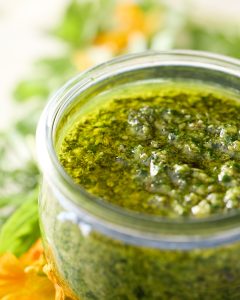
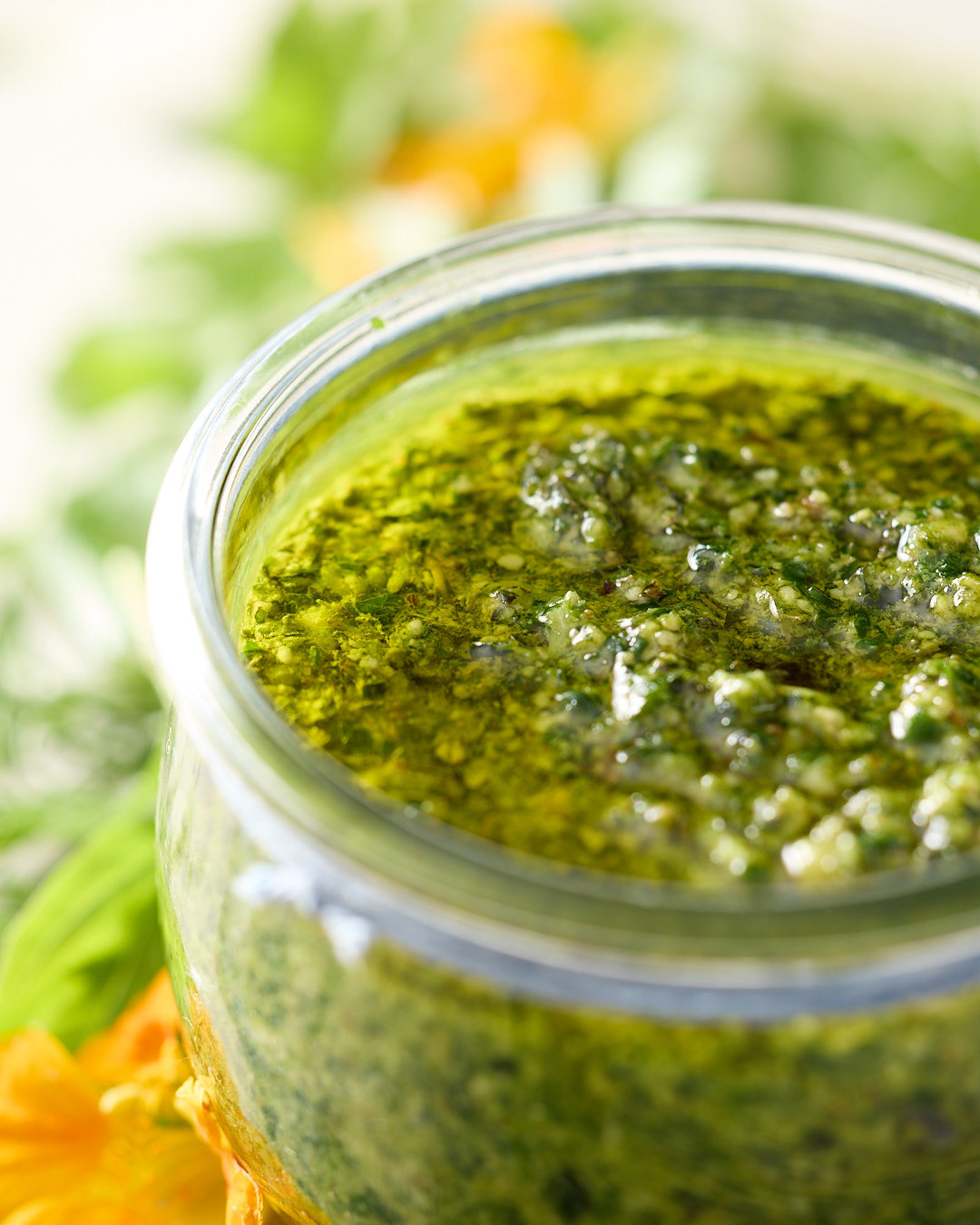
Close-up of a jar of mixed herb walnut pesto topped with olive oil on a light bench, with soft-focus fresh herbs in the background.

Why this mixed herb walnut pesto exists

I first developed this mixed herb walnut pesto out of necessity, then kept making it because it turned out to be the kind of recipe that quietly has your back. Not flashy. Not precious. Just reliably good at making dinner taste like you had a plan. 

Pesto and I go a long way back to my days of making fresh pasta, gelato, and yespesto alla Genovese at a trendy bistro in suburban Brisbane in the 1980s. The pesto at ‘Pasta Pasta’ was probably the only remotely authentic Italian recipe we served. We made it by hand from the original ingredients: basil, garlic, pine nuts, Parmigiano Reggiano, extra virgin olive oil, and salt. I do remember the cheese arriving pre-grated in large plastic bags though. So, OKpretty authentic. 

In my post ‘Pasta Pasta’ life, making basil pesto often meant disappointment. Either there was barely any basil worth buying, or the bunches were so limp you could practically hear them apologise. And pine nuts? Their price point has always made me wonder if they’re meant to be sold by the gram in the same shop as saffron. The good news is: you can absolutely make a beautiful pesto without pine nuts, and a walnut pesto is a genuinely delicious swap. 

After a lot of tweaking, this mixed herb walnut pesto has landed in its happy place. It’s not pretending to deliver the same sun-drenched energy as a perfect basil pesto. It’s more earthy, more savoury-herbal, and built around a Herbes de Provence-style mix—thyme, rosemary, oregano, parsley, and a little sweet basil—with walnuts keeping it in that South of France mood. Lemon lifts it, honey rounds it out, and Parmigiano Reggiano makes sure it still behaves like pesto. 

This isn’t a pasta sauce in my kitchen. This mixed herb walnut pesto is a condiment—especially for lamb in my ‘the way I cook lamb’ series. It also does double duty as a salad dressing for my Provence-style “kitchen sink” pasta salad. 

Let me break it down for you. 

Pesto ingredients

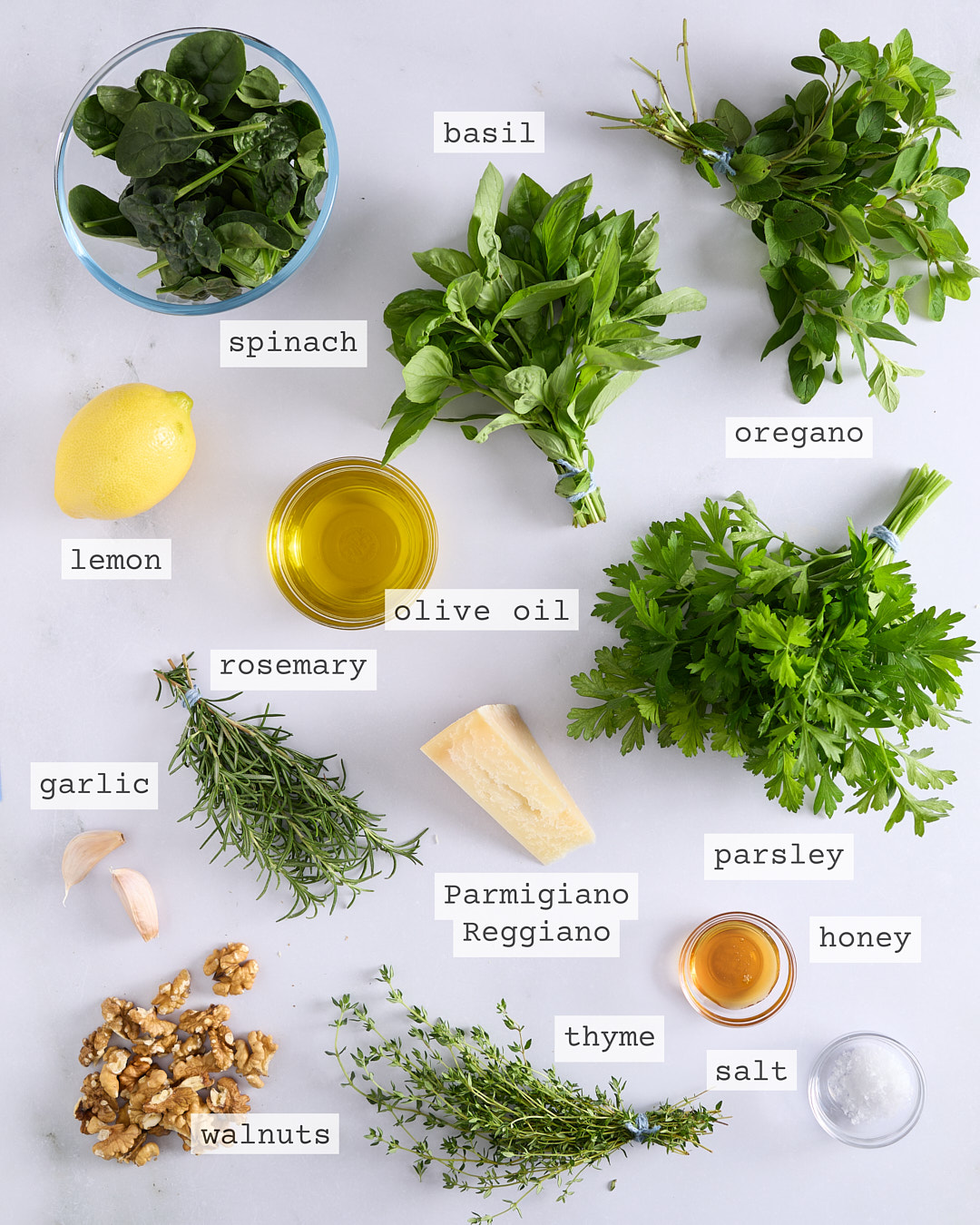
Flat lay of the ingredients for mixed herb walnut pesto arranged on a light bench, including basil, spinach, oregano, parsley, lemon, olive oil, rosemary, garlic cloves, Parmigiano Reggiano, walnuts, thyme, honey, and salt, with ingredient labels.
  • 30g parsley leaves (1 cup packed) 
  • 25g baby spinach (3/4 cup packed) 
  • 20g sweet basil leaves (1/2 cup packed) 
  • 8g oregano leaves (1/4 cup packed) 
  • 5g thyme leaves (2 tablespoons) 
  • 5g rosemary leaves (2 tablespoons) 
  • One large lemon 
  • 2 large garlic cloves 
  • 50g walnuts (1/2 cup) 
  • 60g Parmigiano-Reggiano 
  • ½ teaspoon honey 
  • 6 tablespoons extra virgin olive oil (plus extra to cover pesto) 
  • ½ – 1 teaspoon sea salt 

The ingredients I have listed will net about just over a cup of pesto at about 300ml. Honestly, I can’t remember when I last made just a cup of pesto. But if you’re that sort of person, it should be more than enough to be a condiment on the table for 4 people for a lamb meal.   

There’s a considered rationale behind the herb mix in this mixed herb pesto. The spinach, basil, and parsley work together as the base. They lighten and smooth out the intensity of the woodier herbs added in small amounts—oregano, rosemary, and thyme. 

The honey and lemon (zest and juice) are purposeful too. They balance the bitterness of the oregano, rosemary, and thyme. They also brighten the final result of this mixed herb walnut pesto. 

If you’re wedded to pine nuts in your walnut pesto, feel free to swap out the walnuts. 

Get organised!

Unless you’re making this mixed herb pesto by hand with a mortar and pestle (which I don’t recommend), prepping the ingredients will take the biggest chunk of your time. 

This isn’t a recipe where you can prep as you go. Once you start processing this mixed herb walnut pesto, you need to finish the job fairly quickly, before the herbs oxidise and start to turn brown. So you want to be organised before you press start. 

Set aside a clean or sterilised 500ml glass jar with a lid. 

I wash and spin-dry all the herbs in a salad spinner. You don’t want to be processing wet herbs. After spinning, I spread the herbs across two layers of paper towel. Then I loosely roll the paper towel up, keeping it relaxed rather than tight. I stack the rolls in the fridge so the herbs stay as fresh as possible while they wait their turn. 

Assemble the rest of the ingredients. Zest and juice the lemon. Peel the garlic cloves and cut them in half. Weigh or measure the walnuts. Weigh the Parmigiano-Reggiano and cut it into small chunks. Have the extra virgin olive oil, honey, and salt ready too. While I’ve given measures, I tend to eyeball these as I go. You may also want a little extra at the end, plus more lemon juice, depending on how punchy you like it. 

Next, pick the leaves from the stems of all the herbs. Start with the woody herbs, then do the sweet basil last. Basil is delicate and can oxidise quickly, especially at certain times of year. I like to keep each herb in its own bowl, but that may be a level of organisation your kitchen does not need today. 

Now we’re ready to get on with making my pesto without pine nuts. 

My chunky pesto method

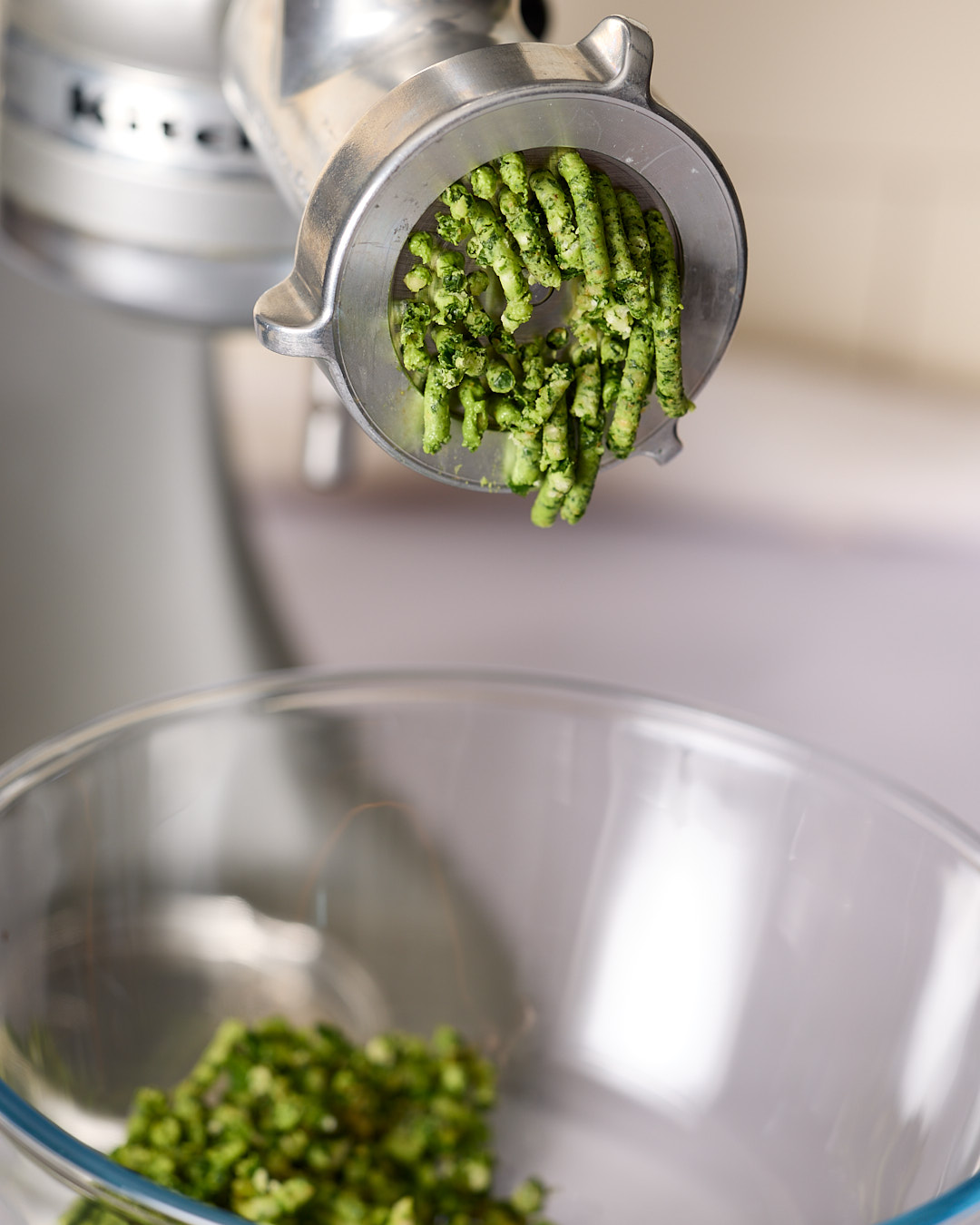
Close-up of a KitchenAid food grinder extruding strands of mixed herb walnut pesto into a glass bowl below.

I’m a strong advocate for a chunky pesto. You shouldn’t be able to point to a specific ingredient, but the mouthfeel should still be clearly communicating cheese, nuts, and herbs. To achieve this with my mixed herb walnut pesto, I use the food grinder attachment on my KitchenAid stand mixer, with the medium grinding plate. 

Assemble all the ingredients, but set aside the lemon juice, honey, olive oil, and salt. Those get added after the herbs, garlic, cheese, and walnuts have been passed through the grinder. 

Turn the grinder to a medium speed. Add the ingredients, alternating between herbs, garlic, cheese, and walnuts. Add up to 1 teaspoon of lemon zest through the grinder as well.

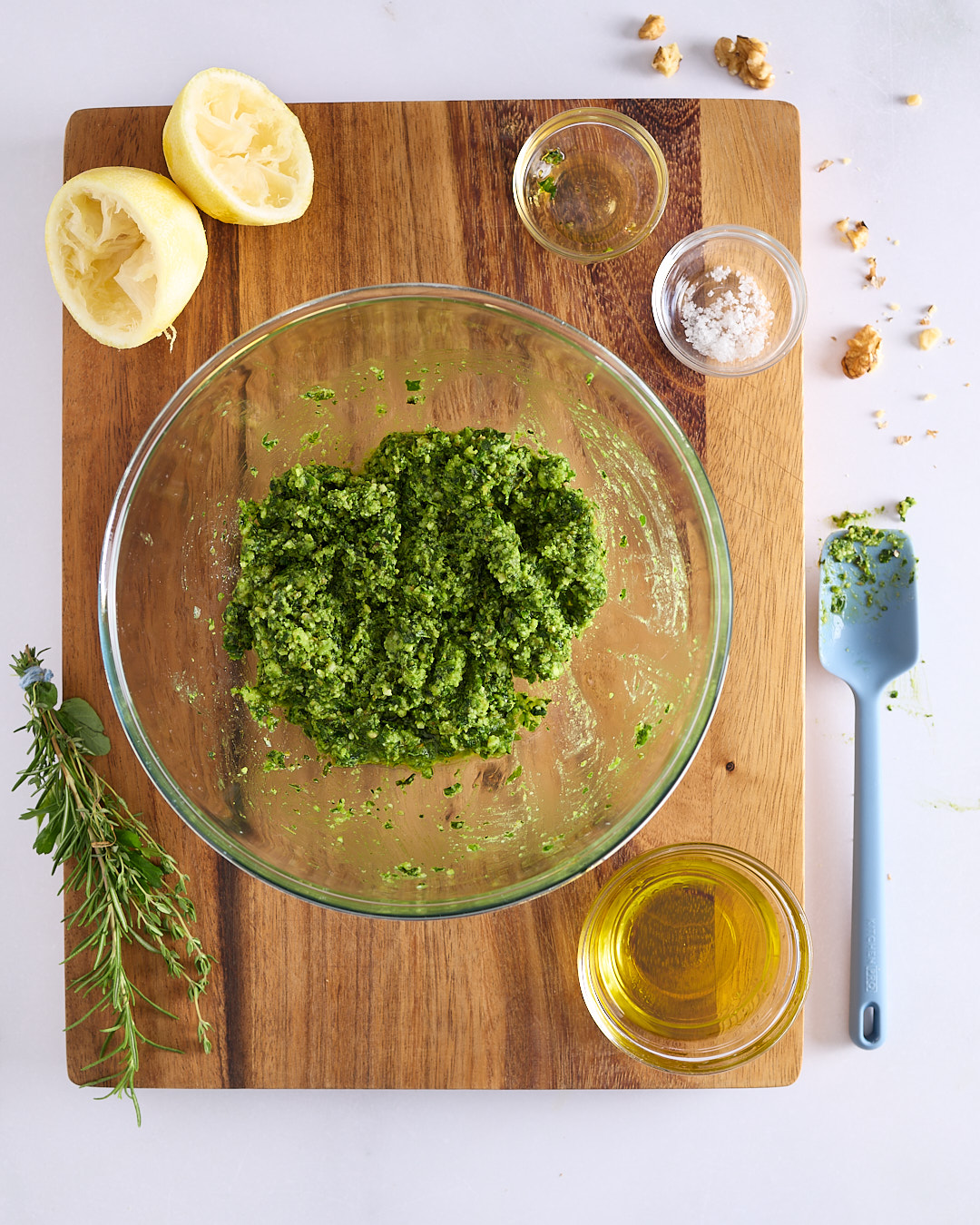
Glass mixing bowl of mixed herb walnut pesto on a wooden board, with squeezed lemon halves, olive oil, honey, sea salt, and a silicone spatula on a light bench.

Once everything has gone through, work fairly quickly. You want to avoid the pesto oxidising and starting to turn brown. 

Add 1 tablespoon of lemon juice and ½ teaspoon of sea salt. Drizzle over ½ teaspoon of honey and 3 tablespoons of extra virgin olive oil. Stir well with a silicone spatula and taste the mixed herb pesto. I don’t recommend adding more lemon juice. Adjust the salt and honey to taste instead. Add another 2–3 tablespoons of olive oil until the ingredients look well coatedalmost suspended in oil, but not swimming in it.  

Scrape the walnut pesto into your 500ml jar and tap the jar to level the top. Pour over a thin layer of olive oil until it just covers the surface. This slows oxidisation while the pesto sits in the fridge. Each time you remove some pesto, level the surface again and top with a little more oil as needed. 

Food processor method

If you don’t have a food grinder and want to use a food processor, you need to be strategic. The goal is to avoid ending up with a “green sauce” and get closer to that traditional mortar-and-pestle texture. 

Grate the Parmigiano-Reggiano and crush the garlic before you start. Roughly chop the walnuts. Add those ingredients to the food processor with the oregano, rosemary, and thyme leaves. Pulse a couple of times using short bursts only. Don’t scrape down the bowl yet. Then add the soft herbsparsley, spinach, and basil. Pulse again, then scrape down the bowl with a silicone spatula and stir. Repeat only as needed to break down the soft herbs and incorporate everything. 

Finish the mixed herb walnut pesto by hand, using the same lemon, honey, salt, and olive oil method as the food grinder version. 

Storage

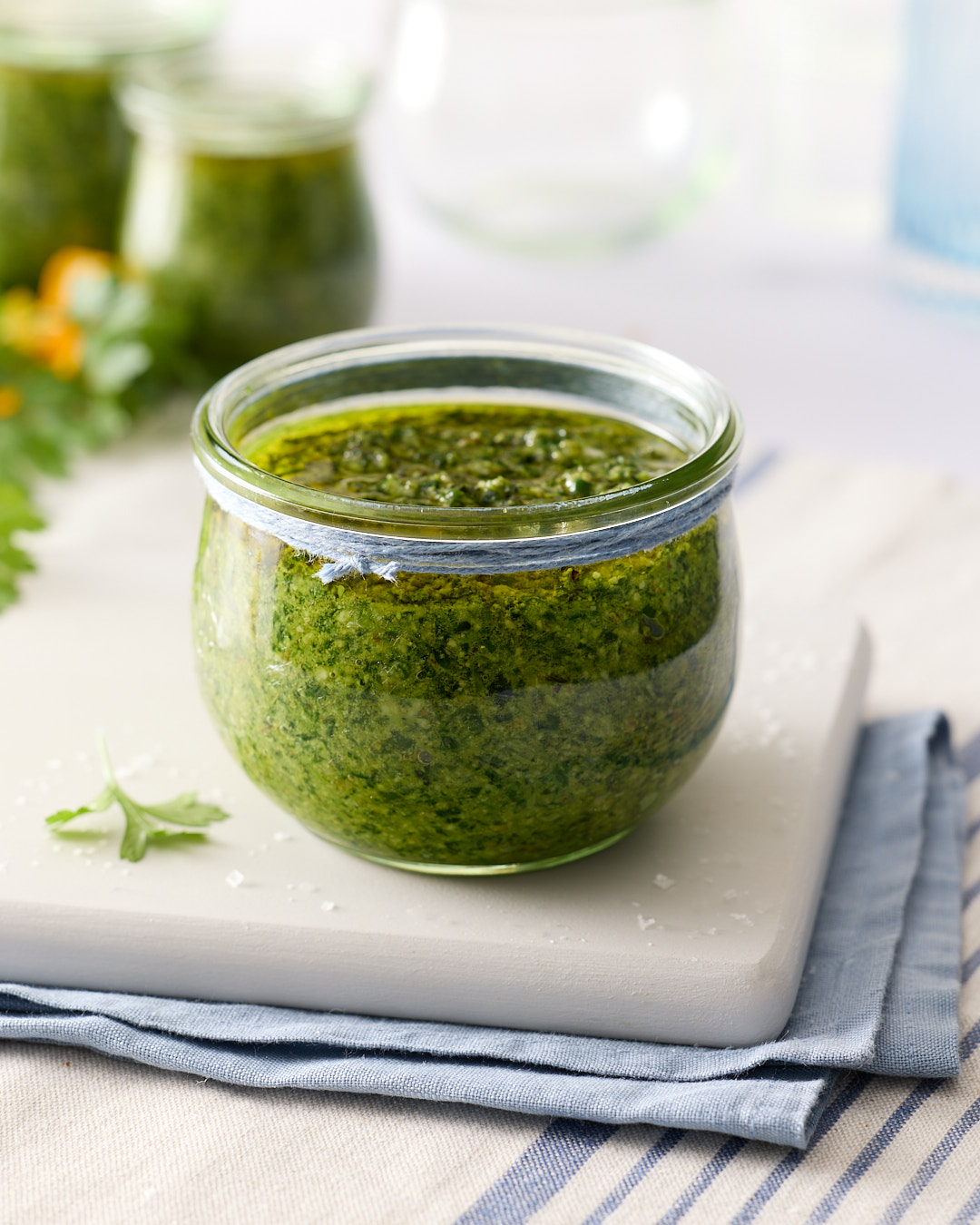
Jar of mixed herb walnut pesto topped with olive oil on a pale board and folded blue tea towel on a light bench, with extra jars blurred in the background.

Store this walnut pesto in the fridge. Keep the surface covered with a thin layer of olive oil and the lid on tightthat oil barrier keeps air off the herbs and slows browning. For best flavour, use it within about 3–4 days. 

If you want to batch this recipe upand I think you shouldit freezes well too. Portion into an ice cube tray (or small containers), freeze solid, then transfer to a ziplock bag or larger freezer container so you can thaw only what you need. Thaw in the fridge. Don’t stir it until you’re ready to use it, as it will start to brown fairly quickly once it’s exposed to air. Mixed herb pesto can be kept frozen for up to six months. 

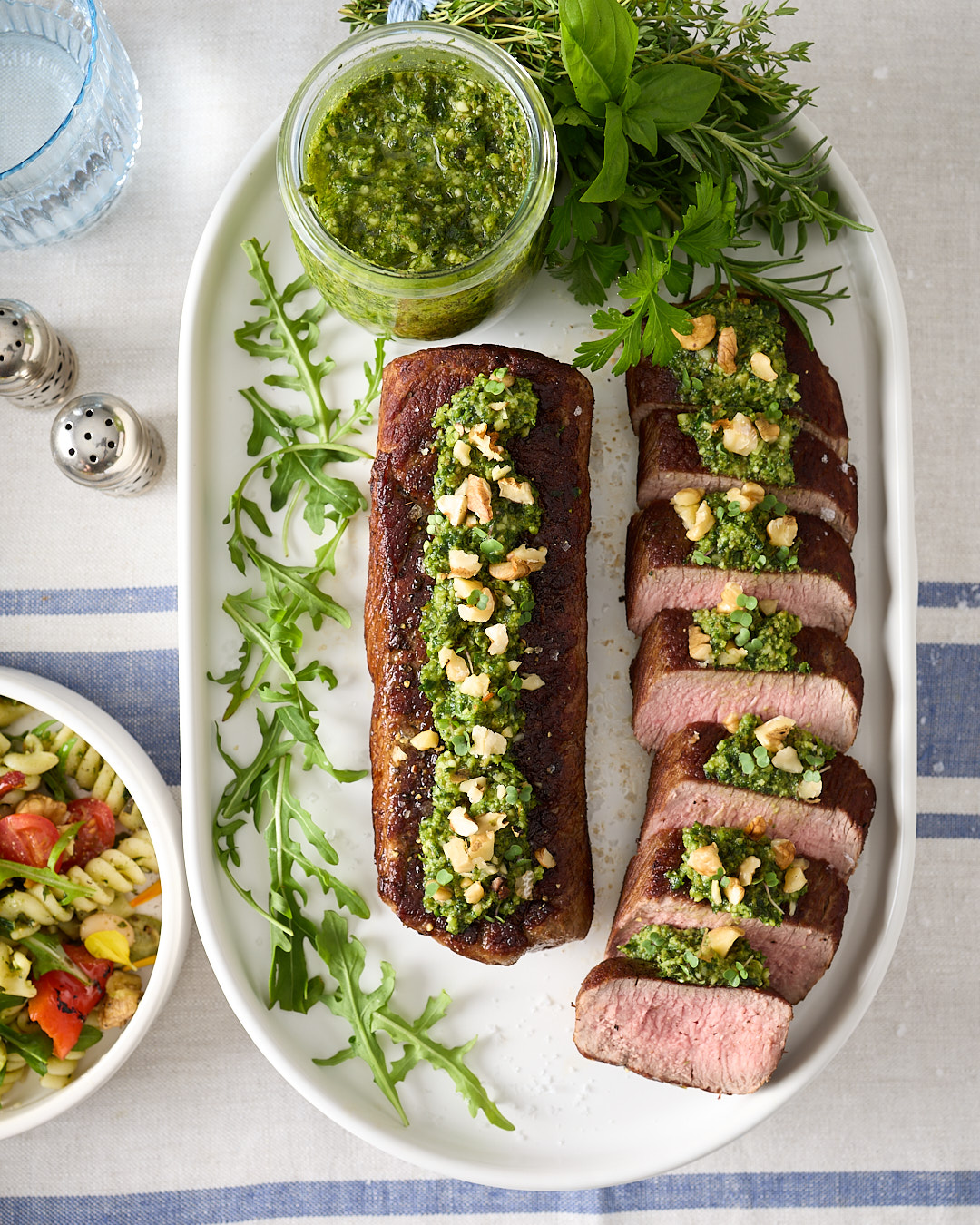
Sliced lamb roast and a whole lamb portion on a white serving platter, topped with spoonfuls of mixed herb walnut pesto and chopped walnuts, with a jar of pesto and fresh herb sprigs on the plate.

This mixed herb walnut pesto is the perfect condiment for a Provence-style lunch. It deserves the best cut of lamblamb backstraps. One batch is enough to serve with the lamb, then stretch into a dressing for my Provence-style kitchen sink pasta salad It’s the final combo in my ‘the way I cook lamb’ series. 

Mixed Herb Walnut Pesto

Close-up of a jar of mixed herb walnut pesto topped with olive oil on a light bench, with soft-focus fresh herbs in the background.
I first developed this mixed herb walnut pesto out of necessity, then kept making it because it turned out to be the kind of recipe that quietly has your back. Not flashy. Not precious. Just reliably good at making dinner taste like you had a plan.
Pesto and I go a long way back to my days of making fresh pasta, gelato, and yes—pesto alla Genovese at a trendy bistro in suburban Brisbane in the 1980s. The pesto at ‘Pasta Pasta’ was probably the only remotely authentic Italian recipe we served. We made it by hand from the original ingredients: basil, garlic, pine nuts, Parmigiano Reggiano, extra virgin olive oil, and salt. I do remember the cheese arriving pre-grated in large plastic bags though. So, OK—pretty authentic.
Prep Time 30 minutes
Course Condiment, Dip, Marinade
Cuisine Italian, Mediterranean
Servings 300 ml

Equipment

  • 500ml glass jar with lid
  • Digital scales
  • KitchenAid stand mixer with food grinder attachment (medium grinding plate)
  • Salad spinner (optional)
  • Microplane (for lemon zest)
  • Optional (if not using the grinder): Food processor

Ingredients  

  • 30 g parsley leaves 1 cup packed
  • 25 g baby spinach 3/4 cup packed
  • 20 g sweet basil leaves 1/2 cup packed
  • 8 g oregano leaves 1/4 cup packed
  • 5 g thyme leaves 2 tablespoons
  • 5 g rosemary leaves 2 tablespoons
  • 1 large lemon
  • 2 large garlic cloves
  • 50 g walnuts 1/2 cup
  • 60 g Parmigiano-Reggiano
  • ½ teaspoon honey
  • 6 tablespoons extra virgin olive oil plus extra to cover pesto
  • ½ - 1 teaspoon sea salt

Instructions 

Prep the ingredients:

  • Wash and spin-dry the herbs in a salad spinner. Spread the herbs over two layers of paper towel and loosely roll up to absorb any remaining moisture. Refrigerate until required.
  • Zest the lemon and set aside the zest. Juice the lemon and set the juice aside.
  • Peel the garlic cloves and cut them in half.
  • Weigh the walnuts.
  • Weigh the Parmigiano-Reggiano and cut it into small chunks.
  • Pick all herb leaves from the stems. Start with the woody herbs (rosemary, thyme, oregano). Leave the sweet basil until last.

KitchenAid grinder method (chunky pesto)

  • Fit the food grinder attachment with the medium grinding plate. Place a large bowl underneath to catch the pesto.
  • Set aside the lemon juice, honey, olive oil, and salt. These are added after grinding.
  • Turn the grinder to medium speed. Feed the ingredients through, alternating herbs, garlic, cheese, and walnuts so it processes evenly. Add up to 1 teaspoon of lemon zest through the grinder as well.
  • Work quickly once it’s ground. Add 1 tablespoon lemon juice, ½ teaspoon sea salt, ½ teaspoon honey, and 3 tablespoons extra virgin olive oil. Stir well with a silicone spatula.
  • Taste. Don’t add more lemon juice. Adjust with more salt and/or honey if needed.
  • Add another 2–3 tablespoons olive oil, stirring as you go, until the pesto looks well coated and lightly suspended in oil (not swimming).
  • Scrape into a clean or sterilised 500ml jar. Tap the jar on the bench to level the surface.
  • Pour a thin layer of olive oil over the top until it just covers the surface. Seal with the lid and refrigerate.

Food processor method (if you don’t have the grinder)

  • Grate the Parmigiano-Reggiano and crush the garlic before you start. Roughly chop the walnuts.
  • Add the grated Parmigiano, garlic, walnuts, and the woody herbs (oregano, rosemary, thyme) to the food processor. Pulse 2–3 times in short bursts. Don’t scrape the bowl down yet.
  • Add the soft herbs (parsley, spinach, basil). Pulse again, then scrape down the bowl with a silicone spatula and stir.
  • Repeat only as needed to break down the soft herbs and incorporate everything.
  • Finish by hand exactly as per the grinder method: add lemon juice, salt, honey, and olive oil, then taste and adjust.
  • Jar the pesto and cover the surface with a thin layer of olive oil before refrigerating.

Just before you cook with abandon…

Yield: This batch of mixed herb walnut pesto makes just over 1 cup (about 300ml). It’s plenty as a table condiment for four with lamb, with enough left to turn into a dressing.
Chunky texture: I’m chasing a pesto where you can’t identify each ingredient, but the mouthfeel still says cheese, nuts, and herbs. The KitchenAid grinder makes that easy. If you’re using a food processor, pulse in short bursts and stop early so you don’t end up with a smooth green sauce.
Why these herbs: The spinach, basil, and parsley form the base for this mixed herb pesto. They soften and balance the stronger woody herbs used in smaller amounts—oregano, thyme, and rosemary.
Lemon and honey: The lemon (zest and juice) and honey aren’t optional “extras”. They round out the bitterness of the woody herbs and lift the overall flavour of this walnut pesto.
Don’t overdo the lemon juice: I add a tablespoon, then adjust with salt, honey, and olive oil instead. More lemon juice can tip the whole thing out of balance.
Oxidation and browning: Work quickly once the herbs are processed. A little browning is normal with any pesto without pine nuts (or with them), but an oil layer on top and a tight lid will slow it down. When you chop or grind herbs for pesto, you rupture plant cells. That exposes the herb compounds and enzymes to oxygen, which triggers enzymatic browning and creates brown pigments. It also shifts the flavour of the herbs, and generally not in a good way.
Walnuts vs pine nuts: If you’re wedded to pine nuts, swap them in. The method stays the same. You’ll still get a great mixed herb walnut pesto vibe, just a little closer to traditional pesto.
Storage and freezing: Store this walnut pesto in the fridge. Keep the surface covered with a thin layer of olive oil and the lid on tight—that oil barrier keeps air off the herbs and slows browning. For best flavour, use it within about 3–4 days. If you want to batch this recipe up—and I think you should—it freezes well too. Portion into an ice cube tray (or small containers), freeze solid, then transfer to a ziplock bag or larger freezer container so you can thaw only what you need. Thaw in the fridge and don’t stir it until you’re ready to use it, as it will start to brown fairly quickly. Mixed herb pesto can be kept frozen for up to six months.
Tablespoon sizes: My tablespoon measures are 15ml (not the larger 20ml Australian tablespoon).

Keyword mixed herb pesto, mixed herb walnut pesto, walnut pesto

Leave a Reply

Your email address will not be published. Required fields are marked *

Recipe Rating


Hi, I'm Sandra!

I live by the words of Harriet Van Horne and I will be exploring every possible way to bring Harriet’s words to life in my kitchen.

Recipes

Discover delicious featured food recipes! From quick meals to gourmet delights, Sandra offer inspiring dishes for every occasion. Explore, cook, and enjoy flavorful creations today.

You might also like..

Pork And Leek Stuffed Shells With Fennel Cream

Homemade Fruit Mince

Whole Lemon Poppy Seed Cake

Easy Moroccan Preserved Lemons

Subscribe

Subscribe to my newsletter for a chance to win a FREE APRON (drawn monthly) as well as cooking tips, recipes, offers and exclusive content.

"*" indicates required fields