My Best Lasagna Yet
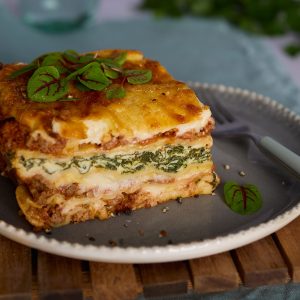
My mum was a reluctant cook—but she was actually a really great one. She was a single mum, and I think the stress she felt making “special” dishes for her kids—like lasagna—came from a sharp awareness of the cost of every single ingredient she used. Her meat and cheese lasagna recipe most likely came from a 1970s issue of Chatelaine—the iconic Canadian women's magazine and her cooking bible. What made my mum’s lasagna stand out was the hidden layer of spinach and cheese sandwiched between the meat sauce layers. There was no béchamel sauce in sight. And that cheese layer? Made from dry curd cottage cheese—a grocery store adaptation of the homemade curd cheese that came with countless immigrants to Canada. When my culinary horizons broadened, I realised that cottage cheese was standing in for Italian ricotta.
Equipment
- 36cm x 26cm x 7cm rectangular baking dish
- Digital scales
- 5L pasta pot (or 3.5L Dutch oven)
- Large frying pan
- Food processor (optional)
- Large mixing bowl
- Instant read thermometer (optional)
- Microplane (optional, for fresh nutmeg)
Ingredients
Egg pasta dough:
- 1 x Easy Homemade Egg Pasta Dough recipe (alternatively, one package fresh lasagna sheets)
Bolognese sauce:
- 1 kg pork mince
- 1 kg beef mince
- 200 g streaky bacon (no rind)
- 2 large carrots
- 3 celery sticks
- 2 medium onions
- 6 large garlic cloves
- 4 – 5 sprigs fresh sage
- 4 – 5 sprigs fresh oregano
- 2 sprigs fresh rosemary
- 2 x 700g bottles passata
- 2 tablespoons tomato paste
- 300 ml red wine
- 2 tablespoons soy sauce
- 2 tablespoons brown sugar
- 500 ml low salt beef broth
- 300 ml water
- 15 g gelatine (optional)
- 2 tablespoons red wine vinegar
Spinach and cheese mixture:
- 500 g ricotta cheese
- 250 g stracciatella cheese
- 600 g fresh spinach
- 4 large garlic cloves (crushed)
- ¼ teaspoon nutmeg (ground or freshly grated)
- 3 large eggs
- 1 small bunch Italian parsley
- 1/2 small bunch fresh basil
Béchamel sauce:
- 1 litre full cream milk
- 100 g white flour
- 100 g unsalted butter
- 1 bay leaf (fresh or dried)
- 1 sprig fresh rosemary
- ¼ teaspoon nutmeg (ground or freshly grated)
- salt and white pepper
Assembly:
- 8 – 10 fresh pasta sheets
- 1.5 kg bolognese sauce
- 750 g spinach and cheese mixture
- 1 kg béchamel sauce
- 650 g – 800g mozzarella cheese (grated)
- 250 g Parmigiano Reggiano cheese (finely grated)
Instructions
Assemble ingredients and equipment
- Gather all ingredients and the necessary equipment before you begin.
Bolognese sauce
Brown the mince:
- In batches, brown 1kg pork mince and 1kg beef mince in a large frying pan on medium-high heat.
- Leave each batch to caramelise well on one side.
- Then transfer each batch to a 5L pasta pot once browned.
Prep vegetables and bacon:
- Chop 200g streaky bacon into approx. 5mm pieces.
- Peel 6 garlic cloves, two onions, and three celery sticks - trim ends off the carrots.
- Chop the carrots, onions and celery into rough 5mm pieces or process in food processor - pulsing the carrots and then adding onions and celery, pulse again.
- Add a couple tablespoons of oil to the large frying pan over a medium heat.
- Add the chopped bacon and fry until the bacon starts to colour.
- Then add the carrots, onions, and celery to the pan.
- Using a garlic crusher, crush the garlic directly into the pan.
- Sauté the vegetables with the bacon until slightly softened.
- Then pour in 300ml red wine and cook until the wine has evaporated.
- Transfer everything to the pasta pot.
Add the liquids, herbs etc:
- Add 2 x 700g bottles passata, 2 tablespoons tomato paste, 2 tablespoons soy sauce, 2 tablespoons brown sugar, and 500ml low salt beef broth to the pot.
- Also add the fresh sage, oregano, and rosemary sprigs. You can tie them with kitchen string or toss them into a muslin bag so you can pull them out at the end without woody bits left behind.
- Bloom 15g gelatine in the 300ml water and set aside.
Simmer and reduce:
- Bring the sauce to a boil over medium-high heat. Then reduce the temperature to medium-low heat.
- Add the bloomed gelatine mix and stir through until completely dissolved.
- Keep the sauce simmering for 2–3 hours, stirring occasionally to prevent sticking and to allow the sauce to slowly reduce and concentrate – noting it needs to retain sufficient liquid for the fresh lasagna sheets to absorb.
Finish the sauce:
- Once the meat is tender and sauce reduced, remove from the heat.
- Season to taste with salt and pepper.
- Then stir in the 2 tablespoons red wine vinegar to finish.
- You might also want to add another pinch of brown sugar to balance the acidity—taste and adjust.
Cool safely:
- If not using immediately, cool the bolognese quickly. Let the sauce cool on the bench for about 30 minutes.
- Then transfer it to the fridge in shallow containers.
- Ensure the centre of the sauce reaches below 5°C within 4 hours, as per Australian Food Standards.
Preparing the pasta sheets:
- I use a 36cm x 26cm x 7cm rectangular stoneware baking pan and layer it with 10 fresh lasagne sheets—each one cut to 14cm x 20cm. If you’re using easy homemade egg pasta dough recipe, roll the dough thin. The KitchenAid roller gives you pasta sheets about 14cm wide, and you can trim them to 20cm lengths. The full batch of dough will give you around 15 lasagne sheets, so you’ve got a few extra sheets. Whether you’re using store bought or homemade, don’t pre-cook the sheets. The moisture in the sauces will hydrate them during baking.
Spinach and cheese mixture:
- Start by adding olive oil to a large frying pan or wok with a lid on medium heat.
- Add 4 large garlic cloves (crushed) —sauté for a few minutes just to soften the garlic.
- Add 600g fresh spinach and put lid on, turn the spinach once or twice until fully wilted but still bright green.
- Transfer to a colander and leave to cool slightly, then press firmly with the back of a spoon to squeeze out any excess liquid.
- Once cool enough to handle, chop the spinach roughly.
- In a large mixing bowl, combine 500g ricotta cheese, 250g stracciatella cheese, and the wilted spinach.
- Add ¼ teaspoon ground or freshly grated nutmeg, 3 large eggs, 1 small bunch finely chopped Italian parsley, and ½ small bunch finely chopped fresh basil.
- Season with salt and pepper, then mix until evenly combined.
Béchamel sauce:
- In a medium saucepan, add a bay leaf and rosemary spring to 1 litre milk.
- Heat on medium heat until just before boiling point, remove from heat and leave to steep.
- Add 100g unsalted butter and 100g white flour to the bowl of a food process or blender.
- Strain the cooled milk into the bowl, discarding the herbs.
- Blend the flour and butter with the strained milk, then pour back into the saucepan and stir over medium heat until the sauce thickens and coats the back of a spoon.
- Season with salt and white pepper, then add ¼ teaspoon ground or freshly grated nutmeg.
Assembly
Get organised:
- Preheat the oven to 170°C fan forced (190°C conventional).
- Gather the components for assembling the lasagna: lasagna pan (I use a 36cm x 26cm x 7cm rectangular baking dish), about 1.5kg bolognese sauce (divide into three equal portions), 750g spinach and cheese mixture, 1kg béchamel sauce (you will need ½ of the sauce for the top meat layer and ¼ for each of the other two meat layers), 650g–800g grated mozzarella, and 250g finely grated Parmigiano Reggiano (again you will need more cheese for the top layer than in between the other layers).
- Spread a thin layer of bolognese on the base of the baking dish.
First meat layer:
- Add your first pasta layer using 2 sheets placed across the pan and always leaving a 1–1.5cm gap around the edges.
- Layer bolognese, then drizzle or spoon the béchamel and top with some mozzarella and Parmigiano Reggiano.
Second meat layer:
- Repeat as per the first layer.
Spinach and cheese layer:
- Use 2 more sheets. If needed, cut extra strips of pasta to fill larger gaps—again leaving a margin around the edges.
- Add the spinach and cheese mixture and gently press to level.
- Sprinkle lightly with mozzarella and Parmigiano Reggiano cheese.
Third meat layer:
- Repeat as per the first layer with placing the pasta sheets and adding bolognese sauce.
- Next the final generous layer of béchamel. Spread it generously across the bolognese but stop just short of the edges. Leaving a ring of bolognese showing helps the lasagna vent while it bakes and keeps the cheesy top from welding itself to the sides of the pan.
- Finish with a generous covering of mozzarella and Parmigiano Reggiano.
Baking the lasagna:
- Cover the lasagna loosely with foil and place it on a baking tray to catch any drips.
- Bake at 170°C fan forced (190°C conventional).
- After 60 minutes, check the temperature of the lasagna. Look for bubbling edges and use an instant-read thermometer to check for an internal temperature of at least 80°C. If you don’t have one, a stainless-steel knife inserted into the centre should come out piping hot to the touch.
- Then remove the foil, increase the oven temperature to 200°C fan forced (180°C conventional), and move the rack to the top of the oven.
- Return the lasagna to the oven and bake until the cheese is golden brown, watching carefully.
Rest then serve:
- Once baked, let the lasagna rest on the bench for at least 30 minutes, uncovered. This allows the pasta to absorb remaining moisture and the cheese layer to firm up for clean slicing. If not serving straight away, it can be kept in a warm oven or warming drawer (85°–100°C) for 1–2 hours. This resting period ensures the lasagna holds its shape when sliced.
Just before you cook with abandon…
Fat content of the meat: The fat content is up to you but I don’t recommend using ‘regular’ mince and definitely not ‘extra lean’. I land in the middle and use lean beef and pork mince—each around 10–12% fat—plus 200g of streaky bacon to boost flavour and add back richness. If you’re feeling virtuous you can used short cut bacon. The combination is deliberate: you get deep flavour without ending up with a greasy sauce, and the bacon fat helps carry the sauce through a long simmer and bake without it drying out.
Do you have to brown the mince? Yes. Yes, you do – but how much you really need to brown the meat is still up for debate. You don’t need to meticulously brown every millimetre of the mince. You just need some of that lovely deep crust of caramelised meat to deliver the flavour base for the sauce—and for the best comfort food lasagna. My compromise? Brown one side. That’s it.
What is gelatine doing in bolognese sauce? Good question – it’s just science. It’s what slow-simmered meat sauces naturally extract from bones and collagen. Adding powdered gelatine boosts body and silkiness, especially helpful when using lean or extra lean mince.
Don’t over reduce the sauce: Yes, you’re simmering for over an hour—but don’t take it too far. This isn’t a ragù that needs to be thick and clinging. The sauce has to retain enough liquid for the pasta sheets to absorb while baking. If it gets too dry, the finished lasagna will be tight and stodgy rather than rich and luscious. You're looking for a balance—flavour that's concentrated, tender mince but still loose enough to keep the pasta supple.
Can I use dry herbs? You can. Use about one-third the quantity listed for fresh, and add them in early so they’ve got time to rehydrate and mellow. But if you’ve got fresh herbs, use them—they bring a brightness you won’t get from dried.
Food safety: Cool the bolognese sauce on the bench for about 30 minutes before refrigerating. You need to get it below 5°C within four hours, as per Australian Food Standards. And once baked, make sure the leftovers go into the fridge or freezer promptly. Refrigerated leftovers should be consumed within 2-3 days.
Fresh versus store bought lasagna sheets: Fresh pasta sheets cook quickly and absorb sauce better than dried ones. If using store bought, choose the fresh kind in the fridge section. Dried or par-cooked pasta won’t give the same layered texture and can throw off your moisture balance. If you have a stand mixer and a pasta roller attachment, why not try my easy homemade egg pasta dough recipe.
Spinach best practice: Adding spinach to lasagna can be a tricky affair. Fresh or frozen is usually the debate—but either way, there’s the inevitable issue of just how much water spinach releases as it cooks. Fresh baby spinach is readily available in Australia, so I recommend using it whenever you can over frozen. And the easiest way to get it ready for the cheese layer is by wilting the spinach it in a large frying pan or wok. With just a few tosses, the spinach should stay a nice dark green and be fully wilted. Transfer to a colander and leave to cool slightly, then press firmly with the back of a spoon to squeeze out any excess liquid.
21st century versus 19th century – the roux affair: I am not a believer in sweating over a roux for a béchamel sauce—where you melt butter, add flour, and toast the paste until golden and nutty. Yes, I know it’s the béchamel of the 19th-century French canon. But I haven’t found it improves this sauce enough to justify the time. Instead, I amp up the flavour by gently heating the milk with a bay leaf and rosemary and letting it infuse. No roux. No drama. Just one of the five French “mother sauces” getting a 21st-century makeover. Scald the milk with the bay leaf and rosemary and leave to infuse. Blend the flour and butter with the strained milk, then pour back into the saucepan and stir over medium heat until the sauce thickens and coats the back of a spoon. Season with salt and white pepper, then add ¼ teaspoon ground or freshly grated nutmeg.
Thermomix béchamel sauce method. I use my Thermomix for all my cooked sauces. Add the flour and butter to the Thermomix bowl, strain in the infused milk (discarding the herbs), and cook for 8 minutes at 90°C on speed 4. Check the consistency—it should thickly coat the back of a spoon. If it needs more time, keep cooking in 2-minute bursts until you get the texture you’re after.
Adjusting for size of your pan: My pan is 36cm x 26cm x 7cm, which fits ten 14cm x 20cm pasta sheets neatly. If you’re using a different sized dish, you’ll need to cut your pasta sheets accordingly—and possibly cut back on filling or add more. Just keep that 1–1.5cm margin around the edges of the pasta so it all has room to expand. And don’t overfill the pain – you want to stop at least 1cm short of the top of the pan. Putting a tray under the lasagna pan will catch any escaping cheese or sauce.
Why resting a lasagna matters: Straight from the oven, it’s molten chaos. Give it time—30 -45 minutes uncovered on the bench will pay off when it comes time to portion it up and serve. The layers will set, the béchamel will firm, and you’ll get clean slices instead of a cheesy puddle.