Recipes

My Best Lasagna Yet

Overhead view of a golden, baked lasagna in a rectangular white dish, topped with melted cheese and fresh basil leaves. One square slice has been removed with a silver serving utensil, revealing the rich meat and cheese layers inside. The dish sits on a striped tea towel, surrounded by salt, pepper, a glass of wine, and green ceramic plates with cutlery.

My mum was a reluctant cook—but she was actually a really great one. She was a single mum, and I think the stress she felt making “special” dishes for her kids—like lasagna—came from a sharp awareness of the cost of every single ingredient she used. Her meat and cheese lasagna recipe most likely came from a 1970s issue of Chatelaine—the iconic Canadian women’s magazine and her cooking bible.  

What made my mum’s lasagna stand out was the hidden layer of spinach and cheese sandwiched between the meat sauce layers. There was no béchamel sauce in sight. And that cheese layer? Made from dry curd cottage cheese—a grocery store adaptation of the homemade curd cheese that came with countless immigrants to Canada. When my culinary horizons broadened, I realised that cottage cheese was standing in for Italian ricotta. 

I’ve been evolving her cheesy beef lasagna for over 40 years—with a few long gaps in development, thanks to certain children who were suspicious of “saucy” food where the ingredients weren’t individually identifiable. I digress. I also made what I’d estimate as a couple thousand lasagne during my university years, working in—and later running—a fresh pasta restaurant in Brisbane in the 1980s. It was called Pasta Pasta. Enough said. 

And I think I’m finally there. There enough to call it:  My Best Lasagna Yet. 

This next level lasagna layers my classic bolognese sauce—the one all the kids would actually eat—with béchamel sauce and mozzarella cheese, between Easy Homemade Pasta Sheets. These pasta sheets are so thin, I can sneak in a generous middle layer of spinach, ricotta, and stracciatella cheese without the lasagna trying to escape the pan in the oven. A meat spinach and ricotta lasagna that makes both sides of the lasagna fence happy. 

If making fresh pasta isn’t your thing, don’t worry—store-bought fresh lasagna sheets will do the job. 

Let me step it out for you. 

Bolognese sauce

Ingredients

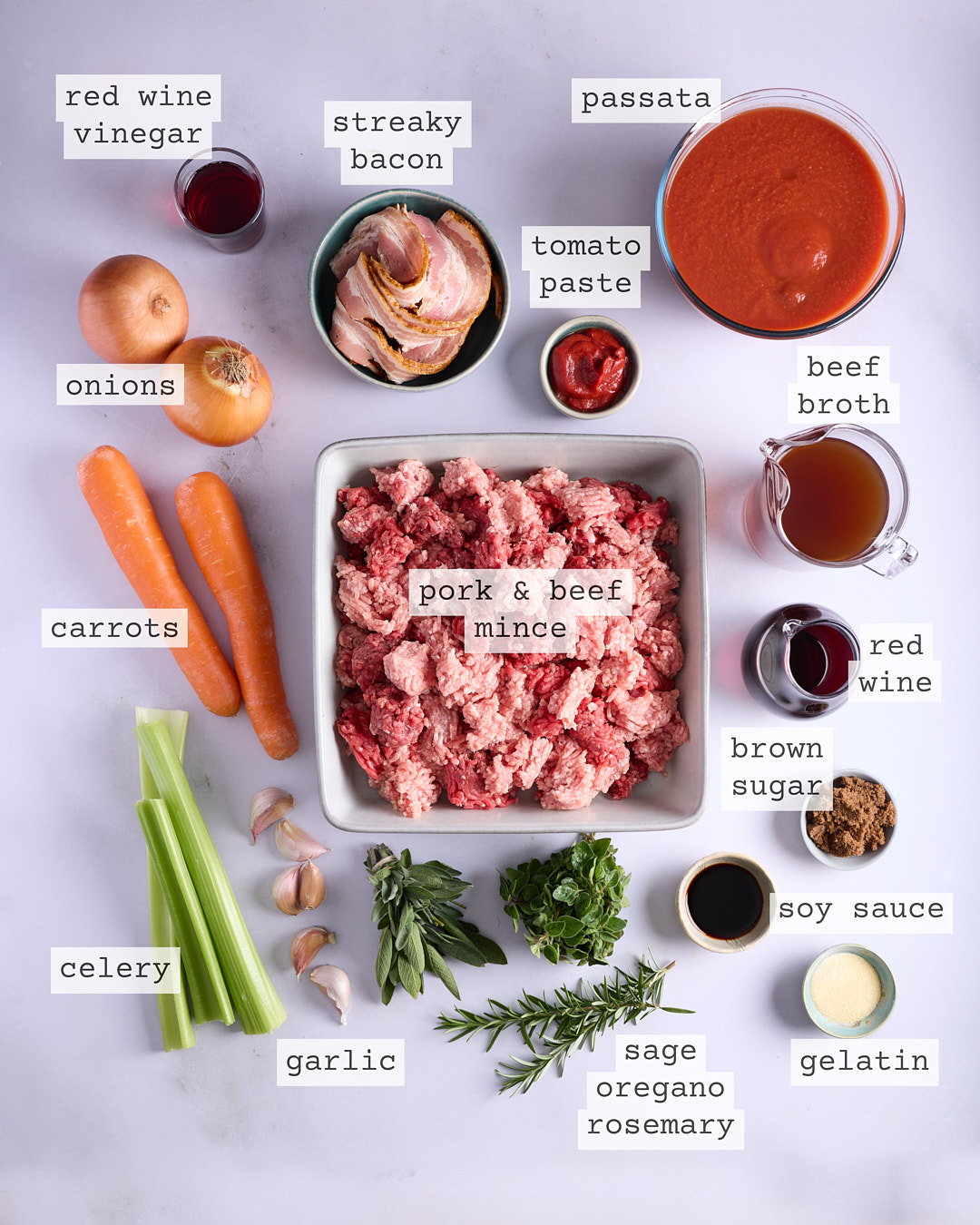
Homemade bolognese sauce ingredients.

Is there a short road to deliciousness?

It’s a bit of a long list, but I don’t think there’s a short road to deliciousness: 

  • 1kg pork mince
  • 1kg beef mince 
  • 200g streaky bacon (no rind) 
  • 2 large carrots 
  • 3 celery sticks 
  • 2 medium onions 
  • 6 large garlic cloves 
  • 4-5 few sprigs fresh sage 
  • 4-5 few sprigs fresh oregano 
  • 2 sprigs fresh rosemary  
  • 2 x 700g bottles passata  
  • 2 tablespoons tomato paste 
  • 300ml red wine 
  • 2 tablespoons soy sauce 
  • 2 tablespoons brown sugar 
  • 500ml low salt beef broth 
  • 300ml water 
  • 15g gelatine (optional) 
  • 2 tablespoons red wine vinegar 

Ok—19 ingredients. How long is your bolognese sauce ingredients list? 

I know you’ve got your own bolognese sauce recipe and you probably don’t need a card. I’m not here to convert you. If you want to use your version in this meat and cheese lasagna recipe, go for it—with one small note: don’t cook it down too much. You need a sauce with enough liquid for fresh lasagna sheets to absorb and still come out of the oven moist and silky. 

Like yours, my sauce has been evolving since my twenties. New techniques, new ingredients… and a lot of trial and error. Here’s the breakdown of why my current version looks the way it does. 

The whole point is to have leftovers

I don’t think anyone makes bolognese for a single meal. This recipe makes a generous batch—around 4.5kg of sauce—which just fits into a 5-litre pasta pot or a 3.5-litre Dutch oven (barely, and only if you stir like with absolute restraint). 

For this beef spinach and ricotta lasagna, I use about 1.5kg of sauce. That leaves at least two family-sized portions of bolognese for the freezer. But if freezer space or pot size is tight, you can halve the recipe. Most mince is sold in 500g packs, so it scales down easily and still gives you plenty of sauce for one big bake. 

Let’s dive into my list

Is bolognese healthy? Honestly, that depends on the day. 

Fat equals flavour, but you can scale it. I usually buy pork and beef mince marked as “lean” (around 10% fat). I skip “extra lean” unless I’m deliberately cutting back—in that case, I’ll use one of each. Same for bacon: I go for streaky if I want full flavour in this next level lasagna, and shortcut bacon if I’m feeling virtuous. 

Fresh herbs make a difference if you can find them. I don’t chop them—just tie with kitchen string or toss into a muslin bag so you can pull them out at the end without woody bits left behind. 

Yes, sugar belongs in this sauce. Just a bit—used to balance. The same goes for red wine vinegar. Add both gradually and taste as you go. Today the addition of vinegar to sauces and braises has gone all chefy a ‘finishing vinegar.’  Right, sure, my mum was using it that way long before it was trendy. 

The new additions to my list

I have to credit J. Kenji López-Alt for two late-stage upgrades to my cheesy beef lasagna bolognese. If you’re a serious home cook and you don’t already own it, you need to add Kenji’s 2015 (and 958-page!) book to your library: The Food Lab: Better Home Cooking Through Science. It’s packed with super practical, science-grounded advice that will absolutely make you a better cook—no lab coat required. 

Soy sauce might sound rogue in an Italian-style sauce, but it brings a deep umami boost that works quietly in the background. Kenji calls it an “umami bomb” for good reason. 

And the gelatine? That’s just science. It’s what slow-simmered meat sauces naturally extract from bones and collagen. Adding powdered gelatine boosts body and silkiness, especially helpful when using lean or extra lean mince. 

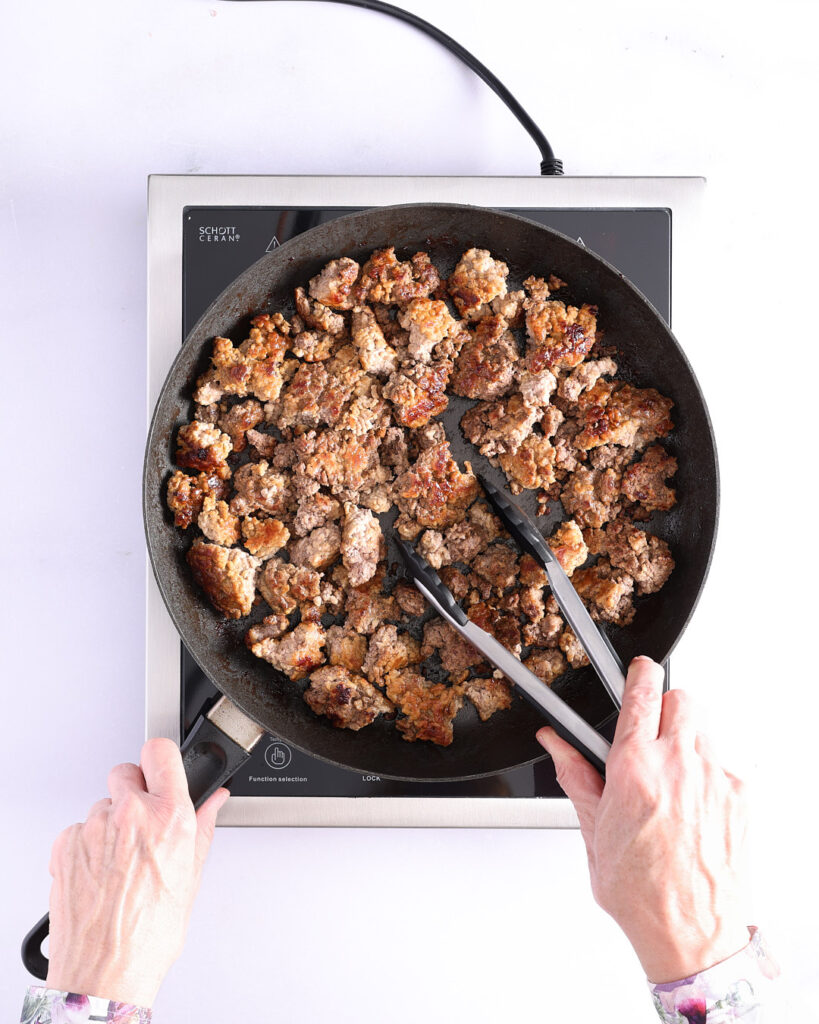
Sandra has partially turned the sizzling ground beef and pork mince, showing the batch cooking process.

I’ll put up my hand—I’ve gone through phases where I didn’t bother browning the meat for my pasta sauces. But I’m reformed. To a degree. 

How much you really need to brown the meat is still up for debate. And here, I’m on Kenji’s side again. You don’t need to meticulously brown every millimetre of the mince. You just need some of that lovely deep crust of caramelised meat to deliver the flavour base for the sauce—and for the best comfort food lasagna. 

My compromise? Brown one side. That’s it. 

To make that work, brown the mince in batches in a large frying pan on medium-high heat. Give it space so the moisture can evaporate and the heat can do its job. We’re not after grey simmered mince here. Keep the heat at medium-high and—this is key—don’t touch it once it hits the pan. Just let it sit. When you see the edges starting to caramelise, lift a corner and check underneath. 

I turn it over in large chunks—no need to break it down fully at this point. You want those browned sections intact. Just before removing each batch from the pan into the sauce pot, I chop it up more finely with a wooden spoon or stiff spatula. 

This is one of those small steps that takes your sauce from “fine” to “found the flavour.” It’s the kind of detail that sets apart a homemade bolognese sauce and earns its place in what I’m calling my best lasagna yet. A little attention up front goes a long way. 

This is not the time for a mirepoix!

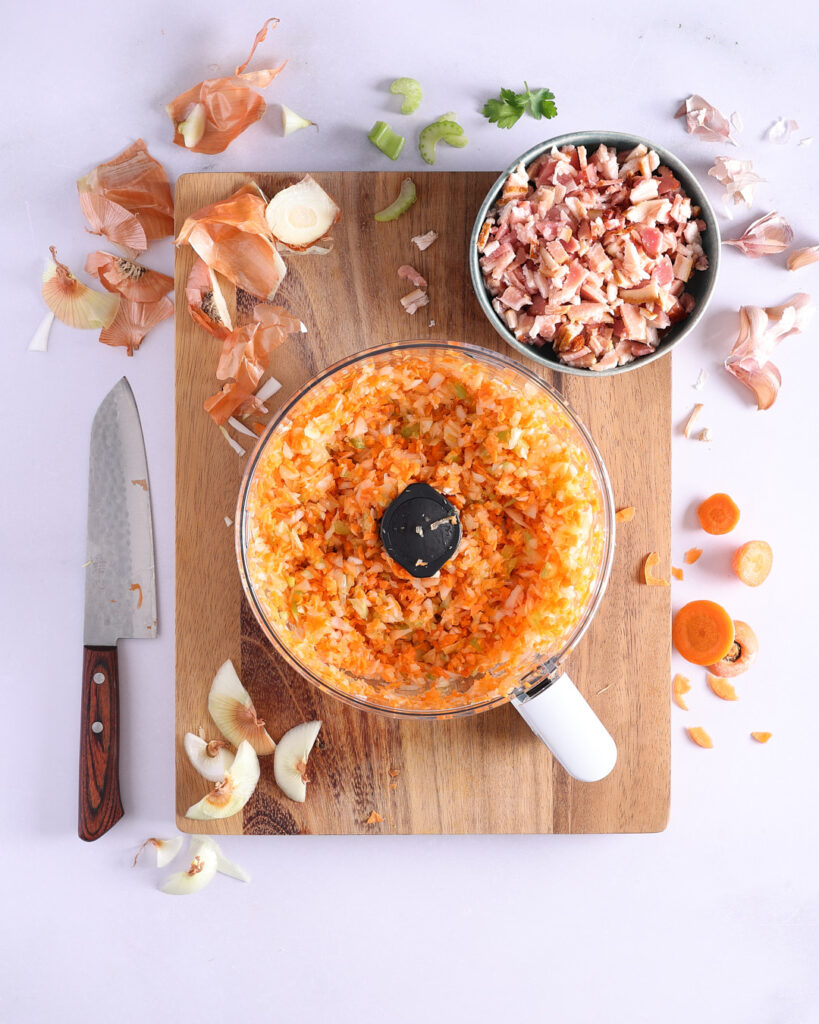
Food processor roughly chopped carrot, celery, and onion with diced bacon to the side.
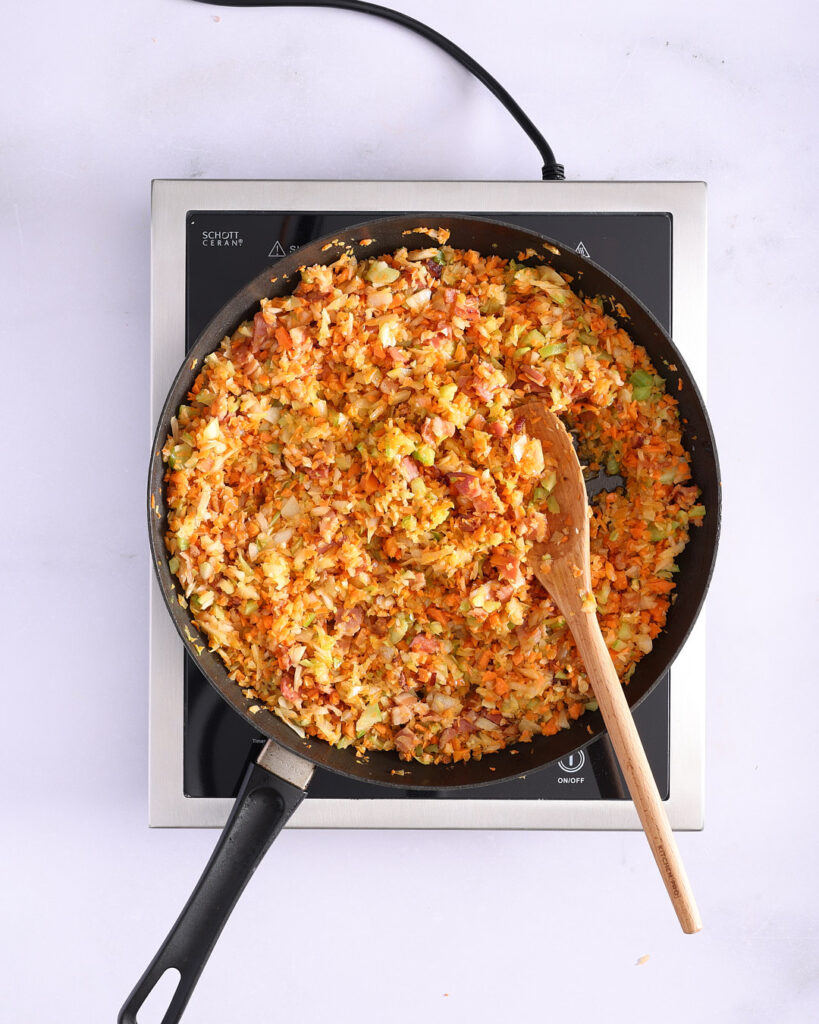
Sautéed roughly chopped carrot, celery, onion, garlic and bacon in a pan.

While I keep a watchful eye on the browning mince, I get on with prepping my carrot, celery, onion and garlic. But let me make this clear—this is not a precision dish. We’re not attempting a French mirepoix where each cube of vegetable is cut to the exact same size. For my meat and cheese lasagna recipe, you just get out the food processor and get on with it. 

Peel the garlic and onions. I don’t peel the carrots—just trim off the ends. Then cut the vegetables (except the garlic) into rough chunks. 

Add the vegetables to the food processor based on their density—it affects how fast they break down. Start with the carrots and pulse them a couple of times. Then add the onions and celery in that order, pulsing between each addition. 

Chop the bacon into small pieces, approximately 5mm square. 

Once you’ve finished browning the meat, heat the pan again over medium heat. You shouldn’t need any extra oil, as you start by adding the chopped bacon and fry until the bacon starts to colour. Then add the carrots, onions, and celery to the pan. Using a garlic crusher, crush the garlic directly into the pan. 

Again, keep it practical, not fussy. Sauté the vegetables for a few minutes until slightly softened and the flavours have started to come together. Add the 300ml red wine and stir until the wine has cooked away. Then tip the vegetable mix into the sauce pot to join the meat. 

This step builds the backbone of flavour in the sauce—and it’s what gives this bolognese sauce the savoury, earthy base that holds up the rest of this comfort food lasagna

Finishing the bolognese sauce

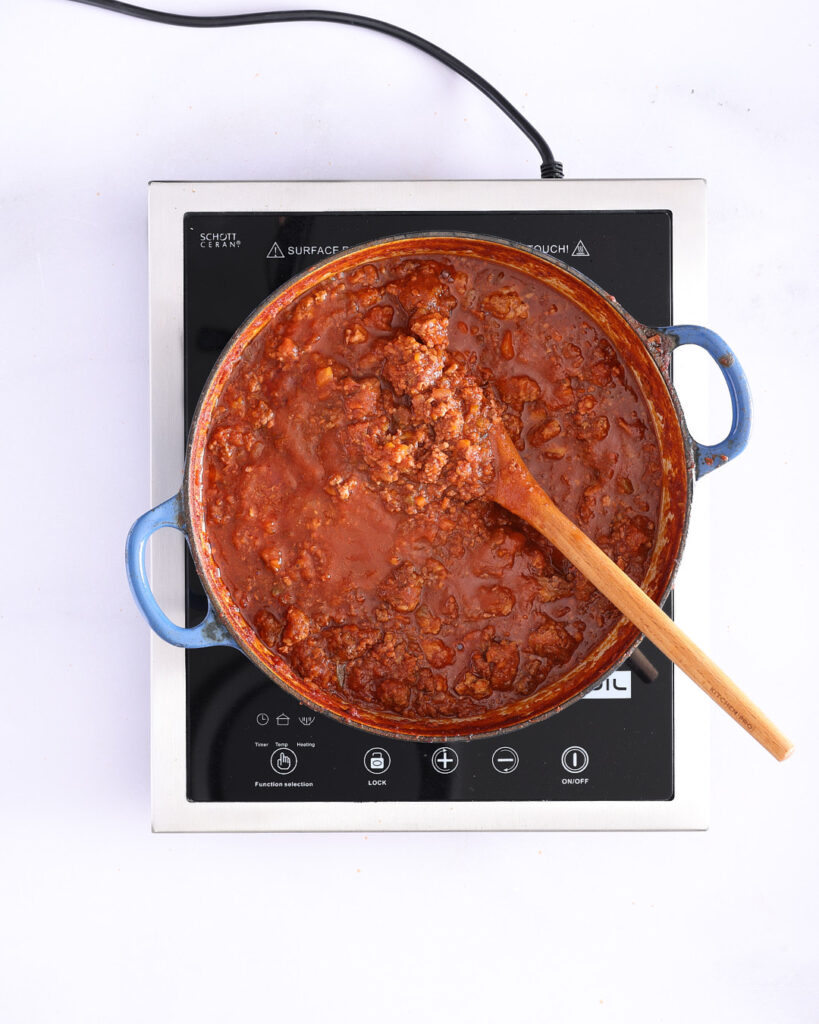
Rich red bolognese sauce simmering, dotted with herbs and visible chunks of meat and vegetables.

Bloom the 15g gelatine (if you’re using it) in the 300ml of water.   

Add remaining ingredients to the sauce pot, except the red wine vinegar—hold that back until the end so you can use it to balance the flavour.   

Add to the pot: 

  • 2 x700g bottles passat
  • 2 tablespoons tomato paste  
  • 2 tablespoons soy sauce  
  • 2 tablespoons brown sugar  
  • 500ml low salt beef broth  

Also add the fresh sage, oregano, and rosemary sprigs.  You can tie then with kitchen string or toss into a muslin bag so you can pull them out at the end without woody bits left behind. 

Bring the sauce to a boil with the lid on, over medium heat. Once it reaches a boil, remove the lid add the bloomed gelatine, stirring until dissolved.   

Lower the heat and simmer gently (stirring occasionally to prevent catching) until the sauce reduces and the meat is tender (2-3 hours). Don’t reduce it too far—this bolognese sauce needs to retain enough liquid for the fresh lasagna sheets to absorb. 

Remove from the heat. Season to taste with salt and pepper, then stir in the red wine vinegar to finish. You might also want to add another pinch of brown sugar to balance the acidity—taste and adjust. 

Take the Australian Food Standards seriously

Let the sauce cool on the bench for about 30 minutes before transferring it to the fridge. It’s important that you follow Australian Food Standards when cooling large batches of sauce. Here’s what the food standards says about cooling food:

Cooling food

If you decide you want to pre-cook food and then cool it, you will need to ensure the food is cooled rapidly to 5°C. If a large container of cooked food, for example a beef curry, is placed in a refrigerator for cooling, it can take as long as 24 hours to cool to 5°C. This is dangerous as the centre of the food will remain warm and allow food-poisoning bacteria to grow to dangerous levels. 

The food safety standards require cooked food to be cooled to 5°C within six hours, in two stages. The food must first be cooled from 60°C to 21°C in 2 hours or faster. It must then be cooled from 21°C to 5°C in four hours or faster. Safe cooling can be achieved by removing the food from the stove top, oven or other heat source after it has cooked; allowing the food to initially cool outside the refrigerator but making sure it is placed in the refrigerator as soon as any part of it drops to a temperature of 60°C; and placing the food in shallow containers in the refrigerator. 

You will need to use your thermometer to check the cooked food is being cooled correctly within the two stages of the 6-hour time limit. 

Definitely a good idea to have an instant read thermometer in your kitchen.   

Based on a 7cm x 36cm x 26cm baking pan, you’ll need about 1.5kg of sauce to build my best lasagna yet. The leftover sauce can be frozen for future use. 

Fresh pasta sheets are essential

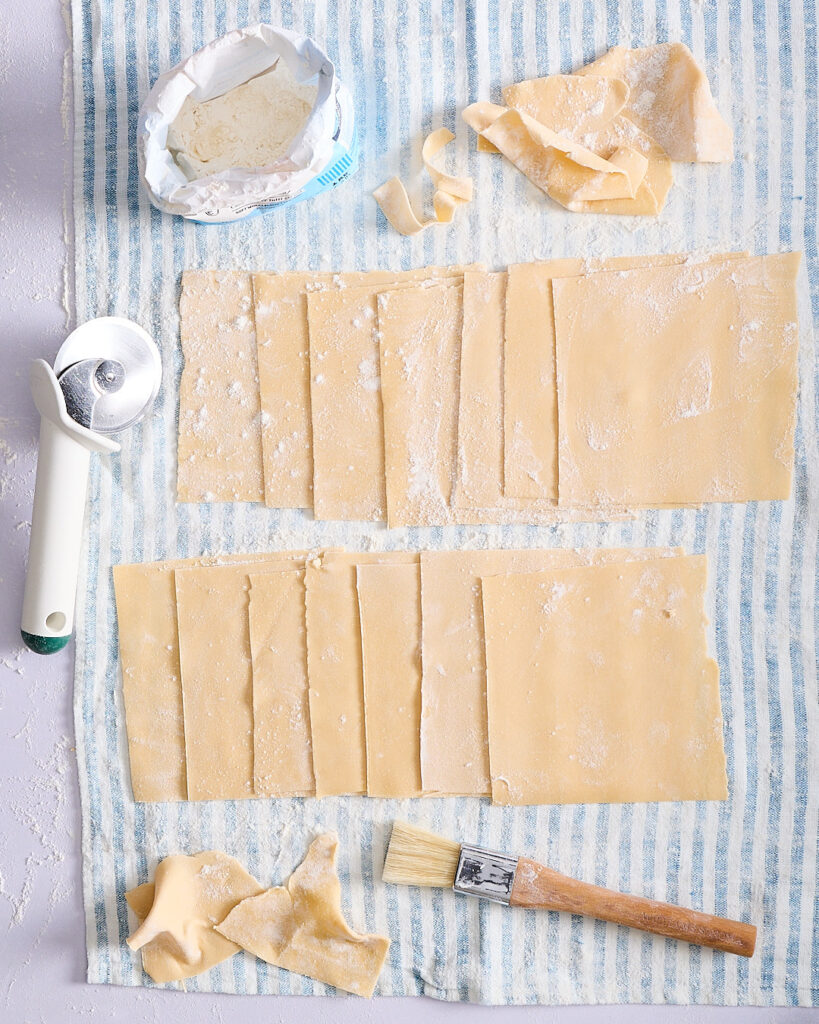
Homemade pasta sheets made with 00 flour, cut and drying on a tea towel—homemade egg pasta dough for homemade mushroom cannelloni.

You’ll find full instructions for producing super thin, silky pasta sheets in my easy homemade egg pasta dough. It’s the method I use for my best lasagna yet, and it’s worth the extra effort. A hand roller will get you close, but if you’ve got a stand mixer with a roller attachment, you can push the dough to the absolute limit of thinness—probably not something you’ll achieve by hand alone. 

If you’re using store-bought pasta, aim for the thinnest fresh lasagna sheets you can find. That’s how you’ll fit all four layers into the pan for this comfort food lasagna. 

For this cheesy beef lasagna, I used a 36cm x 26cm x 7cm rectangular stoneware baking pan and used 10 lasagne sheets—each sheet measuring 14cm x 20cm. The sheets that come out of my KitchenAid pasta roller are conveniently 14cm wide, so I use a pastry wheel to trim them to length after rolling. If you roll the dough to the thin setting (KitchenAid dial no. 6), the batch from my recipe yields about 15 lasagne sheets—enough to give you a buffer. 

There’s no need to pre-boil the pasta. Whether you’re using store-bought fresh sheets or making your own with my easy homemade egg pasta dough, the pasta will cook perfectly in the oven. And fresh pasta really does make a next level lasagna—super easy to layer with a silky, light result with none of the toughness or graininess you get from dried sheets. 

Prepping the spinach & cheese layer

Ingredients

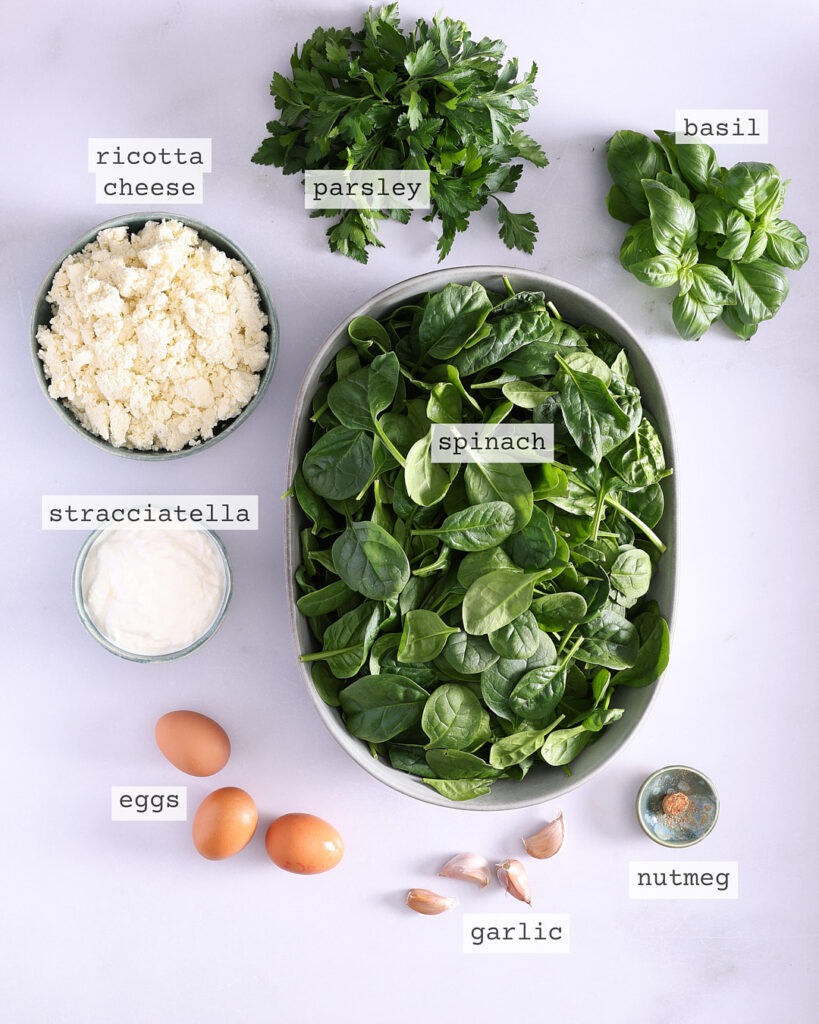
Spinach and cheese layer ingredients.

The spinach and cheese layer of this meat and cheese lasagna recipe includes: 

  • 600g fresh baby spinach leaves
  • 500g ricotta cheese 
  • 250g stracciatella cheese 
  • 4 large cloves garlic 
  • 3 large eggs 
  • Small bunch flat leaf parsley 
  • ½ small bunch basil 
  • ¼ teaspoon nutmeg 

It’s definitely occurred to me that my mum’s original cottage cheese layer was a very 1970s Canadian stand-in for Italian ricotta. And I was ready to embrace it. I’d planned to use creamy Australian-style cottage cheese and baby spinach as a nostalgic nod to the version I grew up with. 

But when I hit the shops, the cottage cheese shelves were bare. 

At first, I assumed it was a lingering post-pandemic supply chain glitch. But by the third supermarket with nothing in sight, I flagged down a shop assistant restocking yoghurts. She—actually—rolled her eyes and informed me it was all thanks to a viral TikTok video. Apparently, the world had collectively rediscovered cottage cheese. A recipe or fitness trend (I still don’t know which) had wiped out stock globally. 

If only I could have that kind of influence. 

But in this one instance, I think I’m grateful to TikTok—because it led me to a tub of stracciatella cheese. This is the gooey stuff you find inside burrata: strands of fresh mozzarella mixed with cream. And yes, you can now buy it in tubs. 

So, my next level lasagna was born. I reverted to traditional ricotta—not the smooth version, please—added the stracciatella, folded in baby spinach and garlic, and stirred through those essential Italian herbs: sweet basil and flat-leaf parsley. Full cheese layer method below.

Spinach best practice

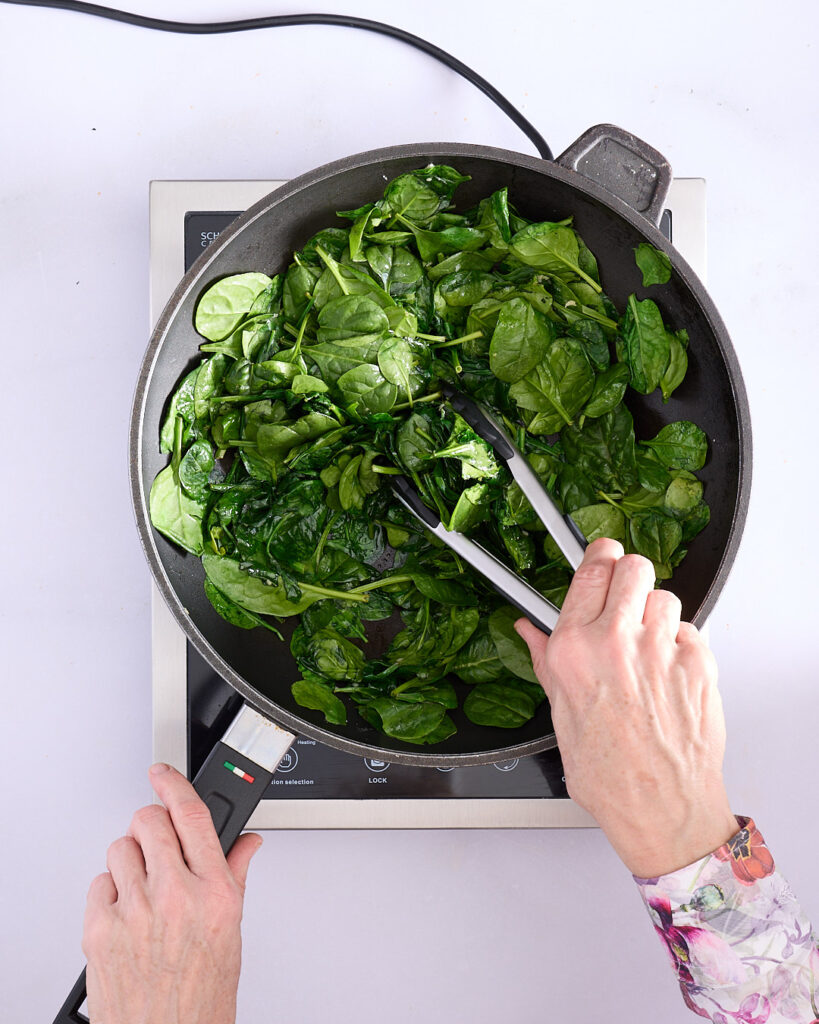
Sandra wilting baby spinach to be cooled and chopped.

Adding spinach to lasagna can be a tricky affair. Fresh or frozen is usually the debate—but either way, there’s the inevitable issue of just how much water spinach releases as it cooks. Sure, you can squeeze the liquid from thawed frozen spinach, but that doesn’t quite convince me it belongs in my next level lasagna. 

Fresh baby spinach is readily available in Australia, so I recommend using it whenever you can over frozen. And the easiest way to get it ready for the cheese layer is by wilting 600g of fresh spinach it in a large frying pan or wok. I use my wok (with a lid) and take the opportunity to start with a bit of olive oil and garlic.  Add the 4 large garlic cloves (crushed) —sauté for a few minutes just to soften the garlic. Then I throw in the spinach and turn up the heat. With just a few tosses, the spinach should stay a nice dark green and be fully wilted. 

Transfer to a colander and leave to cool slightly, then press firmly with the back of a spoon to squeeze out any excess liquid. Set the spinach aside to cool, then chop it roughly before adding to the cheese mixture. 

This simple prep step keeps your cheesy beef lasagna from turning watery, and helps every layer in my best lasagna yet hold its structure without sacrificing that deep spinach flavour.

This layer’s got my Mom’s tick of approval

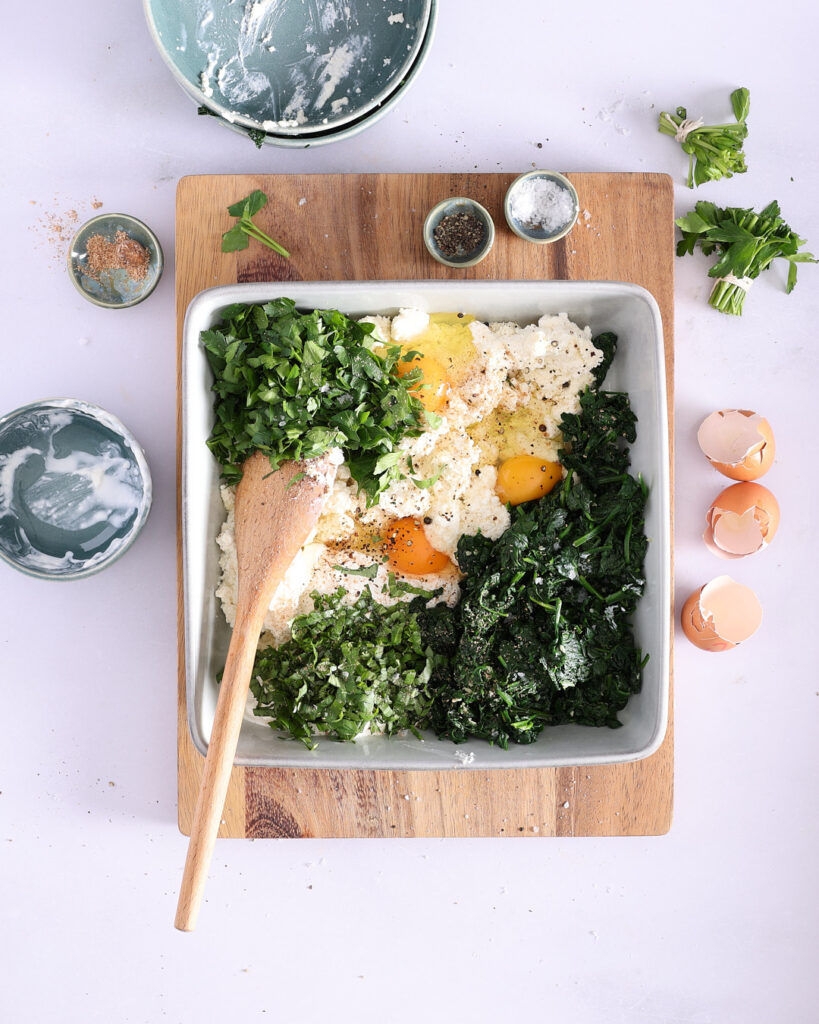
Mise en place for a generous middle layer in a cheesy beef lasagna.

To finish prepping the spinach and cheese layer, pick the leaves from the parsley and basil, discarding the stems. Chop the leaves fairly finely and add to a large mixing bowl with the rest of the ingredients—your chopped wilted spinach, 500g ricotta cheese, 250g stracciatella cheese, ¼ teaspoon ground or grated nutmeg, and 3 large eggs. 

On this occasion, it’s best to use your hands to combine the ingredients to ensure an even distribution of each element through the mixture. It’s not elegant work, but it’s worth it. 

I think this version of Mum’s cheese layer would get her tick of approval. It’s rich, savoury, and brings a fresh lift right through the centre of this meat and cheese lasagna recipe. A middle layer that makes my best lasagna yet not just comforting, but properly craveable. 

Putting it all together

Ingredients

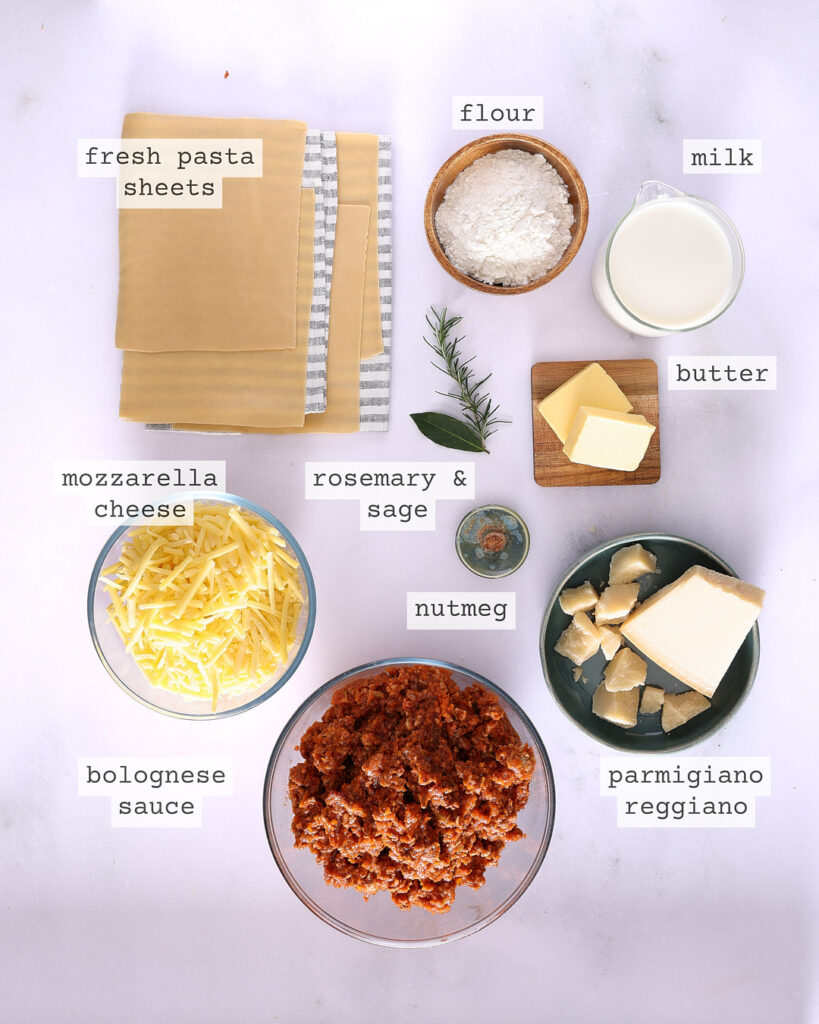
My best lasagna yet ingredients.

We’re into my best lasagna yet home stretch—you just need to make the béchamel sauce and then it’s time to start building this comfort food lasagna. To begin assembly, you’ll need: 

  • 8-10 sheets of fresh pasta sheets 
  • 1.5kg bolognese sauce 
  • 750g spinach cheese mix 
  • 1kg béchamel sauce 
  • 650g-800g mozzarella cheese
  • 250 Parmigiano Reggiano cheese 

Whether you’re feeding a crowd or just want leftovers for the best desk lunch of your life, this is the meat and cheese lasagna recipe to go all in on. 

Béchamel sauce

Here’s my take on a classic béchamel sauce, and yes, it breaks a few rules:  

  • 1 litre full cream milk
  • 100g white flour 
  • 100g unsalted butter 
  • 1 x bay leaf (fresh or dry) 
  • 1 x sprig of fresh rosemary 
  • ¼ teaspoon ground nutmeg 
  • salt & white pepper  

I am not a believer in sweating over a roux—where you melt butter, add flour, and toast the paste until golden and nutty. Yes, I know it’s the béchamel of the 19th-century French canon. But I haven’t found it improves this sauce enough to justify the time. 

Instead, I amp up the flavour by gently heating the milk with a bay leaf and rosemary and letting it infuse while I get on with other parts of the meat and cheese lasagna recipe. No roux. No drama. Just one of the five French “mother sauces” getting a 21st-century makeover. 

This recipe yields just under 1.1kg of béchamel sauce, which is exactly what you’ll need to build the final layers of my best lasagna yet. The béchamel sauce can me made 1 to 2 days in advance of assembling your lasagna and kept in the fridge until needed.   

The 21st century technique

I use a Thermomix for all my sauces. Add the 100g white flour and 100g butter to the Thermomix bowl, strain in the infused milk (discarding the herbs), and cook for 8 minutes at 90°C on speed 4. Check the consistency—it should thickly coat the back of a spoon. If it needs more time, keep cooking in 2-minute bursts until you get the texture you’re after. 

Season with salt, finely ground white pepper, and ¼ teaspoon nutmeg—either pre-ground or freshly grated. 

No Thermomix? Use a blender or food processor instead. Blend the flour and butter with the strained milk, then pour into a medium saucepan and stir over medium heat until the sauce thickens. Done. 

This technique gives you a lump free silky and flavourful béchamel to build even more depth into your next level lasagna.

Assembling the cheesy beef lasagna

First layer

  • thin layer of bolognese sauce to coat the bottom of the pan 
  • 2 x fresh pasta sheets 
  • bolognese sauce 
  • béchamel sauce 
  • mozzarella & Parmigiano Reggiano cheese  

Second layer  

  • 2 x fresh pasta sheets  
  • bolognese sauce 
  • béchamel sauce 
  • mozzarella & Parmigiano Reggiano cheese  

Third layer  

  • 2 -3 x fresh pasta sheets  
  • spinach and cheese mixture 
  • mozzarella & Parmigiano Reggiano cheese  

Fourth layer  

  • 2-3 x fresh pasta sheets  
  • bolognese sauce 
  • béchamel sauce 
  • mozzarella cheese & Parmigiano Reggiano cheese  

Let me step it out for you with some pictures.

First and second layers

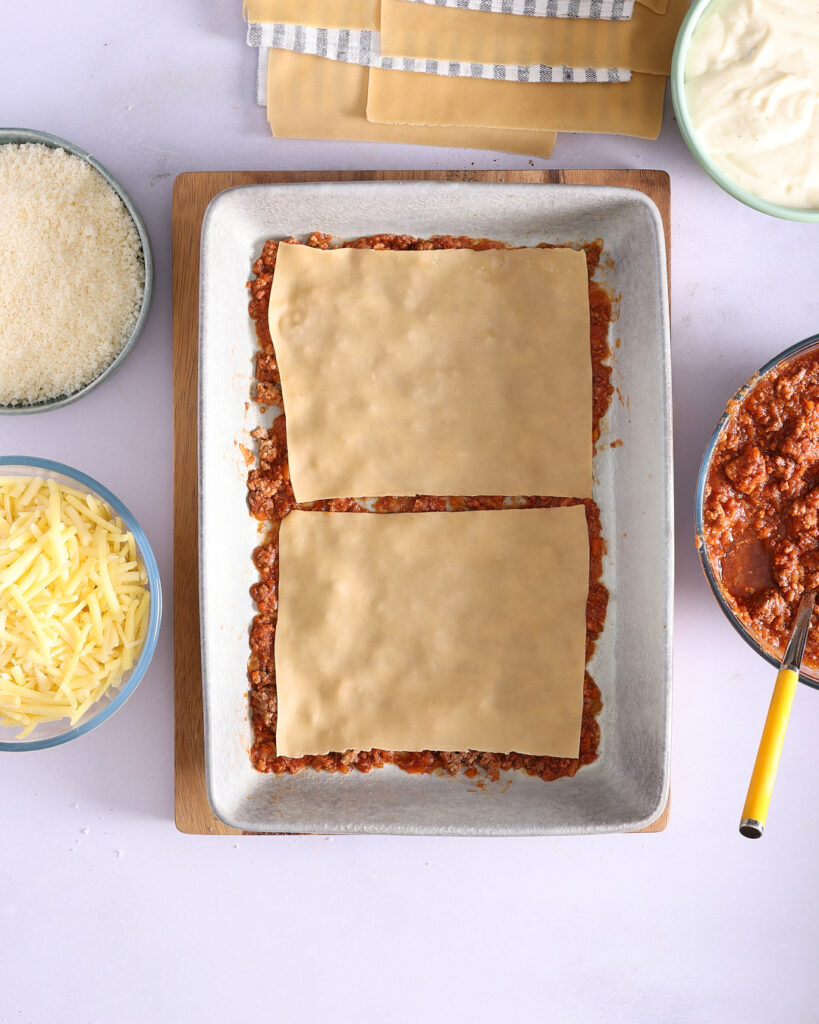
Fresh lasagna sheets layered over bolognese sauce.
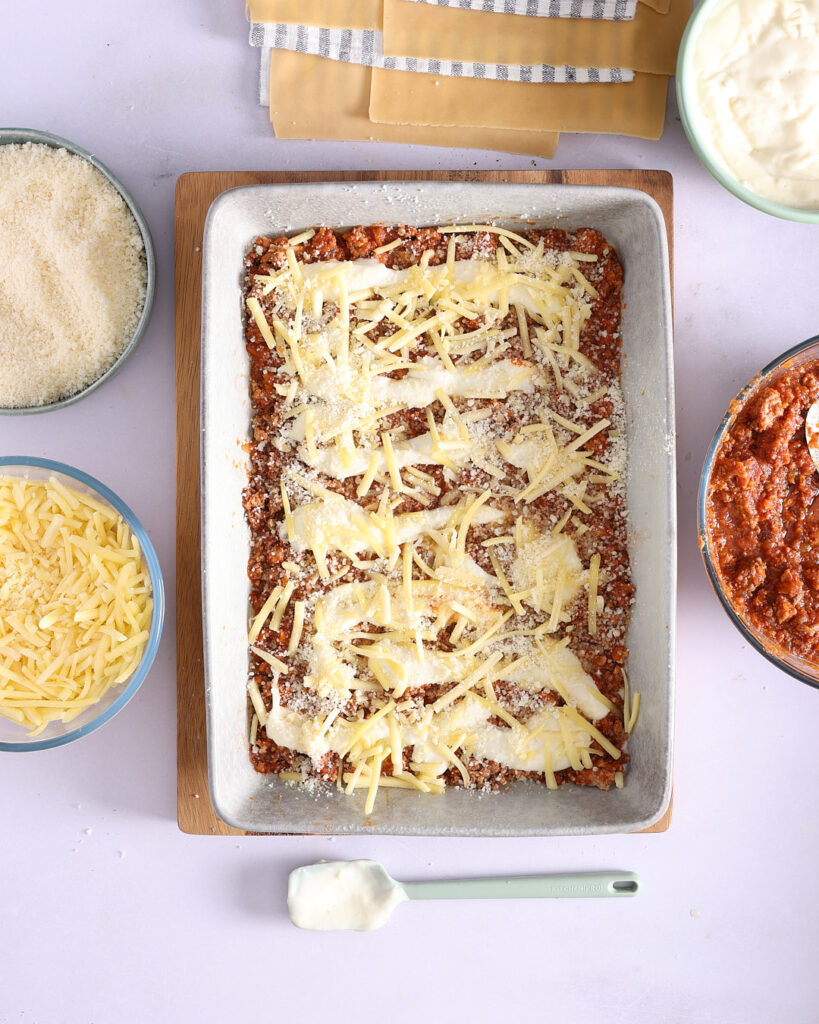
Layering béchamel, shredded mozzarella, and grated Parmigiano Reggiano cheese over the bolognese sauce.

Preheat the oven to 170°C fan forced (190°C conventional).  

To assemble the lasagna, I start by spraying the lasagna pan with oil – but honestly I have no proof it prevents this comfort food lasagna from sticking. Follow this with a thin layer of bolognese sauce to prevent the first pasta sheets from sticking to the bottom of the pan when baking.

I eyeball the bolognese sauce into three portions for the layers, but if you want to be precise you could weigh it out as you layer.

Place two pasta sheets across the pan, making sure to leave a gap of 1–1.5cm between each of the sheets and the sides of the lasagna pan. The pasta will expand while baking and fill those gaps.

Top the pasta sheets with one-third of the bolognese sauce. I break up any large lumps of meat with my fingers to assist in keeping each layer level as I go. Press down lightly with each addition of bolognese sauce and each layer of pasta sheets.

As you can see, there’s no need to spread the béchamel sauce evenly across the pan—just drizzle it (if warm) or spoon it (if cold) across the bolognese sauce and lightly smooth it out, trying to avoid mixing it into the meat sauce. Also note, you need at least double the amount of béchamel sauce for the top layer.  See the image below.

Top with mozzarella and Parmigiano Reggiano cheese. I use a light sprinkling of cheese between the layers. Again, I am looking ahead to the top layer where I’m going to need about half of the cheeses to cover the top of the lasagna.

Repeat this process for the second meat layer of this cheesy beef lasagna.

Third and fourth layers

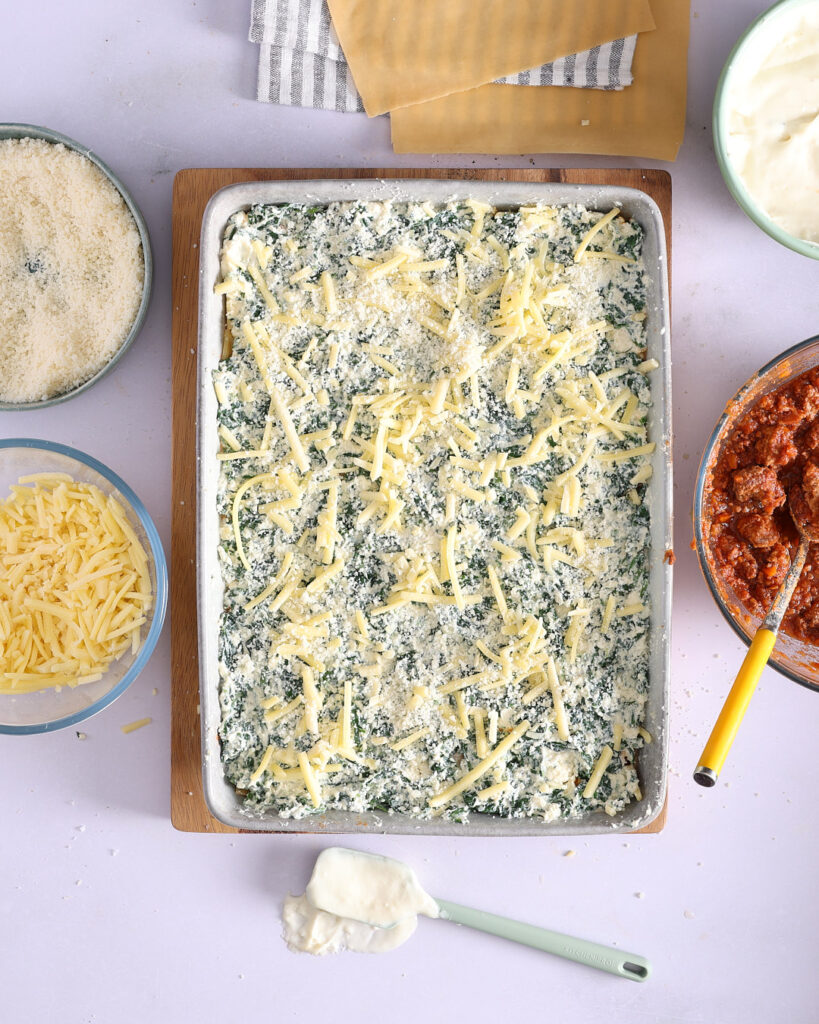
Spinach and cheese layer spread over fresh pasta sheets.
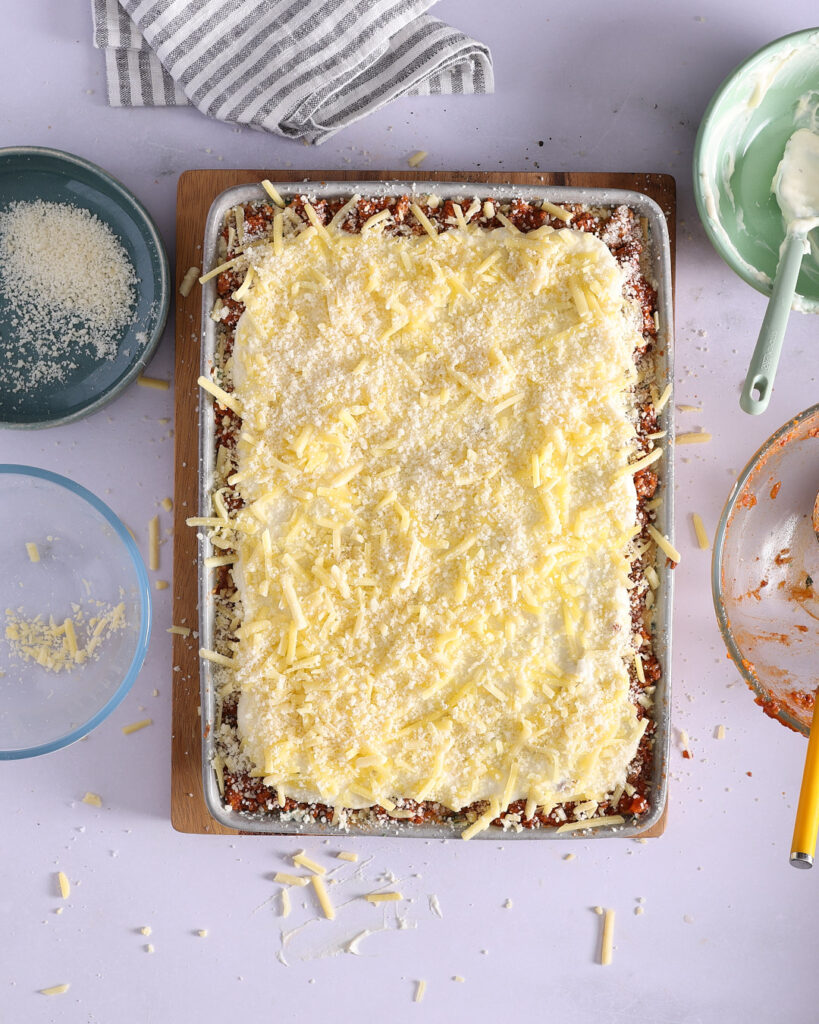
Ready for baking with a thick layer of béchamel sauce, topped with shredded mozzarella, Parmigiano Reggiano, and flecks of stracciatella cheese.

For the spinach and cheese layer, start with 2 pasta sheets. My pan starts to get wider at this point, so I cut a few extra strips of pasta to fill in the larger gaps that appear—always being mindful to leave a 1–1.5cm gap around the edge. That margin gives the pasta room to expand while baking without buckling the structure. 

Spoon in the spinach and cheese mixture and press it in gently with your fingers to get an even layer. Then sprinkle lightly with mozzarella and Parmigiano Reggiano

Add another round of pasta sheets to build your final layer—again adding strips of additional pasta where needed but always leaving space at the edges. Spoon on the last of your bolognese sauce and press it gently to level. 

Next the top layer of béchamel. Spread it generously across the bolognese, but stop just short of the edges. Leaving a ring of bolognese showing helps the lasagna vent while it bakes, and also keeps the cheesy top from welding itself to the sides of the pan. And honestly? It just looks better that way. The finish is cleaner, more intentional—and a little more next level lasagna. Finish with a generous covering of mozzarella and Parmigiano Reggiano. 

Baking my best lasagna yet

Your oven should be preheated to 170°C fan forced (190°C conventional).   

Loosely cover the lasagna with foil. I spray the underside with a little oil to reduce the chance of losing your top layer of cheese when you peel it off later. 

I’ve tried a few different techniques to avoid that tragic cheese peel. When using a stainless-steel lasagna pan, I’ve clamped a second identical pan upside down on top with bulldog clips—worked a treat. More recently, when I needed a photo-worthy finish, I built a full foil tent using extra-wide aluminium foil to keep everything clean and steam-friendly. That one’s for when you’ve got something to prove. 

Bake for 60 minutes, then start checking. The exact timing depends on how deep your lasagna is and how hot your oven runs. Remember—all the ingredients are pre-cooked, so your goal is to bring the whole thing up to temperature safely, allow the pasta to fully hydrate, and melt the cheeses into one unified, bubbling blanket of deliciousness. 

Look for bubbling edges and use an instant-read thermometer to check for an internal temperature of at least 80°C. If you don’t have one, a stainless-steel knife inserted into the centre should come out piping hot to the touch. 

Remove the foil and turn the oven up to 200°C fan forced (180°C conventional) and move the rack to the top of the ovenReturn the lasagna to the oven and watch carefully until the cheese is golden brown.   

Rest then serve this next level lasagna

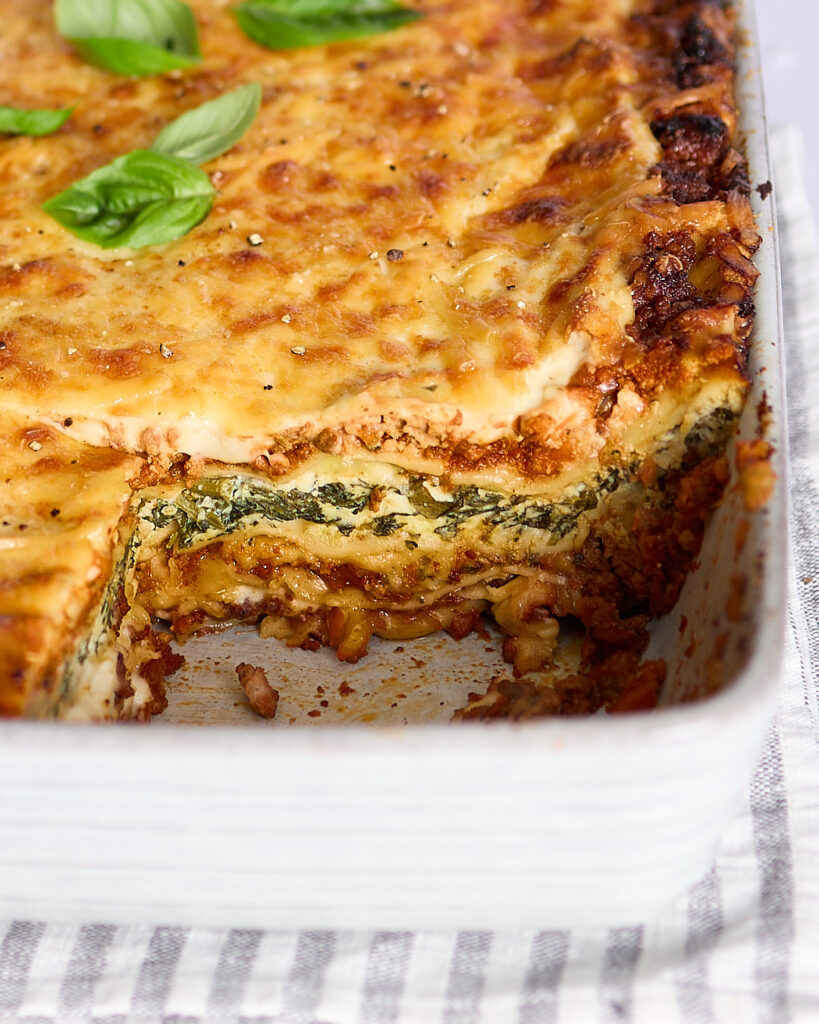
Closeup of a tray of my best lasagna with a slice served to show the rich layers inside.

Once baked, this cheesy beef lasagna needs a solid rest before slicing in. I know it’s tempting—but don’t serve it straight out of the oven. If you do, the béchamel and bolognese sauce will still be fluid and the layers won’t hold. Give it time. 

Let the lasagna rest on the bench for at least 30 minutes, uncovered. This gives the pasta time to fully absorb the remaining moisture and the cheese layer time to firm up just enough for clean slicing. If you aren’t serving the lasagna right away, after an hour it can be left in a warm oven or warming drawer (85°-100°C) for 1-2 hours before serving.   

If your meat and cheese lasagna recipe is part of a larger meal and you’re juggling oven space or prep, this rest period gives you a built-in pause to get everything else sorted. It will still be piping hot when you serve—just without the puddle of molten cheese on the plate. 

This rest might be the hardest part, but it’s what takes this from messy and molten to structured and spectacular. You want to make sure this comfort food lasagna lives up to its name – my best lasagna yet! 

My Best Lasagna Yet

My mum was a reluctant cook—but she was actually a really great one. She was a single mum, and I think the stress she felt making “special” dishes for her kids—like lasagna—came from a sharp awareness of the cost of every single ingredient she used. Her meat and cheese lasagna recipe most likely came from a 1970s issue of Chatelaine—the iconic Canadian women's magazine and her cooking bible.
What made my mum’s lasagna stand out was the hidden layer of spinach and cheese sandwiched between the meat sauce layers. There was no béchamel sauce in sight. And that cheese layer? Made from dry curd cottage cheese—a grocery store adaptation of the homemade curd cheese that came with countless immigrants to Canada. When my culinary horizons broadened, I realised that cottage cheese was standing in for Italian ricotta.
Prep Time 1 hour 15 minutes
Cook Time 30 minutes
Course Main Course, Pasta
Cuisine Italian
Servings 6 people

Equipment

  • 36cm x 26cm x 7cm rectangular baking dish
  • Digital scales
  • 5L pasta pot (or 3.5L Dutch oven)
  • Large frying pan
  • Food processor (optional)
  • Large mixing bowl
  • Instant read thermometer (optional)
  • Microplane (optional, for fresh nutmeg)

Ingredients  

Egg pasta dough:

  • 1 x Easy Homemade Egg Pasta Dough recipe (alternatively, one package fresh lasagna sheets)

Bolognese sauce:

  • 1 kg pork mince
  • 1 kg beef mince
  • 200 g streaky bacon (no rind)
  • 2 large carrots
  • 3 celery sticks
  • 2 medium onions
  • 6 large garlic cloves
  • 4 – 5 sprigs fresh sage
  • 4 – 5 sprigs fresh oregano
  • 2 sprigs fresh rosemary
  • 2 x 700g bottles passata
  • 2 tablespoons tomato paste
  • 300 ml red wine
  • 2 tablespoons soy sauce
  • 2 tablespoons brown sugar
  • 500 ml low salt beef broth
  • 300 ml water
  • 15 g gelatine (optional)
  • 2 tablespoons red wine vinegar

Spinach and cheese mixture:

  • 500 g ricotta cheese
  • 250 g stracciatella cheese
  • 600 g fresh spinach
  • 4 large garlic cloves (crushed)
  • ¼ teaspoon nutmeg (ground or freshly grated)
  • 3 large eggs
  • 1 small bunch Italian parsley
  • 1/2 small bunch fresh basil

Béchamel sauce:

  • 1 litre full cream milk
  • 100 g white flour
  • 100 g unsalted butter
  • 1 bay leaf (fresh or dried)
  • 1 sprig fresh rosemary
  • ¼ teaspoon nutmeg (ground or freshly grated)
  • salt and white pepper

Assembly:

  • 8 – 10 fresh pasta sheets
  • 1.5 kg bolognese sauce
  • 750 g spinach and cheese mixture
  • 1 kg béchamel sauce
  • 650 g – 800g mozzarella cheese (grated)
  • 250 g Parmigiano Reggiano cheese (finely grated)

Instructions 

Assemble ingredients and equipment

  • Gather all ingredients and the necessary equipment before you begin.

Bolognese sauce

    Brown the mince:

    • In batches, brown 1kg pork mince and 1kg beef mince in a large frying pan on medium-high heat.
    • Leave each batch to caramelise well on one side.
    • Then transfer each batch to a 5L pasta pot once browned.

    Prep vegetables and bacon:

    • Chop 200g streaky bacon into approx. 5mm pieces.
    • Peel 6 garlic cloves, two onions, and three celery sticks - trim ends off the carrots.
    • Chop the carrots, onions and celery into rough 5mm pieces or process in food processor - pulsing the carrots and then adding onions and celery, pulse again.
    • Add a couple tablespoons of oil to the large frying pan over a medium heat.
    • Add the chopped bacon and fry until the bacon starts to colour.
    • Then add the carrots, onions, and celery to the pan.
    • Using a garlic crusher, crush the garlic directly into the pan.
    • Sauté the vegetables with the bacon until slightly softened.
    • Then pour in 300ml red wine and cook until the wine has evaporated.
    • Transfer everything to the pasta pot.

    Add the liquids, herbs etc:

    • Add 2 x 700g bottles passata, 2 tablespoons tomato paste, 2 tablespoons soy sauce, 2 tablespoons brown sugar, and 500ml low salt beef broth to the pot.
    • Also add the fresh sage, oregano, and rosemary sprigs. You can tie them with kitchen string or toss them into a muslin bag so you can pull them out at the end without woody bits left behind.
    • Bloom 15g gelatine in the 300ml water and set aside.

    Simmer and reduce:

    • Bring the sauce to a boil over medium-high heat. Then reduce the temperature to medium-low heat.
    • Add the bloomed gelatine mix and stir through until completely dissolved.
    • Keep the sauce simmering for 2–3 hours, stirring occasionally to prevent sticking and to allow the sauce to slowly reduce and concentrate – noting it needs to retain sufficient liquid for the fresh lasagna sheets to absorb.

    Finish the sauce:

    • Once the meat is tender and sauce reduced, remove from the heat.
    • Season to taste with salt and pepper.
    • Then stir in the 2 tablespoons red wine vinegar to finish.
    • You might also want to add another pinch of brown sugar to balance the acidity—taste and adjust.

    Cool safely:

    • If not using immediately, cool the bolognese quickly. Let the sauce cool on the bench for about 30 minutes.
    • Then transfer it to the fridge in shallow containers.
    • Ensure the centre of the sauce reaches below 5°C within 4 hours, as per Australian Food Standards.

    Preparing the pasta sheets:

    • I use a 36cm x 26cm x 7cm rectangular stoneware baking pan and layer it with 10 fresh lasagne sheets—each one cut to 14cm x 20cm. If you’re using easy homemade egg pasta dough recipe, roll the dough thin. The KitchenAid roller gives you pasta sheets about 14cm wide, and you can trim them to 20cm lengths. The full batch of dough will give you around 15 lasagne sheets, so you’ve got a few extra sheets. Whether you’re using store bought or homemade, don’t pre-cook the sheets. The moisture in the sauces will hydrate them during baking.

    Spinach and cheese mixture:

    • Start by adding olive oil to a large frying pan or wok with a lid on medium heat.
    • Add 4 large garlic cloves (crushed) —sauté for a few minutes just to soften the garlic.
    • Add 600g fresh spinach and put lid on, turn the spinach once or twice until fully wilted but still bright green.
    • Transfer to a colander and leave to cool slightly, then press firmly with the back of a spoon to squeeze out any excess liquid.
    • Once cool enough to handle, chop the spinach roughly.
    • In a large mixing bowl, combine 500g ricotta cheese, 250g stracciatella cheese, and the wilted spinach.
    • Add ¼ teaspoon ground or freshly grated nutmeg, 3 large eggs, 1 small bunch finely chopped Italian parsley, and ½ small bunch finely chopped fresh basil.
    • Season with salt and pepper, then mix until evenly combined.

    Béchamel sauce:

    • In a medium saucepan, add a bay leaf and rosemary spring to 1 litre milk.
    • Heat on medium heat until just before boiling point, remove from heat and leave to steep.
    • Add 100g unsalted butter and 100g white flour to the bowl of a food process or blender.
    • Strain the cooled milk into the bowl, discarding the herbs.
    • Blend the flour and butter with the strained milk, then pour back into the saucepan and stir over medium heat until the sauce thickens and coats the back of a spoon.
    • Season with salt and white pepper, then add ¼ teaspoon ground or freshly grated nutmeg.

    Assembly

      Get organised:

      • Preheat the oven to 170°C fan forced (190°C conventional).
      • Gather the components for assembling the lasagna: lasagna pan (I use a 36cm x 26cm x 7cm rectangular baking dish), about 1.5kg bolognese sauce (divide into three equal portions), 750g spinach and cheese mixture, 1kg béchamel sauce (you will need ½ of the sauce for the top meat layer and ¼ for each of the other two meat layers), 650g–800g grated mozzarella, and 250g finely grated Parmigiano Reggiano (again you will need more cheese for the top layer than in between the other layers).
      • Spread a thin layer of bolognese on the base of the baking dish. 

      First meat layer:

      • Add your first pasta layer using 2 sheets placed across the pan and always leaving a 1–1.5cm gap around the edges.
      • Layer bolognese, then drizzle or spoon the béchamel and top with some mozzarella and Parmigiano Reggiano.

      Second meat layer:

      • Repeat as per the first layer.

      Spinach and cheese layer:

      • Use 2 more sheets. If needed, cut extra strips of pasta to fill larger gaps—again leaving a margin around the edges.
      • Add the spinach and cheese mixture and gently press to level.
      • Sprinkle lightly with mozzarella and Parmigiano Reggiano cheese.

      Third meat layer:

      • Repeat as per the first layer with placing the pasta sheets and adding bolognese sauce.
      • Next the final generous layer of béchamel. Spread it generously across the bolognese but stop just short of the edges. Leaving a ring of bolognese showing helps the lasagna vent while it bakes and keeps the cheesy top from welding itself to the sides of the pan.
      • Finish with a generous covering of mozzarella and Parmigiano Reggiano.

      Baking the lasagna:

      • Cover the lasagna loosely with foil and place it on a baking tray to catch any drips.
      • Bake at 170°C fan forced (190°C conventional).
      • After 60 minutes, check the temperature of the lasagna. Look for bubbling edges and use an instant-read thermometer to check for an internal temperature of at least 80°C. If you don’t have one, a stainless-steel knife inserted into the centre should come out piping hot to the touch.
      • Then remove the foil, increase the oven temperature to 200°C fan forced (180°C conventional), and move the rack to the top of the oven.
      • Return the lasagna to the oven and bake until the cheese is golden brown, watching carefully.

      Rest then serve:

      • Once baked, let the lasagna rest on the bench for at least 30 minutes, uncovered. This allows the pasta to absorb remaining moisture and the cheese layer to firm up for clean slicing. If not serving straight away, it can be kept in a warm oven or warming drawer (85°–100°C) for 1–2 hours. This resting period ensures the lasagna holds its shape when sliced.

      Just before you cook with abandon…

      Fat content of the meat: The fat content is up to you but I don’t recommend using ‘regular’ mince and definitely not ‘extra lean’. I land in the middle and use lean beef and pork mince—each around 10–12% fat—plus 200g of streaky bacon to boost flavour and add back richness. If you’re feeling virtuous you can used short cut bacon. The combination is deliberate: you get deep flavour without ending up with a greasy sauce, and the bacon fat helps carry the sauce through a long simmer and bake without it drying out.
      Do you have to brown the mince? Yes. Yes, you do – but how much you really need to brown the meat is still up for debate. You don’t need to meticulously brown every millimetre of the mince. You just need some of that lovely deep crust of caramelised meat to deliver the flavour base for the sauce—and for the best comfort food lasagna. My compromise? Brown one side. That’s it.
      What is gelatine doing in bolognese sauce? Good question – it’s just science. It’s what slow-simmered meat sauces naturally extract from bones and collagen. Adding powdered gelatine boosts body and silkiness, especially helpful when using lean or extra lean mince.
      Don’t over reduce the sauce: Yes, you’re simmering for over an hour—but don’t take it too far. This isn’t a ragù that needs to be thick and clinging. The sauce has to retain enough liquid for the pasta sheets to absorb while baking. If it gets too dry, the finished lasagna will be tight and stodgy rather than rich and luscious. You're looking for a balance—flavour that's concentrated, tender mince but still loose enough to keep the pasta supple.
      Can I use dry herbs? You can. Use about one-third the quantity listed for fresh, and add them in early so they’ve got time to rehydrate and mellow. But if you’ve got fresh herbs, use them—they bring a brightness you won’t get from dried.
      Food safety: Cool the bolognese sauce on the bench for about 30 minutes before refrigerating. You need to get it below 5°C within four hours, as per Australian Food Standards. And once baked, make sure the leftovers go into the fridge or freezer promptly. Refrigerated leftovers should be consumed within 2-3 days.
      Fresh versus store bought lasagna sheets: Fresh pasta sheets cook quickly and absorb sauce better than dried ones. If using store bought, choose the fresh kind in the fridge section. Dried or par-cooked pasta won’t give the same layered texture and can throw off your moisture balance. If you have a stand mixer and a pasta roller attachment, why not try my easy homemade egg pasta dough recipe.
      Spinach best practice: Adding spinach to lasagna can be a tricky affair. Fresh or frozen is usually the debate—but either way, there’s the inevitable issue of just how much water spinach releases as it cooks. Fresh baby spinach is readily available in Australia, so I recommend using it whenever you can over frozen. And the easiest way to get it ready for the cheese layer is by wilting the spinach it in a large frying pan or wok. With just a few tosses, the spinach should stay a nice dark green and be fully wilted. Transfer to a colander and leave to cool slightly, then press firmly with the back of a spoon to squeeze out any excess liquid.
      21st century versus 19th century – the roux affair: I am not a believer in sweating over a roux for a béchamel sauce—where you melt butter, add flour, and toast the paste until golden and nutty. Yes, I know it’s the béchamel of the 19th-century French canon. But I haven’t found it improves this sauce enough to justify the time. Instead, I amp up the flavour by gently heating the milk with a bay leaf and rosemary and letting it infuse. No roux. No drama. Just one of the five French “mother sauces” getting a 21st-century makeover. Scald the milk with the bay leaf and rosemary and leave to infuse. Blend the flour and butter with the strained milk, then pour back into the saucepan and stir over medium heat until the sauce thickens and coats the back of a spoon. Season with salt and white pepper, then add ¼ teaspoon ground or freshly grated nutmeg.
      Thermomix béchamel sauce method. I use my Thermomix for all my cooked sauces. Add the flour and butter to the Thermomix bowl, strain in the infused milk (discarding the herbs), and cook for 8 minutes at 90°C on speed 4. Check the consistency—it should thickly coat the back of a spoon. If it needs more time, keep cooking in 2-minute bursts until you get the texture you’re after.
      Adjusting for size of your pan: My pan is 36cm x 26cm x 7cm, which fits ten 14cm x 20cm pasta sheets neatly. If you’re using a different sized dish, you’ll need to cut your pasta sheets accordingly—and possibly cut back on filling or add more. Just keep that 1–1.5cm margin around the edges of the pasta so it all has room to expand. And don’t overfill the pain – you want to stop at least 1cm short of the top of the pan. Putting a tray under the lasagna pan will catch any escaping cheese or sauce.
      Why resting a lasagna matters: Straight from the oven, it’s molten chaos. Give it time—30 -45 minutes uncovered on the bench will pay off when it comes time to portion it up and serve. The layers will set, the béchamel will firm, and you’ll get clean slices instead of a cheesy puddle.
      Keyword bolgnese sauce, cheesy beef lasagna, meat and cheese lasagna recipe

      One Response

      1. 4 stars
        Hello there, just became aware of your blog through Google,
        and found that it is really informative. I am gonna watch out for brussels.
        I’ll appreciate if you continue this in future. Lots of people will be benefited
        from your writing. Cheers!

      Leave a Reply

      Your email address will not be published. Required fields are marked *

      Recipe Rating


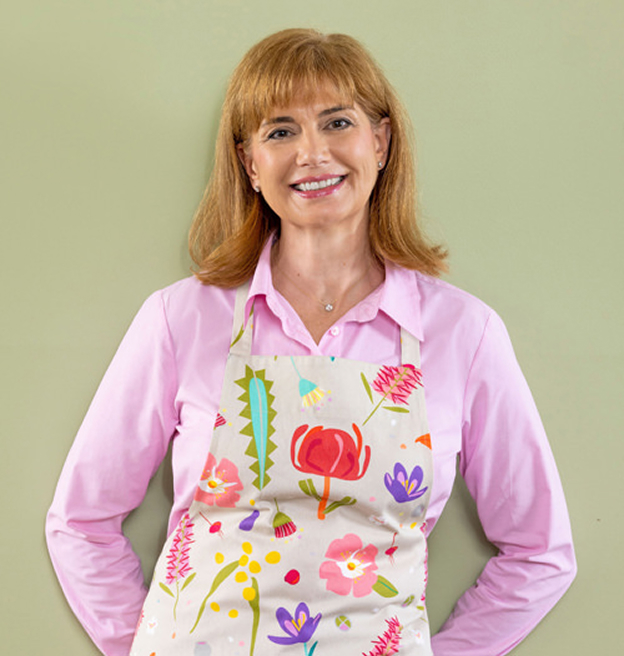
      Hi, I'm Sandra!

      I live by the words of Harriet Van Horne and I will be exploring every possible way to bring Harriet’s words to life in my kitchen.

      Recipes

      Discover delicious featured food recipes! From quick meals to gourmet delights, Sandra offer inspiring dishes for every occasion. Explore, cook, and enjoy flavorful creations today.

      You might also like..

      Yoghurt Coeur à la Crème with Grapefruit and Strawberry Compote

      Christmas Fruit Mince Tarts

      Salsa Verde Mayo Chicken Kebab

      Green Goddess Salmon Salad

      Subscribe

      Subscribe to my newsletter for a chance to win a FREE APRON (drawn monthly) as well as cooking tips, recipes, offers and exclusive content.

      "*" indicates required fields