Recipes

Korean-style Pork Burger with Fresh Nashi Kimchi
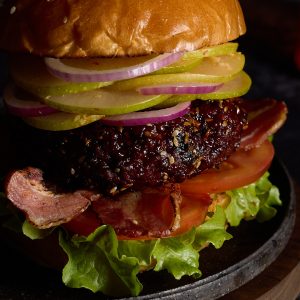
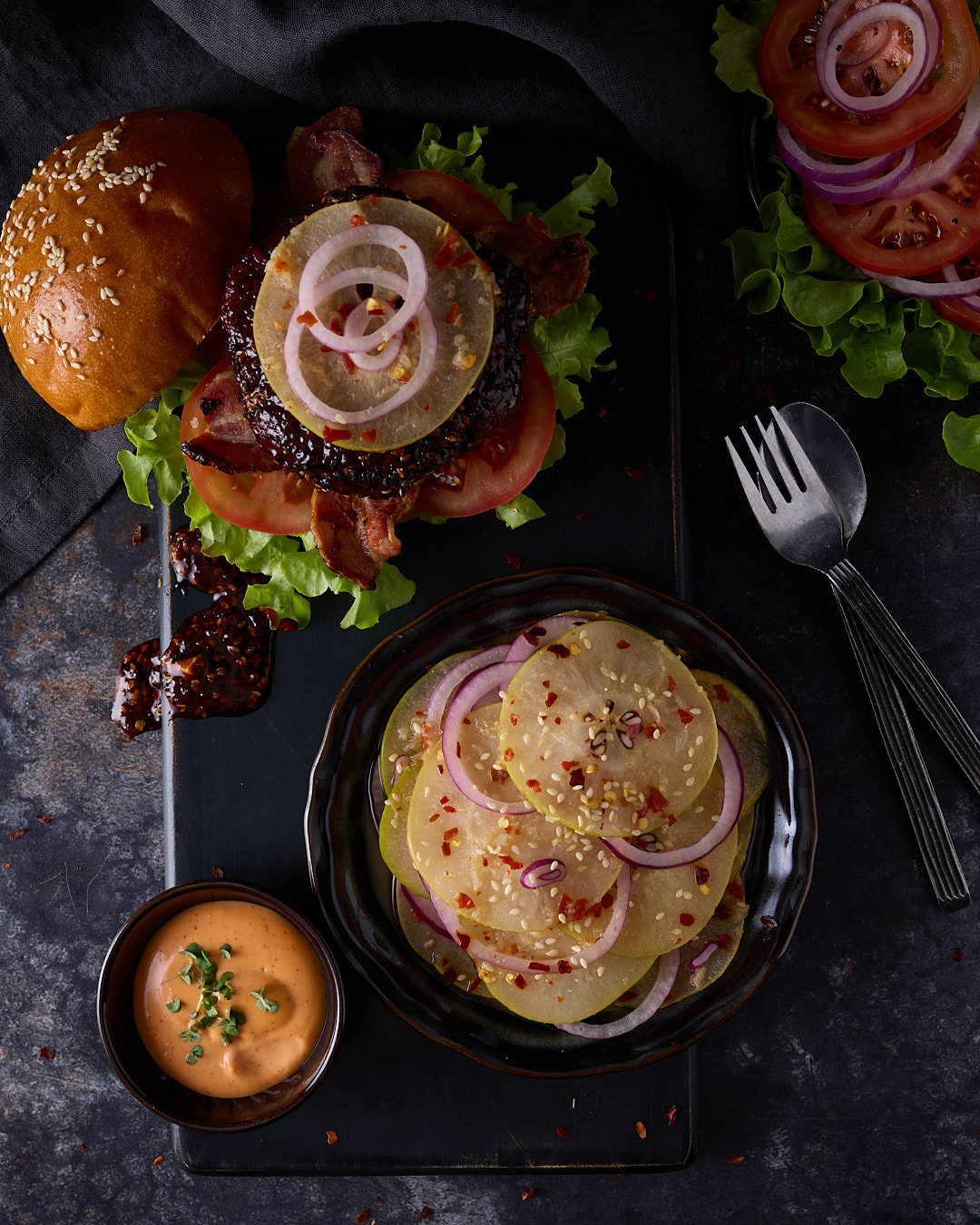
Korean-style pork burger with gochujang glazed pork patty, streaky bacon, lettuce, tomato, fresh nashi kimchi and spicy mayo on a brioche bun, served open on a dark board alongside a bowl of fresh nashi kimchi with red onion, chilli flakes and sesame seeds, and a small bowl of gochujang mayo, on a dark moody surface with fork and spoon alongside.

My Korean-style pork burger grew out of my love of kimchi. I am always in pursuit of pickle-y additions to my meals. When first introduced to this Korean fermented side dish, I assumed ‘kimchi’ was its specific name. I’ve caught up a bit since and now understand that ‘kimchi’ is a collective term for vegetable dishes that have been salted, seasoned, and fermented—the wombok version being baechu kimchi. And it’s the first side dish I reach for when eating out at a Korean restaurant. 

I was sure it would be the perfect ‘pickle’ for a pork burger with Korean BBQ sauce. But I found the fermented baechu kimchi just didn’t work in the assembled burger—with the bacon, tomato, lettuce, and mayo, it was a flavour too far. 

Fortune had it that I’d been gifted The Korean Cookbook by Junghyun Park and Junyoon Choi, Phaidon, 2023. They have a whole chapter on kimchi, which introduced me to the concept of fresh kimchi—known as geotjeori. This fresh, salad-like version is not fermented and often incorporates fruit. I’ve taken that idea and landed on a fresh nashi kimchi with red onion. It’s crisp, fresh, and sweet, with just the right amount of kick from the kimchi seasoning. It’s perfect with a gochujang glazed pork burger—but just as good alongside a simple pork chop. 

Let me break it down for you. 

Ingredients

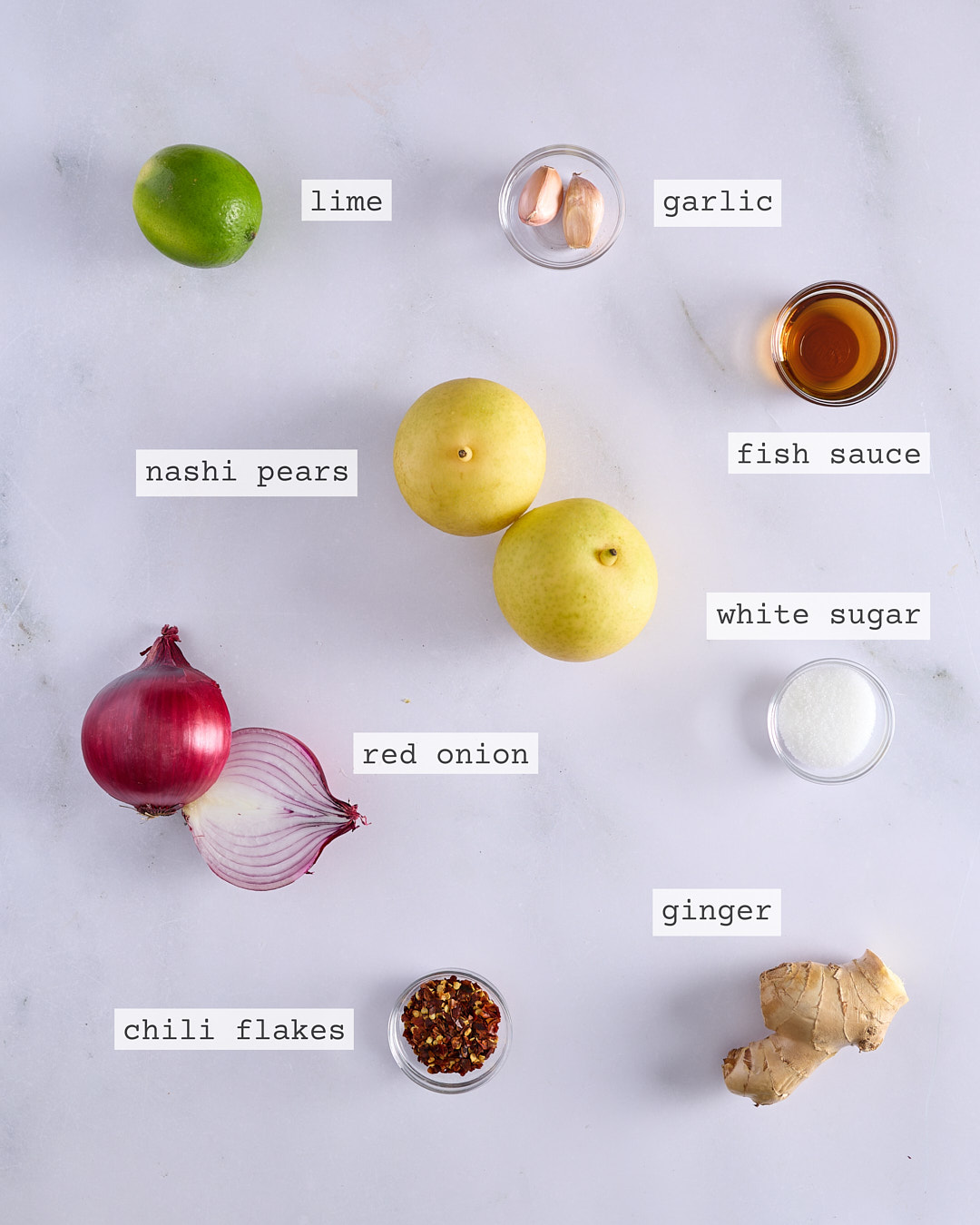
Fresh nashi kimchi ingredients

Flat lay of ingredients for fresh nashi kimchi including nashi pears, red onion, chilli flakes, garlic, ginger, fish sauce, white sugar and lime, each clearly labelled on a white marble surface.
  • 400g nashi pears (2 large pears) 
  • 1 small red onion 
  • 1 tablespoon chilli flakes 
  • 2 medium garlic cloves (crushed) 
  • 2 teaspoons finely grated fresh ginger 
  • 2 teaspoons caster sugar 
  • 1 tablespoon fish sauce 
  • 2 tablespoons fresh lime juice (1 large lime)

Gochujang pork burger ingredients

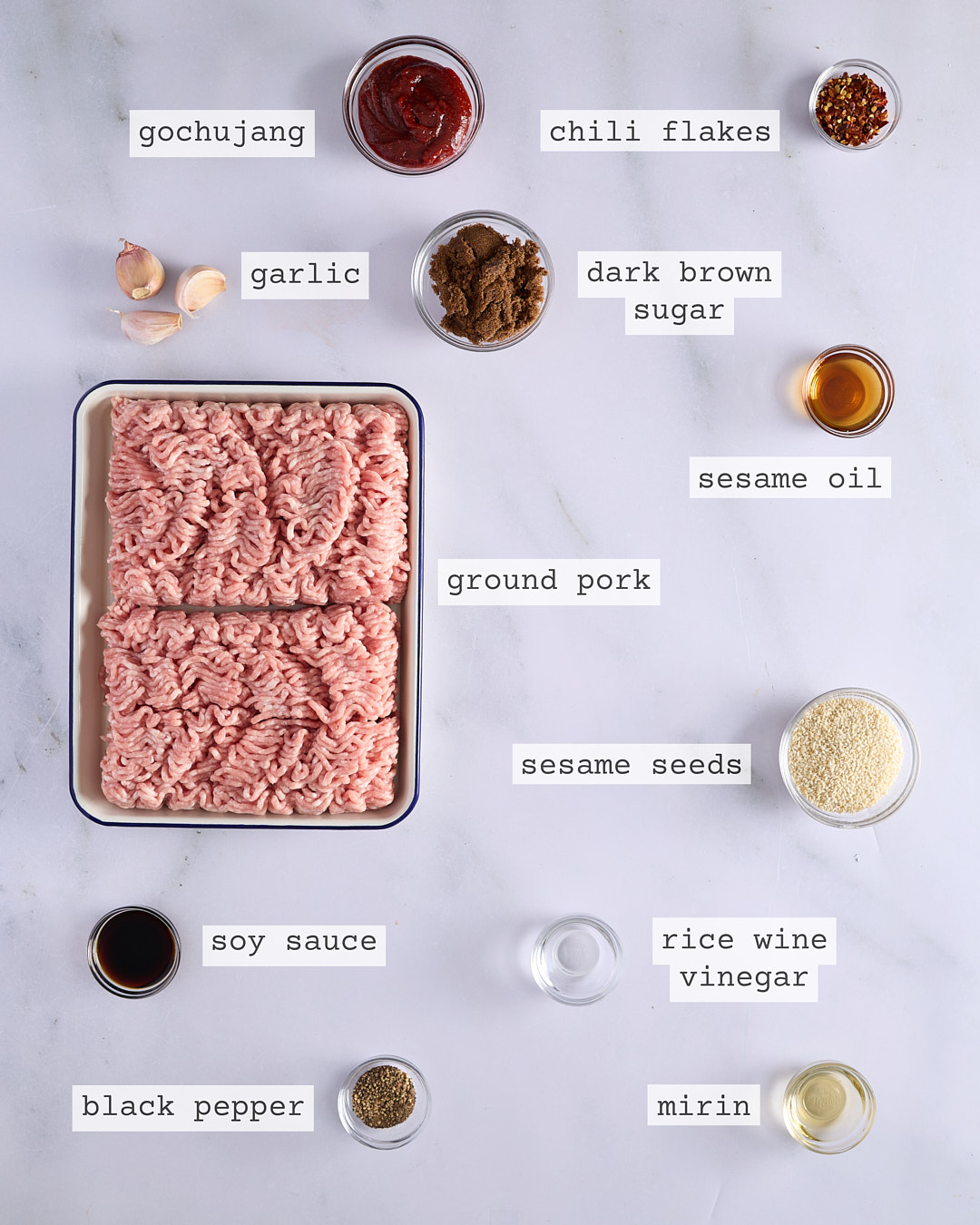
Flat lay of ingredients for gochujang pork burger including pork mince, gochujang, chilli flakes, garlic, dark brown sugar, sesame oil, sesame seeds, soy sauce, rice wine vinegar, mirin and black pepper, each clearly labelled on a white marble surface.
  • 1kg pork mince (15% fat content) 
  • 6 tablespoons sesame seeds  
  • 1/3 cup gochujang 
  • 2 tablespoons soy sauce 
  • 2 tablespoons mirin 
  • 1 tablespoon rice wine vinegar 
  • 1 tablespoon sesame oil 
  • 3 tablespoons dark brown sugar 
  • 3 large garlic cloves 
  • ¼ teaspoon ground black pepper 
  • 1 tablespoon chilli flakes 

1kg pork mince will make 4 generous 250g burgers or 5 smaller burgers at 200g each. 

Gochujang is a Korean fermented chilli paste—deeply savoury, mildly sweet, and with a slow-building heat that sets it apart from other chilli condiments. It’s the backbone of this burger and worth having in your fridge. You’ll find it at any Asian grocery and increasingly in the international aisle of most supermarkets. Once opened and refrigerated, it keeps for up to 2 years. 

The build ingredients

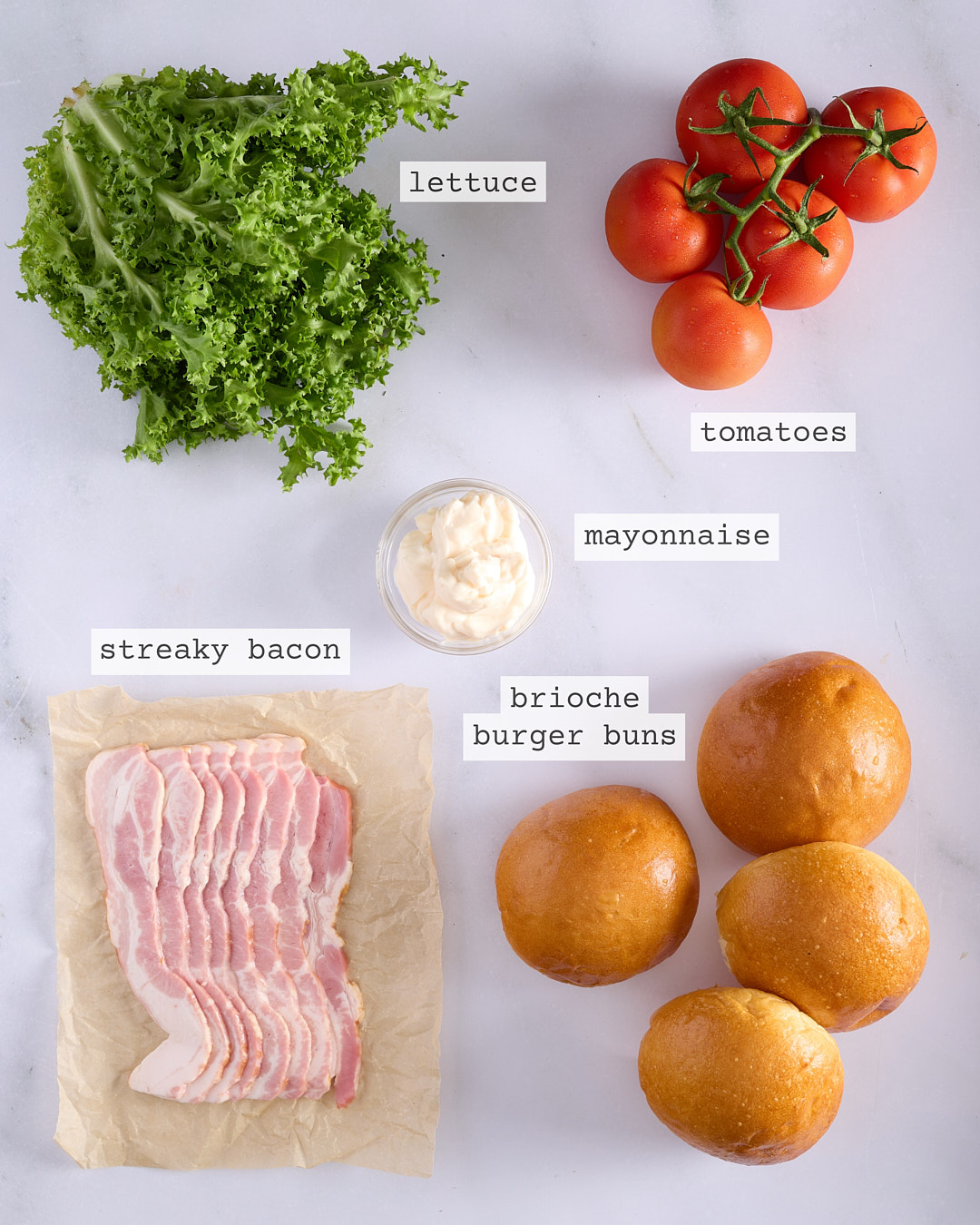
Flat lay of ingredients for Korean-style pork burger assembly including brioche burger buns, streaky bacon, lettuce, vine tomatoes and mayonnaise, each clearly labelled on a white marble surface.
  • 4-5 large brioche burger buns 
  • 4 large truss tomatoes 
  • A small bunch of lettuce of your choice 
  • 8 rashers of streaky smoked bacon 
  • 1 cup mayonnaise  

And if you’re going so far as to have crispy streaky bacon, don’t reach for the low-fat mayonnaise. This burger calls for the best full-fat mayo—whether you’re a fan of Kewpie or, like me, Best Foods.

Get organised

I’m an adherent to the French cooking principle of mise en place—everything in its place. Having your ingredients and equipment ready before you start isn’t just for professional kitchens; it’s how you keep home baking calm and consistent. 

Measuring, prepping and setting everything out before the first step is the difference between cooking and chaos. 

Fresh nashi kimchi method

For this Korean-style pork burger, I recommend making the fresh nashi kimchi a few hours ahead of when you plan to cook the burgers, to allow the fruit to soften a little and absorb the kimchi seasoning. The fresh kimchi is best eaten on the day it’s made if you want it to remain crisp—it will soften and start to discolour by the next day.   

Make the kimchi seasoning by combining all the ingredients, except the nashi pears and red onion, in a small bowl. Set aside until required.

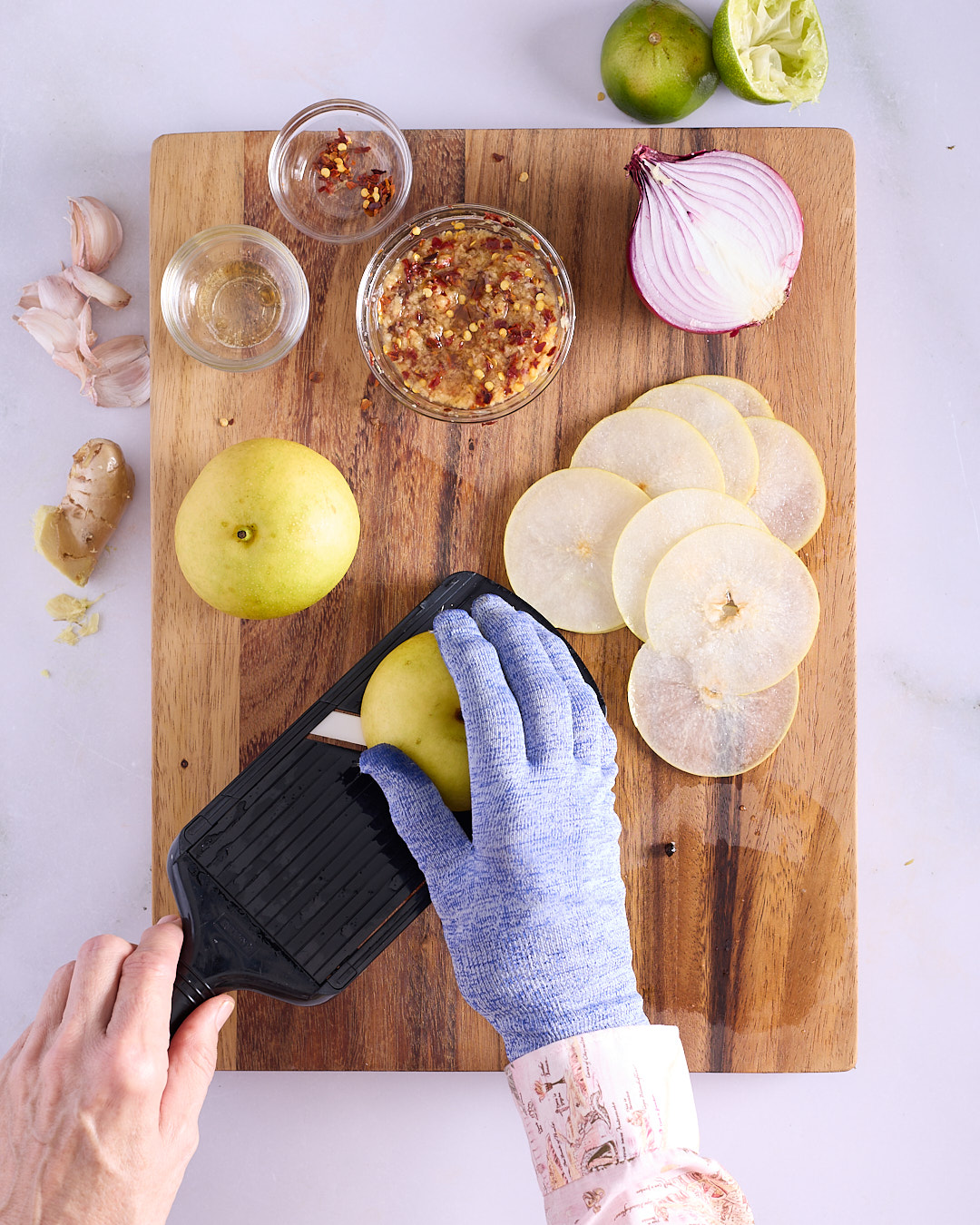
Sandra slicing nashi pear being on a handheld mandolin with a cut-resistant glove, thin rounds fanned on a wooden board alongside kimchi seasoning, red onion, garlic, ginger, lime and chilli flakes.

I use a small handheld mandolin to slice both the red onion and nashi pears into paper-thin slices of about 2–3mm. Peel the red onion and cut in half lengthwise before slicing. I slice the nashi pear with the skin on. Make sure you use a cut-resistant glove or hand guard when using the mandolin—otherwise, slice as thinly as possible by hand. 

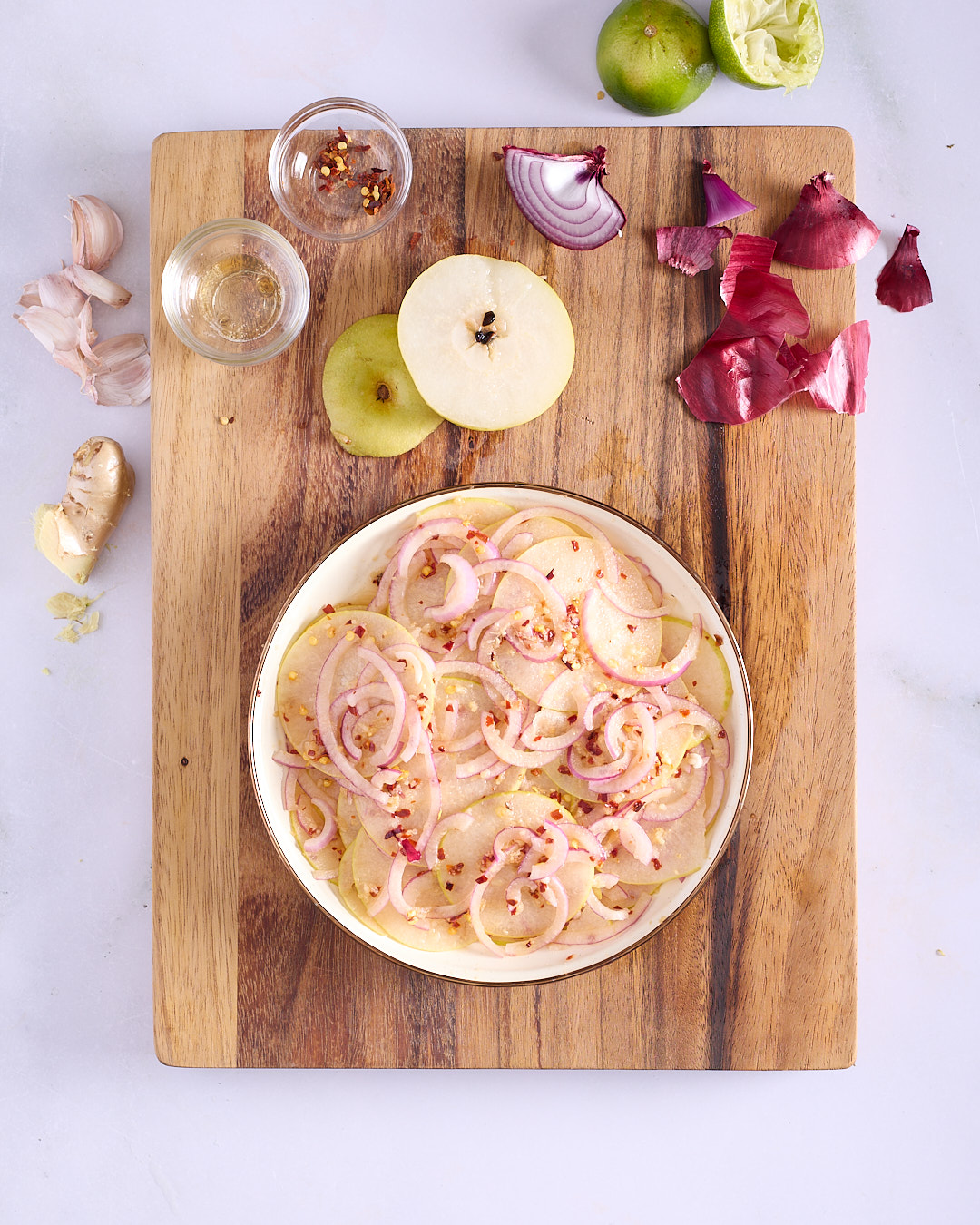
Fresh nashi kimchi with paper-thin nashi pear and red onion slices dressed in kimchi seasoning in a wide bowl on a wooden board, with halved nashi pear, red onion, garlic, ginger, chilli flakes and lime alongside.

Gochujang pork burger method

Make the gochujang BBQ sauce

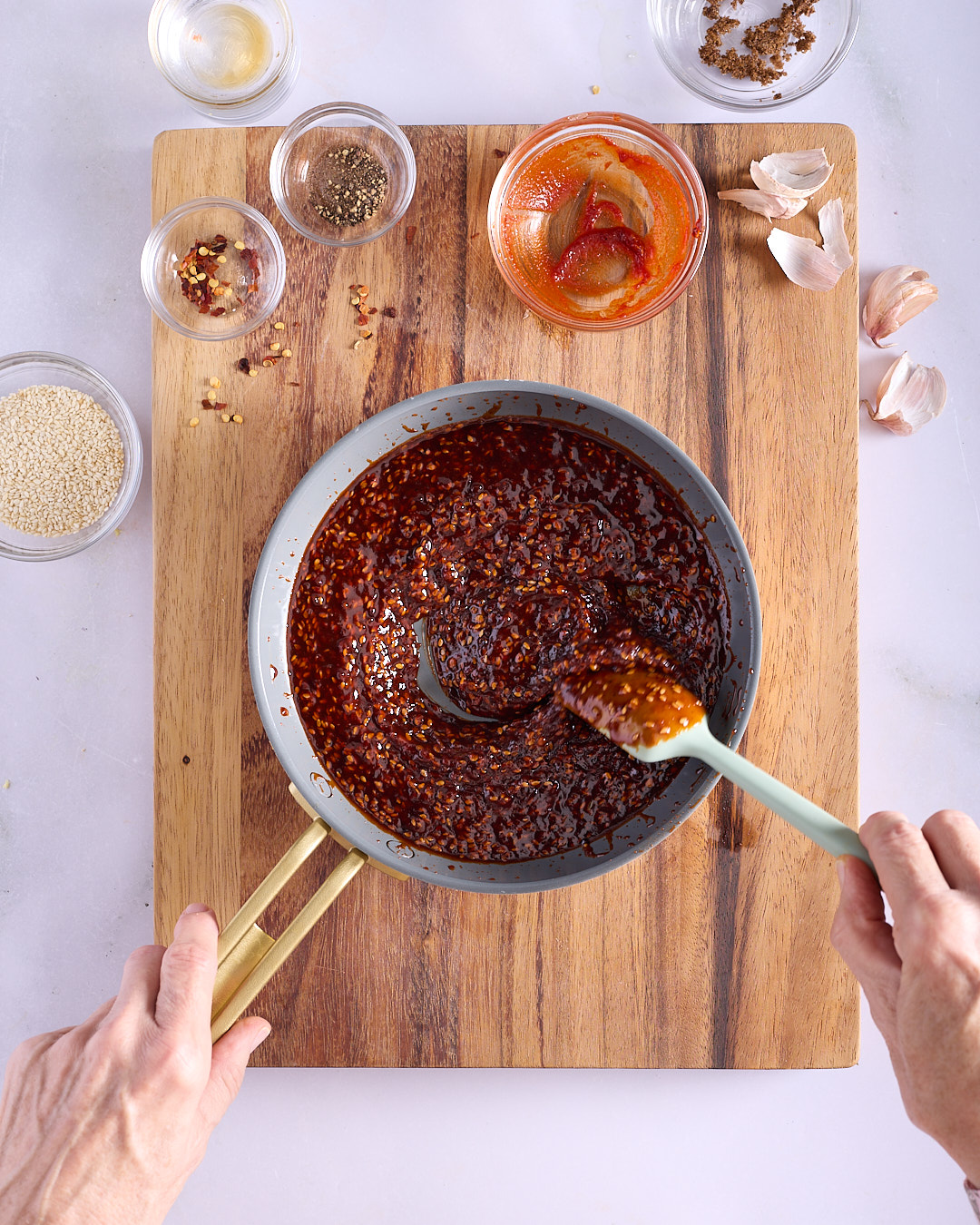
Sandra stirring gochujang BBQ sauce in a small saucepan on a wooden board, with gochujang, chilli flakes, black pepper, sesame seeds and garlic alongside, showing the sauce preparation step for the gochujang pork burger.

Toast 6 tablespoons sesame seeds in a small pan until a light golden colour. Remove from the pan and set aside. 

In the same pan, place ⅓ cup gochujang, 2 tablespoons soy sauce, 2 tablespoons mirin, 1 tablespoon sesame oil, 3 tablespoons dark brown sugar, 3 large garlic cloves (crushed), ¼ teaspoon ground black pepper, and 1 tablespoon chilli flakes. Reserve the rice wine vinegar at this stage. Stir the BBQ sauce over medium heat until the sugar dissolves—the sauce should be heated through but need not come to a boil. 

Add approximately 1 tablespoon of rice wine vinegar, tasting as you go. Stir in 3 tablespoons of toasted sesame seeds, reserving the rest to sprinkle over the cooked burgers. Set aside the gochujang BBQ sauce while you prepare the pork burger patties. 

Shape the pork burger patties

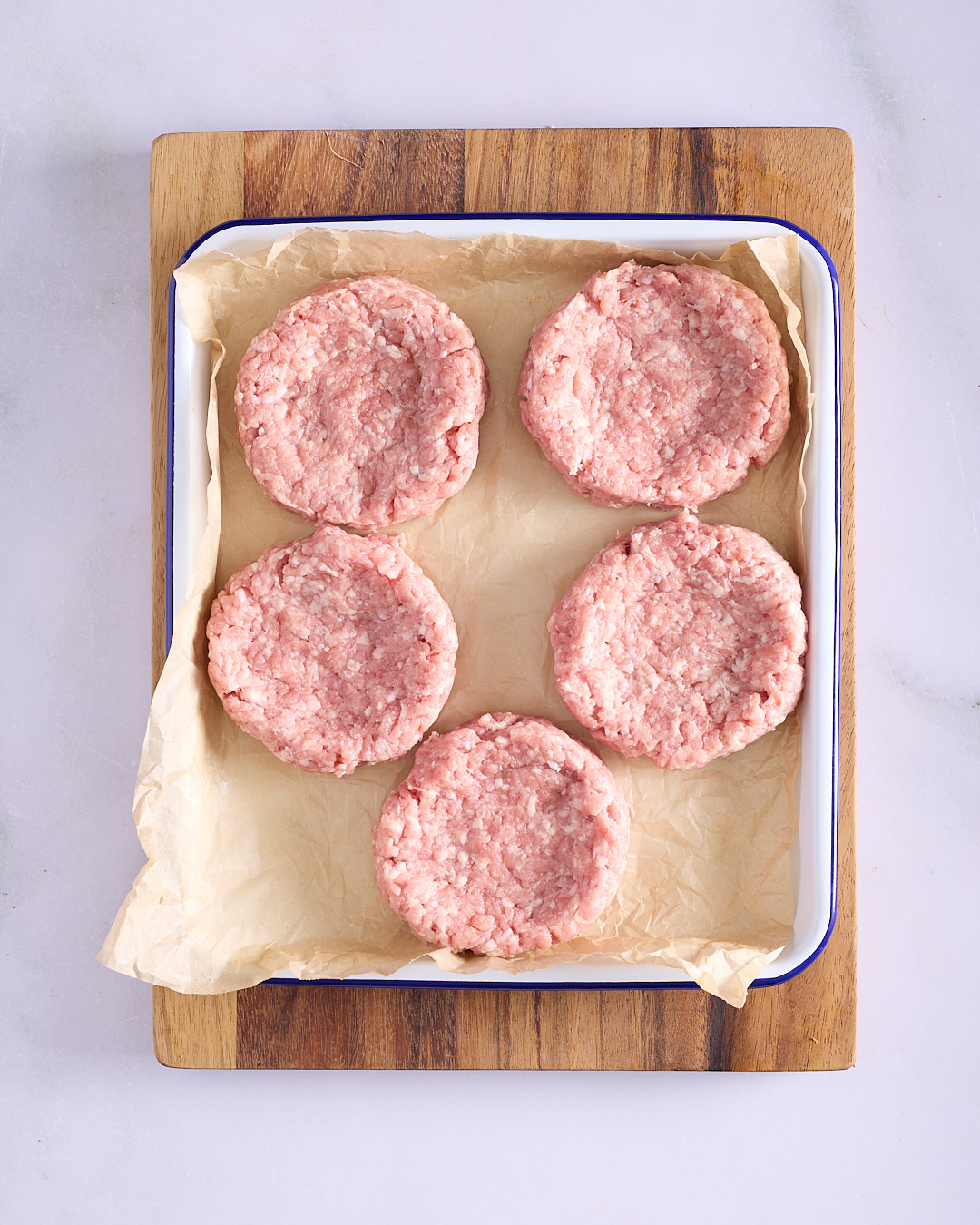
5 raw gochujang pork burger patties in a baking paper lined enamel tray on a wooden board, ready to chill before cooking.

This Korean-style pork burger recipe makes fairly thick burgers and is not designed to be a thin smashed burger. I recommend dividing the 1kg pork mince into either 4 generous 250g patties or 5 smaller patties at 200g each. Bear in mind that the mince has quite a bit of water content and the served weight of the burger will be less after cooking. 

Weigh out each portion and form into a ball. I throw the ball between my hands a few times to compact the meat slightly—this helps prevent the pure pork burger from falling apart while cooking. Then shape the patties into discs slightly wider than the buns you’re using. While shaping, create a shallow well in the centre of each patty. This results in a level cooked burger and prevents the centre bulging up as the outside shrinks during cooking. 

Chill the formed patties for at least 30 minutes before cooking. They can be made ahead and refrigerated on the morning you plan to cook them

Cooking the burgers

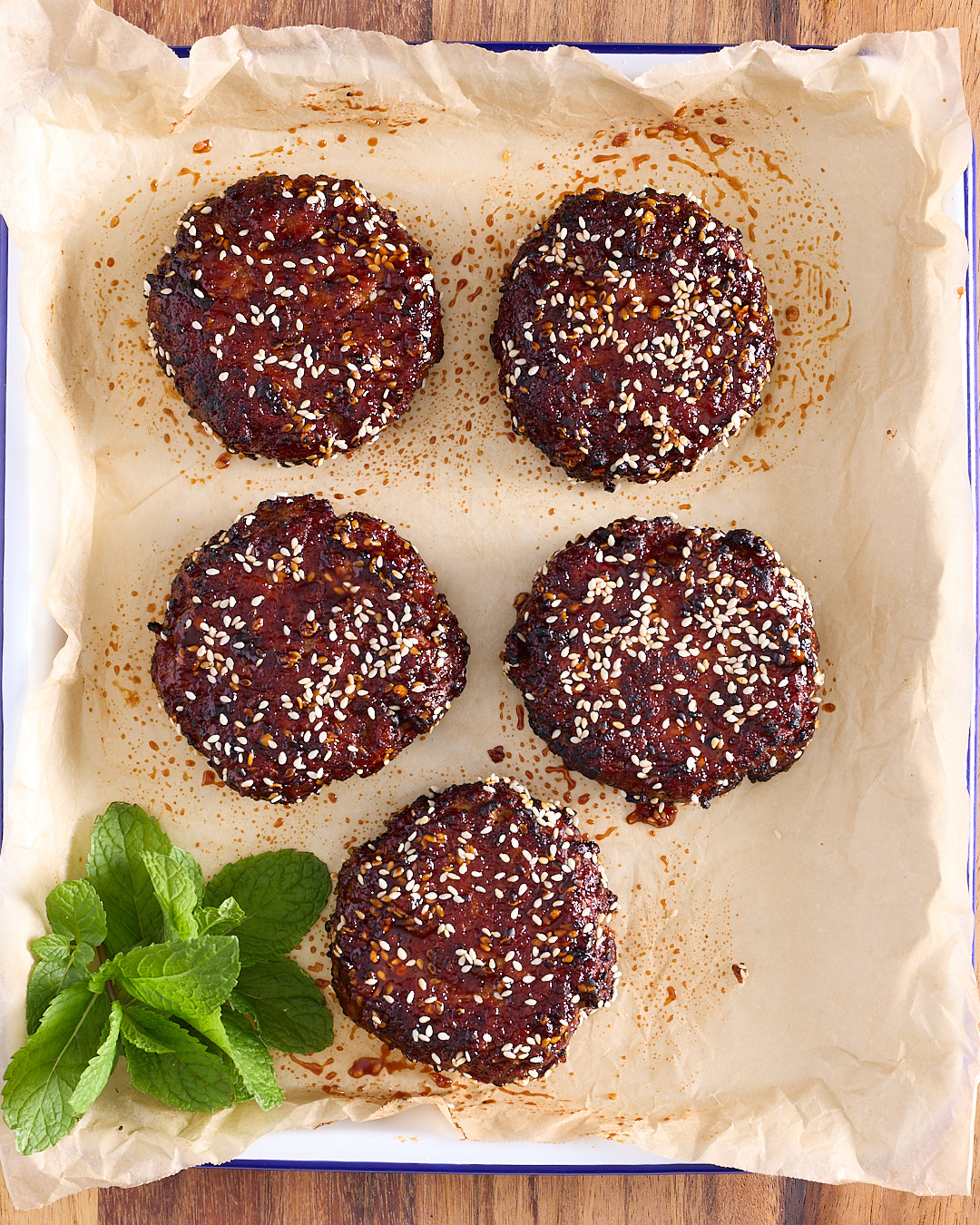
5 gochujang glazed pork burger patties topped with toasted sesame seeds on a baking paper lined enamel tray, deeply lacquered and cooked through, with fresh mint alongside.

The burgers can be cooked on a BBQ, a teppanyaki grill, or a frying pan. I’ve used my teppanyaki grill for this recipe. The cooking starts on medium to medium-high heat—cook the burgers, flipping at least once, until almost cooked through. 

With pork mince the internal temperature you’re aiming for is 75°C, bearing in mind the temperature will continue to rise for a minute or two after removing the burgers from the heat. 

At around 65°C, turn the heat to high and start basting with the gochujang BBQ sauce. Flip the burgers and baste each side—I aim for three coats. 

Remove from the heat and sprinkle with the reserved toasted sesame seeds.

Assembling the Korean-style burgers with kimchi

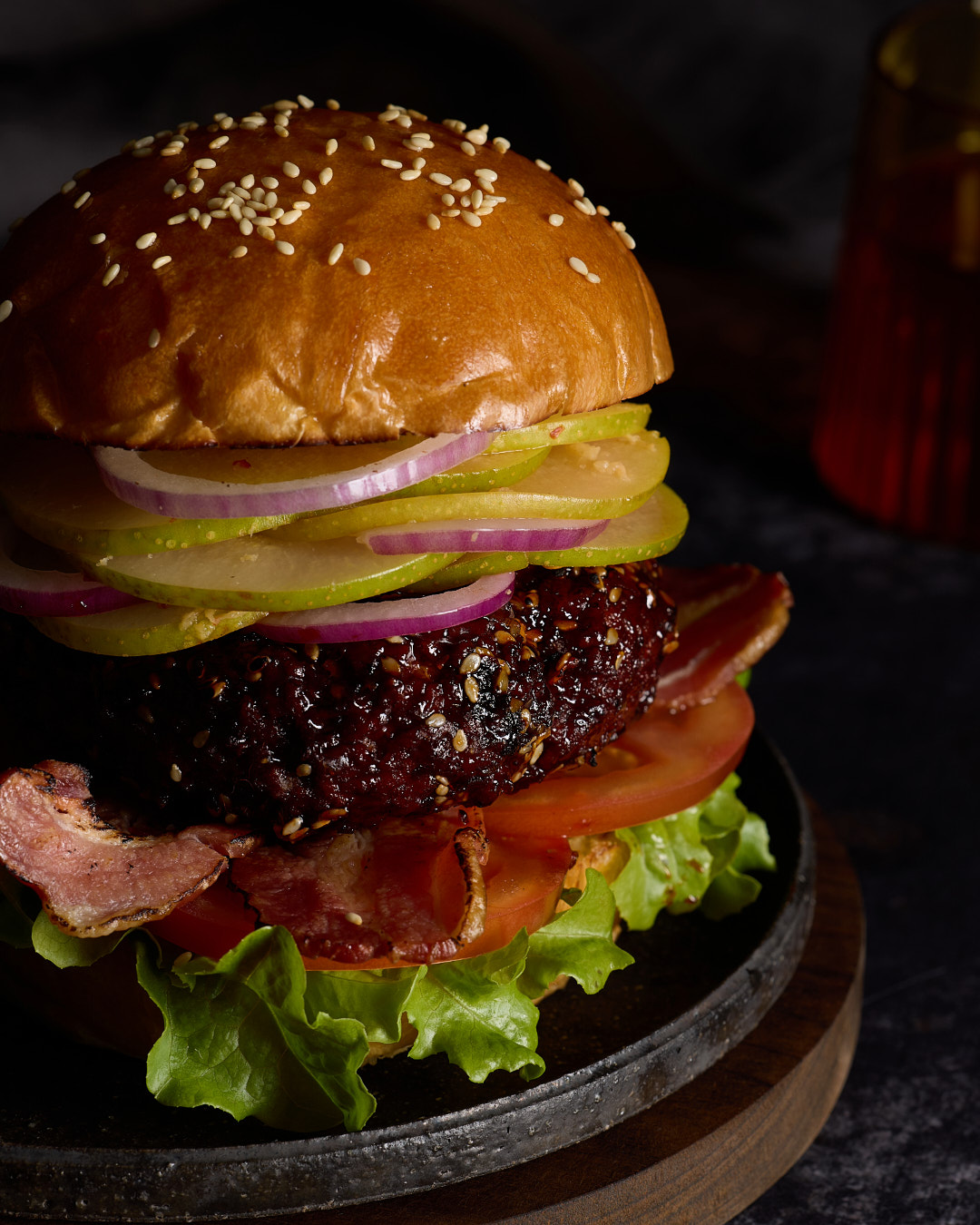
Korean-style pork burger with gochujang glazed pork patty, fresh nashi kimchi, red onion, streaky bacon, lettuce and tomato on a brioche bun with sesame seeds, stacked high on a dark wooden board against a dark moody background.

To assemble this Korean-style pork burger with kimchi, cook the streaky bacon rashers to your liking. I cook mine under the grill and like them crispy but still just a little pliable. Slice the truss tomatoes and split and lightly toast the brioche burger buns. 

On this occasion I’ve added a little sriracha to the mayonnaise. Be generous with the mayo on both sides of the bun, then assemble the burgers—loading them with the fresh nashi kimchi, sliced tomatoes, lettuce, and bacon. 

Serve immediately.

Korean-style Pork Burger with Fresh Nashi Kimchi

Korean-style pork burger with gochujang glazed pork patty, fresh nashi kimchi, red onion, streaky bacon, lettuce and tomato on a brioche bun with sesame seeds, stacked high on a dark wooden board against a dark moody background
My Korean-style pork burger grew out of my love of kimchi. I am always in pursuit of pickle-y additions to my meals. When first introduced to this Korean fermented side dish, I assumed 'kimchi' was its specific name. I've caught up a bit since and now understand that 'kimchi' is a collective term for vegetable dishes that have been salted, seasoned, and fermented—the wombok version being baechu kimchi. And it's the first side dish I reach for when eating out at a Korean restaurant.
Fortune had it that I'd been gifted The Korean Cookbook by Junghyun Park and Junyoon Choi, Phaidon, 2023. They have a whole chapter on kimchi, which introduced me to the concept of fresh kimchi—known as geotjeori. This fresh, salad-like version is not fermented and often incorporates fruit. I've taken that idea and landed on a fresh nashi kimchi with red onion. It's crisp, fresh, and sweet, with just the right amount of kick from the kimchi seasoning. It's perfect with a gochujang glazed pork burger—but just as good alongside a simple pork chop.
Prep Time 40 minutes
Cook Time 15 minutes
Course Condiment, Finishing sauce, Main Course, Side Dish
Cuisine Korean
Servings 4 to 5 people

Equipment

  • BBQ, frying pan, or Teppanyaki grill
  • Mandolin (optional)
  • Cut-resistant glove or hand guard (if using mandolin)
  • Digital kitchen scales (optional)
  • Instant read thermometer

Ingredients  

Fresh nashi kimchi:

  • 400 g nashi pears (2 large pears)
  • 1 small red onion
  • 1 tablespoon chilli flakes
  • 2 medium garlic cloves (crushed)
  • 2 teaspoons finely grated fresh ginger
  • 2 teaspoons caster sugar
  • 1 tablespoon fish sauce
  • 2 tablespoons fresh lime juice (1 large lime)

Gochujang pork burger: 

  • 1 kg pork mince (15% fat content)
  • 6 tablespoons sesame seeds
  • 1/3 cup gochujang
  • 2 tablespoons soy sauce
  • 2 tablespoons mirin
  • 1 tablespoon rice wine vinegar
  • 1 tablespoon sesame oil
  • 3 tablespoons dark brown sugar
  • 3 large garlic cloves
  • ¼ teaspoon ground black pepper
  • 1 tablespoon chilli flakes

To assemble the burgers:

  • 4-5 large brioche burger buns
  • 4 large truss tomatoes
  • A small bunch of lettuce of your choice
  • 8 rashers of streaky smoked bacon
  • 1 cup mayonnaise

Instructions 

Fresh nashi kimchi:

  • Make the kimchi seasoning by combining the chilli flakes, crushed garlic, grated ginger, caster sugar, fish sauce, and fresh lime juice in a small bowl. Set aside until required.
  • Using a mandolin, slice the nashi pears and red onion into paper-thin slices of about 2–3mm. Peel the red onion and cut in half lengthwise before slicing. Slice the nashi pear with the skin on. Use a cut-resistant glove or hand guard when using the mandolin—otherwise, slice as thinly as possible by hand.
  • Gently massage the kimchi seasoning into the combined nashi pear and red onion slices, taking care not to break up the delicate nashi. Set aside at room temperature for up to 15 minutes, or refrigerate until required to keep the kimchi crisp.

Gochujang pork burger:

  • Toast the sesame seeds in a small pan until a light golden colour. Remove from the pan and set aside.
  • In the same pan, combine the gochujang, soy sauce, mirin, sesame oil, dark brown sugar, 3 crushed garlic cloves, ground black pepper, and chilli flakes. Reserve the rice wine vinegar at this stage. Stir over medium heat until the sugar dissolves—the sauce should be heated through but need not come to a boil.
  • Add approximately 1 tablespoon of rice wine vinegar, tasting as you go.
  • Stir in 3 tablespoons of the toasted sesame seeds, reserving the rest to sprinkle over the cooked burgers. Set aside the gochujang BBQ sauce while you prepare the patties.
  • Divide the pork mince into either 4 portions of 250g or 5 portions of 200g.
  • Form each portion into a ball, throwing it between your hands a few times to compact the meat slightly. Shape into discs slightly wider than the buns you're using, creating a shallow well in the centre of each patty. Chill for at least 30 minutes before cooking.
  • Cook the patties on a BBQ, teppanyaki grill, or frying pan over medium to medium-high heat, flipping at least once, until almost cooked through.
  • At around 65°C internal temperature, turn the heat to high and start basting the patties generously with the gochujang BBQ sauce, flipping and basting each side. Aim for three coats. The target final internal temperature for ground pork is 75°C—bearing in mind the internal temperature will continue to rise for a minute or two after removing the patties from the heat.
  • Remove from the heat and sprinkle with the reserved toasted sesame seeds.

To assemble the burgers:

  • Cook the streaky bacon rashers to your liking.
  • Split and lightly toast the brioche burger buns.
  • Slice the truss tomatoes.
  • Be generous with the mayo on both sides of the bun, then assemble the burgers—loading them with the fresh nashi kimchi, sliced tomatoes, lettuce, and bacon.
  • Serve immediately.

Just before you cook with abandon…

Get organised—mise en place: I adherent to the French cooking principle of mise en place—everything in its place. Having your ingredients and equipment ready before you start isn't just for professional kitchens; it's how you keep home cooking calm and consistent. Measuring, prepping and setting everything out before the first step is the difference between cooking and chaos.
Make the kimchi ahead: The fresh nashi kimchi can be made a few hours ahead and refrigerated until required. It's best eaten on the day it's made—it will soften and start to discolour by the next day.
Shape and chill the patties ahead: The patties can be shaped and refrigerated on the morning you plan to cook them. A minimum of 30 minutes in the fridge before cooking helps them hold together.
Gochujang: Once opened and refrigerated, gochujang keeps for up to 2 years.
Internal temperature: The target internal temperature for ground pork is 75°C. An instant-read thermometer takes the guesswork out of it entirely.
Mandolin safety: A cut-resistant glove or hand guard is strongly recommended when using a mandolin. The nashi pear and red onion slices need to be paper-thin—2mm to 3mm—and a mandolin is the most efficient way to achieve that consistently.

Keyword fresh nashi kimchi, gochujang BBQ sauce, gochujang pork burger, korean-style burger with kimchi, Korean-style pork burger

Leave a Reply

Your email address will not be published. Required fields are marked *

Recipe Rating


Hi, I'm Sandra!

I live by the words of Harriet Van Horne and I will be exploring every possible way to bring Harriet’s words to life in my kitchen.

Recipes

Discover delicious featured food recipes! From quick meals to gourmet delights, Sandra offer inspiring dishes for every occasion. Explore, cook, and enjoy flavorful creations today.

You might also like..

Lime Cream Cheese Pound Cake

Thai-style Crispy Potato Waffles with Prawns and Maple Chilli Oil

Homemade Fruit Mince

Vietnamese-style Pork and Chicken Meatloaf Bánh Mì

Subscribe

Subscribe to my newsletter for a chance to win a FREE APRON (drawn monthly) as well as cooking tips, recipes, offers and exclusive content.

"*" indicates required fields