

Creamy Greek Tzatziki Sauce
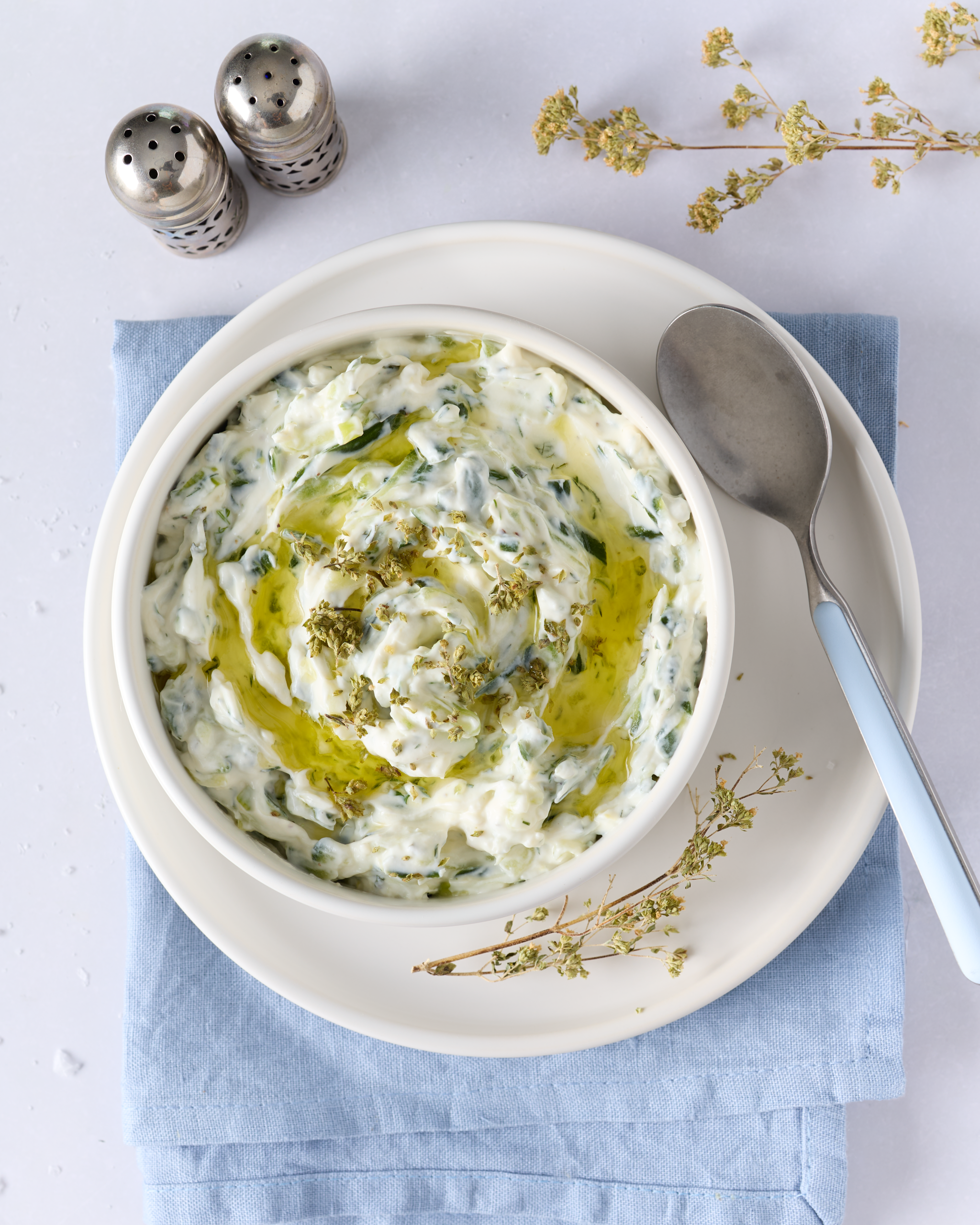
I think Australians might be more familiar with Greek yoghurt tzatziki as a dip than as a sauce for meat. For me, a creamy tzatziki sauce is the only sauce I pair with a summertime leg of lamb. This cucumber yoghurt sauce does double duty when boiled potatoes or a simply dressed potato salad served with the lamb. This is a make-ahead recipe in two parts. The full fat Greek yoghurt needs to be strained overnight, and once the homemade tzatziki is mixed, it’s best finished and refrigerated for 4–6 hours before serving. That window the flavours to develop, the garlic to soften a little, and the whole cucumber yoghurt sauce to firm up into something that behaves properly next to warm lamb and potatoes.
Equipment
- Large sieve
- Cheesecloth or nut bag
- Medium mixing bowl
- Medium grater
- Microplane (optional)
Ingredients
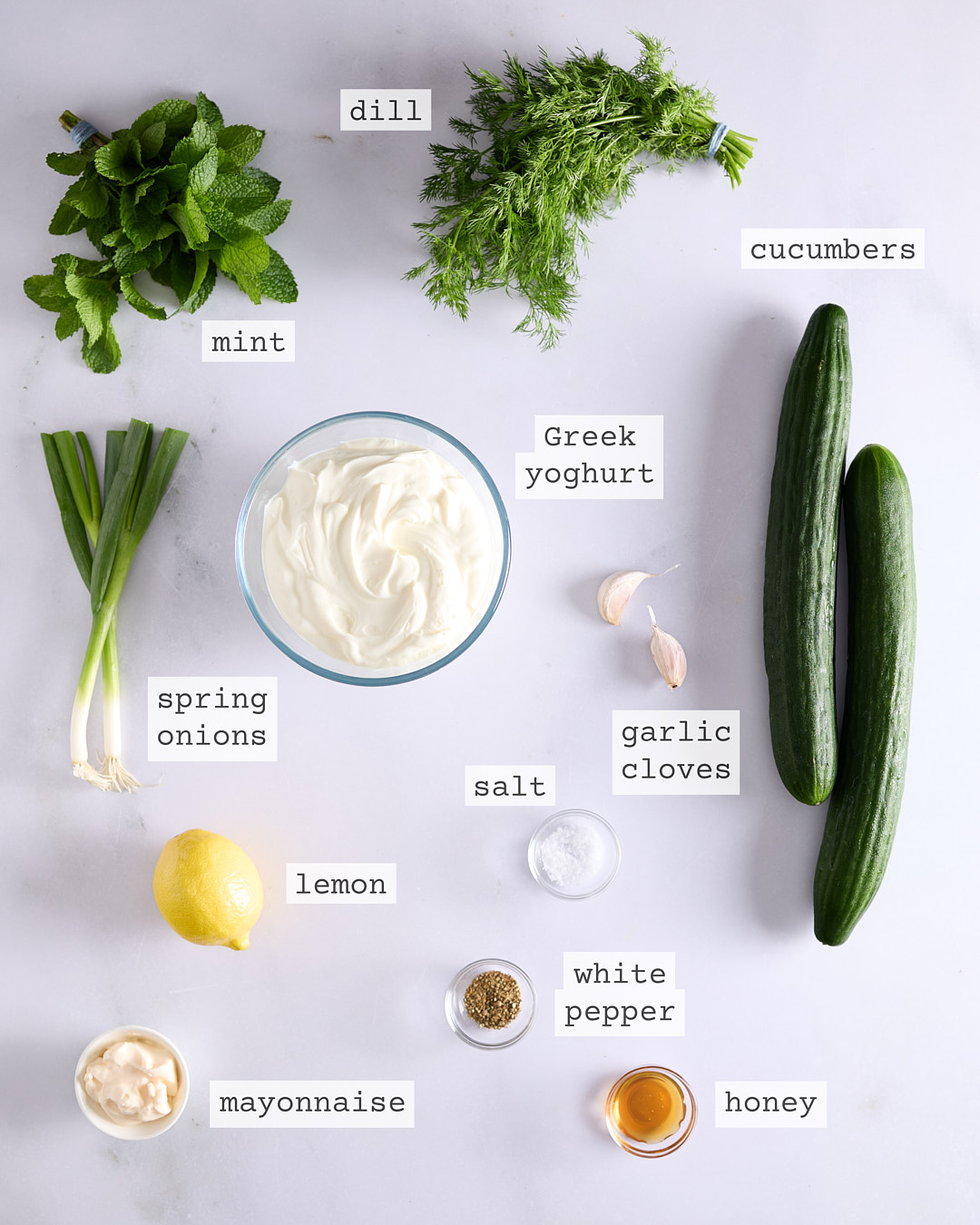
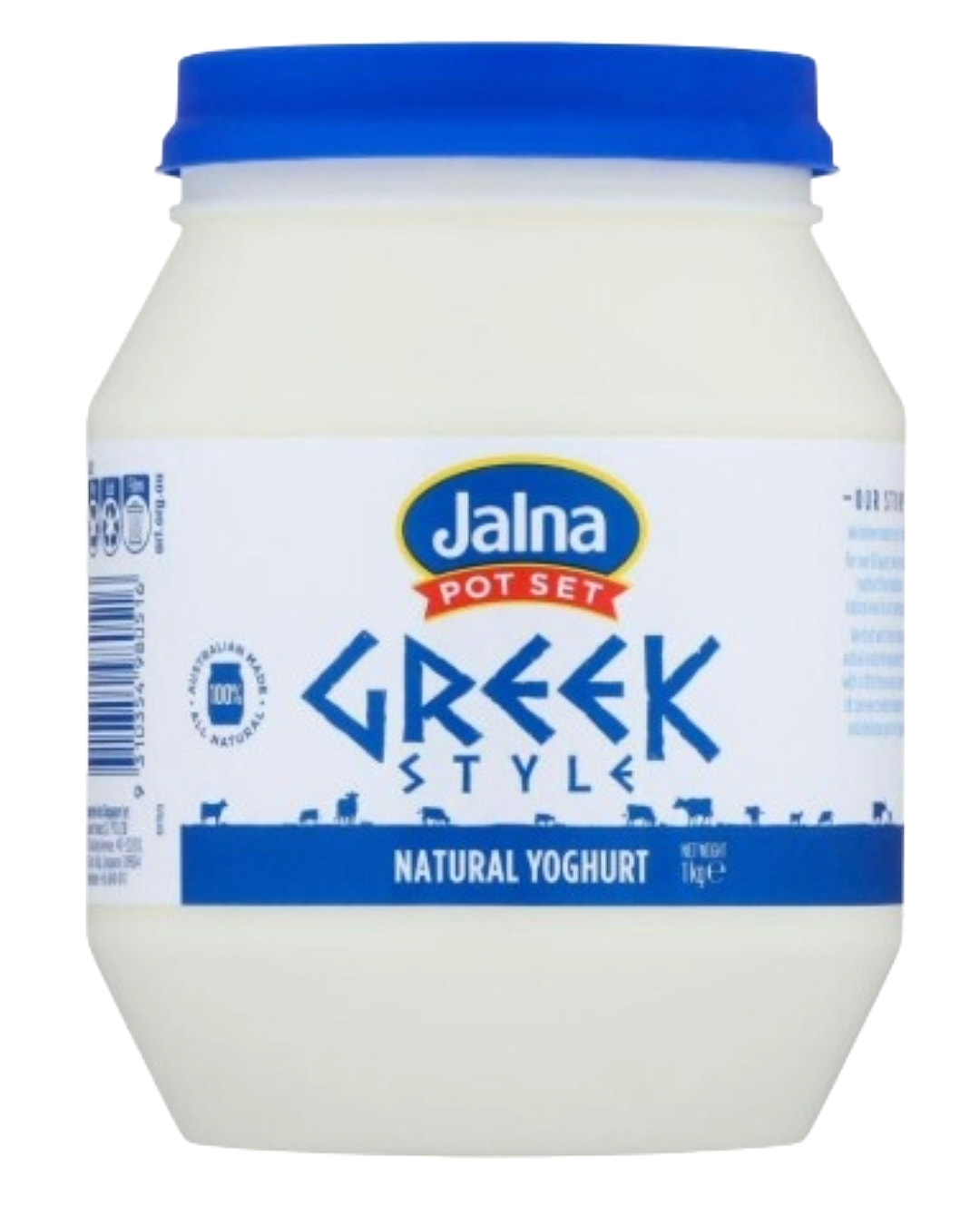
- 1 kg full fat Greek yoghurt
- 1 teaspoon sea salt
- 2 large continental (telegraph cucumbers)
- 2 spring onions
- Small bunch fresh mint
- Small bunch fresh dill
- 1 large lemon
- 2 large garlic cloves
- 2 tablespoons full fat mayonnaise
- 1-2 teaspoons honey
- 1-2 tablespoons extra virgin olive oil (extra to serve)
- White pepper
Instructions
Get ahead:
- Start the day before serving by straining the 1kg full fat Greek yoghurt overnight in the fridge. This easy tzatziki recipe is best finished and refrigerated for 4–6 hours before serving.
Strain the yoghurt:
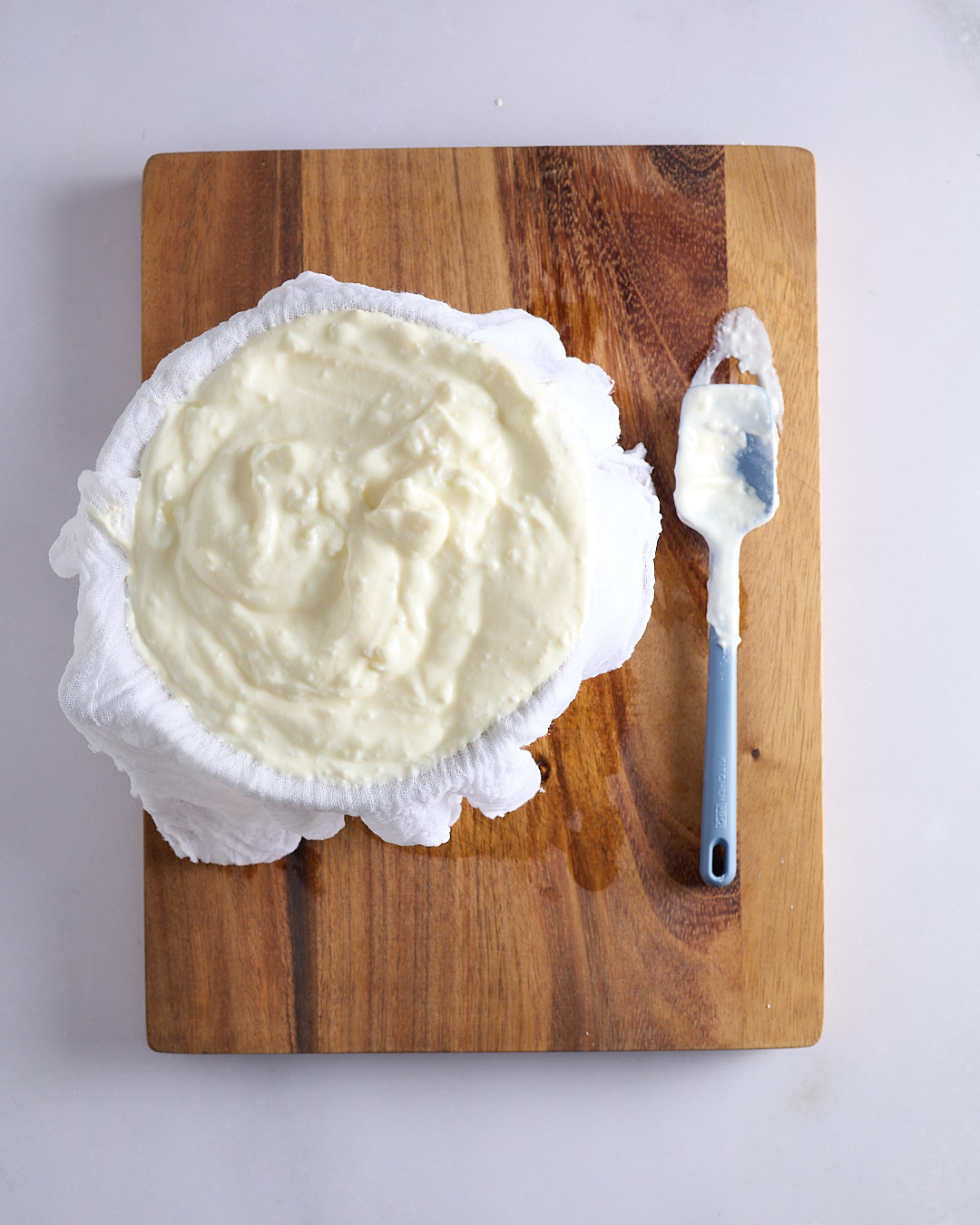
- Set a large sieve over a bowl and line it with three layers of cheesecloth (or use a nut bag).
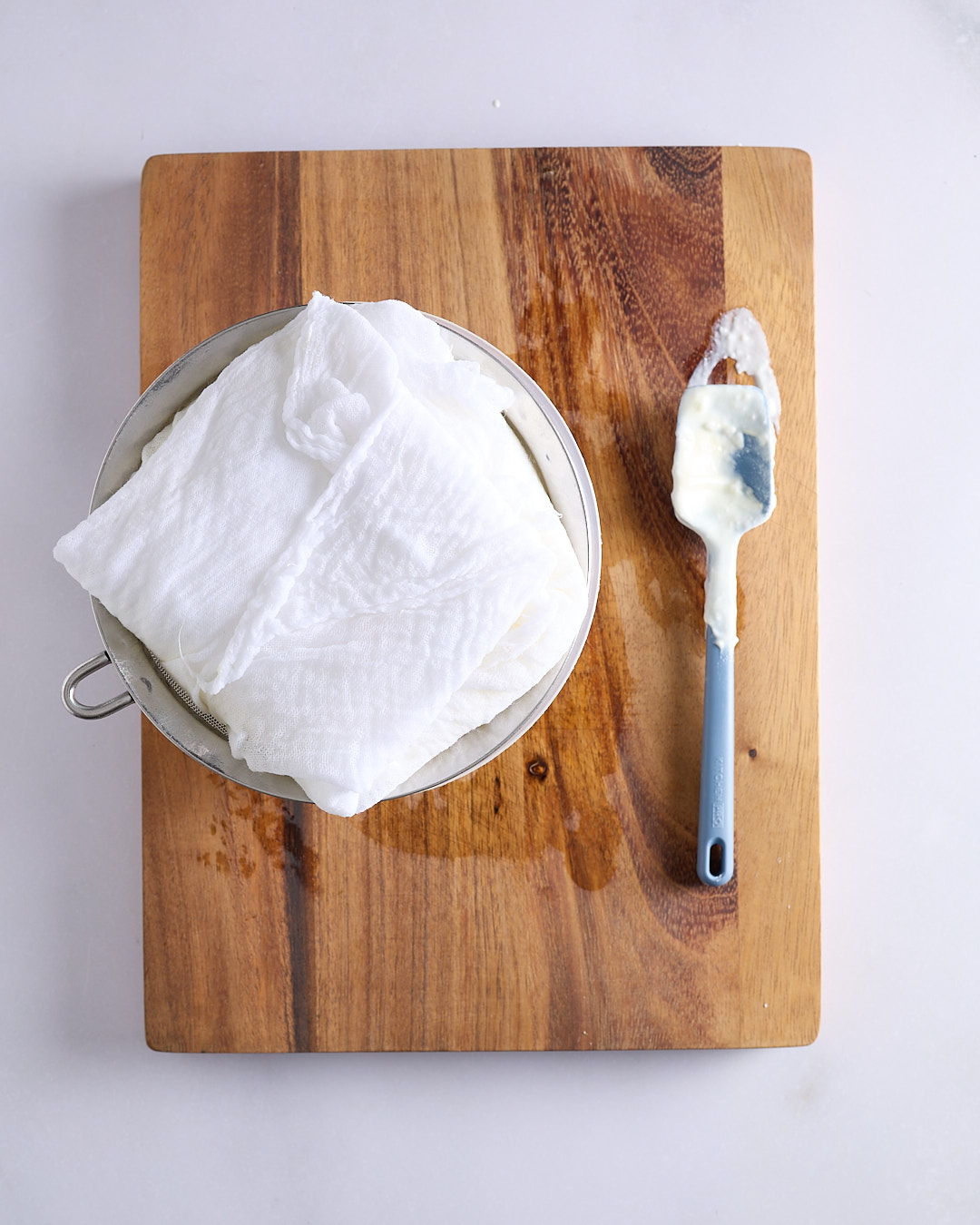
- Spoon in the 1kg Greek yoghurt, fold the cloth over to cover, and refrigerate overnight.
- In the morning, scrape the thickened yoghurt into a medium mixing bowl and set aside.
- Tip the collected whey into a jar and keep it in the fridge in case you want to loosen the sauce later.
Prep the cucumbers:
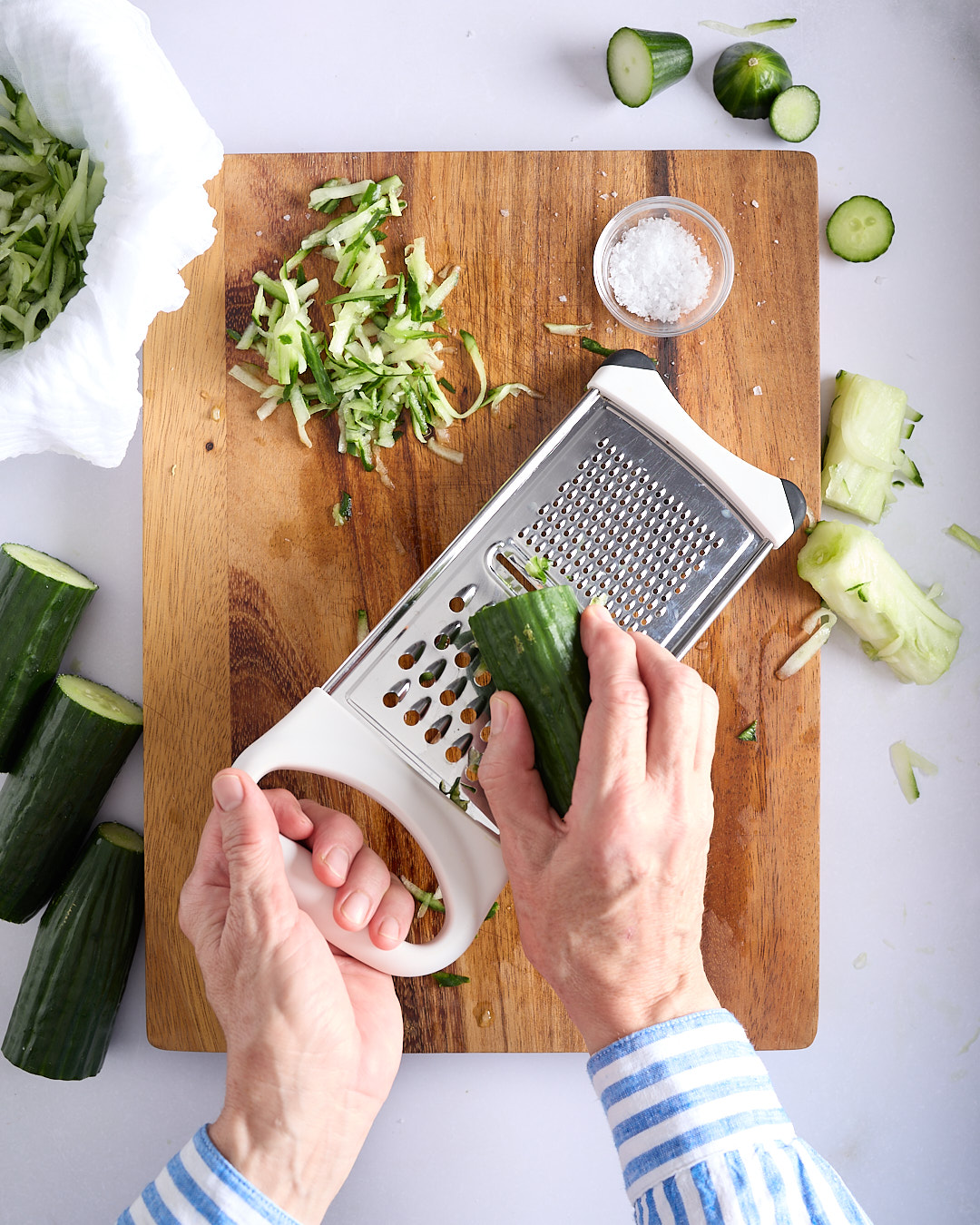
- Cut the ends off the 2 large continental (telegraph) cucumbers and cut them in half.
- For this Greek tzatziki recipe, grate the cucumber flesh on a medium grater, rotating each piece as you get close to the seeded centre so you avoid the seeds.
- Discard the seeded core blocks. Sprinkle the grated cucumber with 1 teaspoon sea salt and toss through.
Drain the cucumbers:
- Tip the salted cucumber into the reserved cheesecloth (or nut bag) set over a bowl.
- Gather the corners, twist into a ball, then squeeze firmly to remove excess liquid, but don’t overdo it. You want it drained, not dry.
- You should end up with around 500g drained grated cucumber.
Finish the creamy Greek tzatziki sauce:
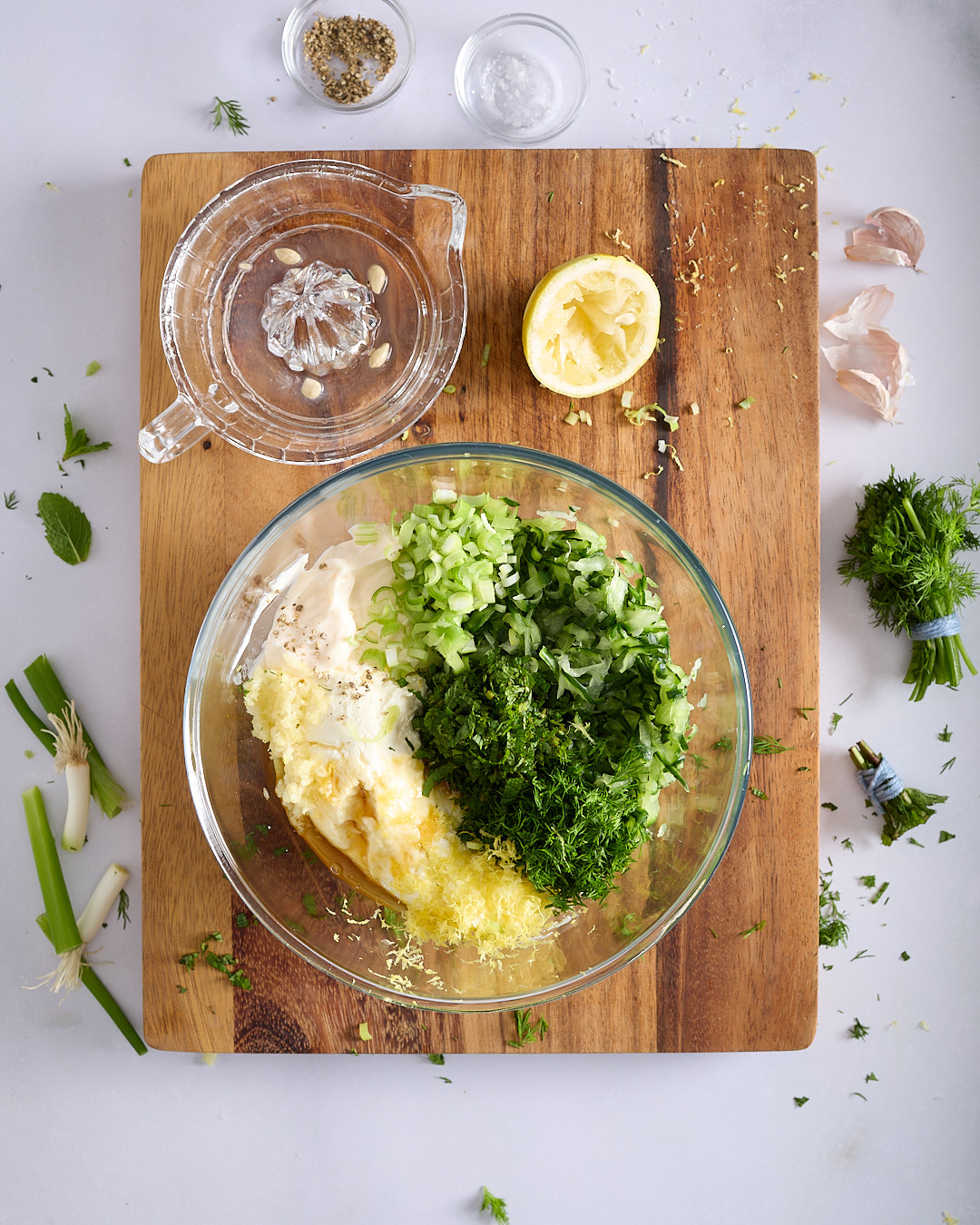
- Add the strained yoghurt and drained cucumber to a medium mixing bowl.
- Zest and juice 1 large lemon, adding the zest to the bowl and setting the juice aside.
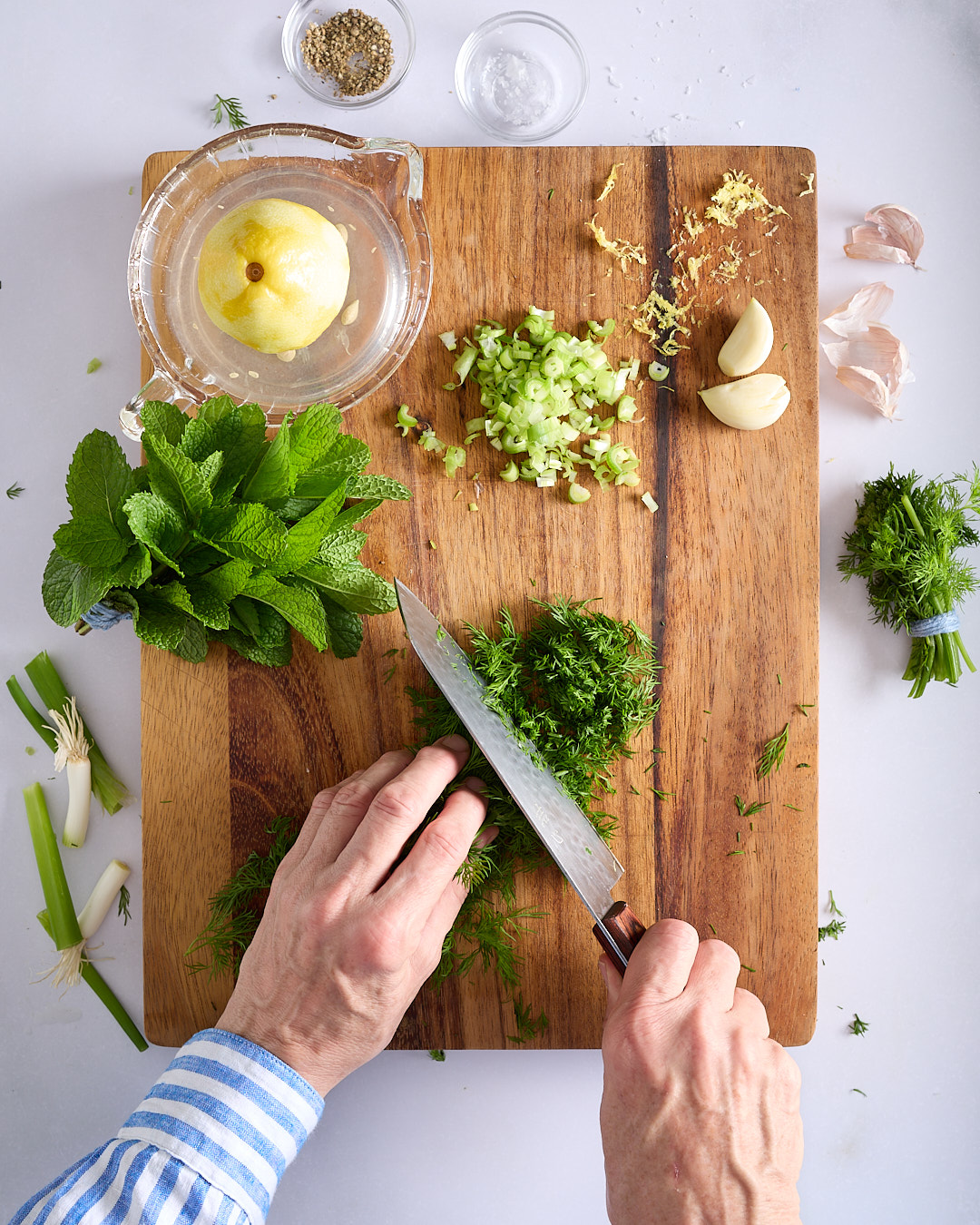
- Add 2 crushed garlic cloves, the sliced white and light green parts of the 2 spring onions, and the finely chopped mint and dill.
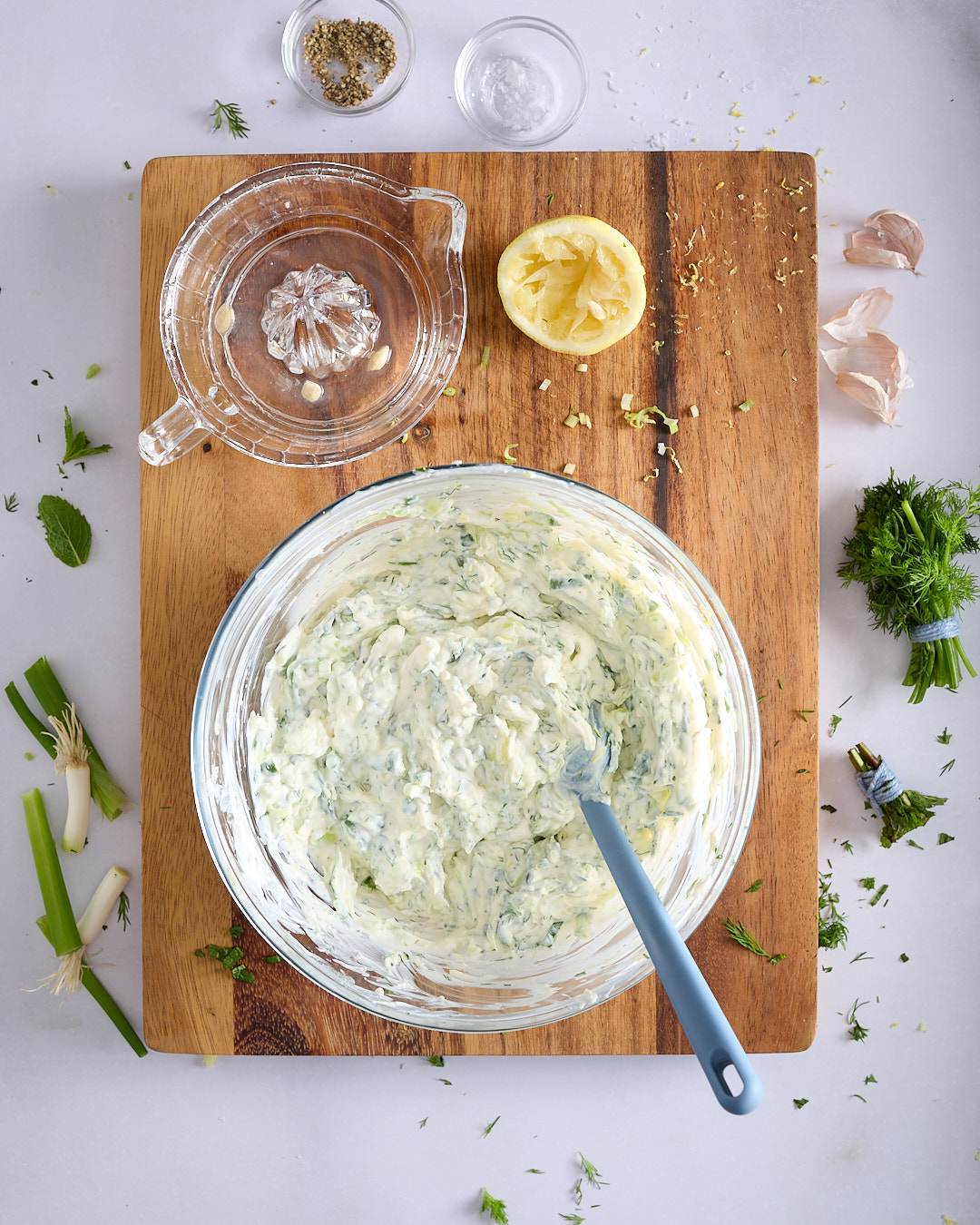
- Add 2 tablespoons mayonnaise, 1 teaspoon honey, 1 tablespoon extra-virgin olive oil, and 1 tablespoon lemon juice, then mix until homogeneous.
Adjust and serve:
- Taste and adjust with white pepper, more sea salt, honey, lemon juice, and extra virgin olive oil as needed.
- You’re aiming for a cucumber yoghurt sauce that tastes cool and creamy first, with clean lemon brightness, a gentle garlic bite, and a savoury lift from the herbs.
- Refrigerate for 4–6 hours before serving.
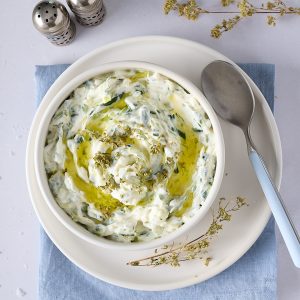
- To serve, drizzle with extra virgin olive oil (and a pinch of crushed dried Greek oregano – if available).
Just before you cook with abandon…
Make ahead: This is a make-ahead recipe in two parts. Strain the full fat Greek yoghurt overnight, then once the homemade tzatziki is mixed, finish it and refrigerate for 4–6 hours before serving so the flavours develop and the cucumber yoghurt sauce firms up.
Full fat yoghurt matters: This easy tzatziki recipe is built for lamb and warm potatoes, so you need proper full fat Greek yoghurt. Low fat yoghurts loosen quickly and run around the plate.
Skip the seeds, keep the skin: For this Greek tzatziki recipe I don’t use the cucumber seeds because they make the finished sauce too watery. I do keep the skin, which is why I specify continental or telegraph cucumbers.
Salt then squeeze, but don’t overdo it: Salting the grated cucumber helps it release liquid, but you don’t want to squeeze it bone dry. If you squeeze too aggressively you’ll lose flavour along with the fluid.
Whey is your safety net: Keep the collected yoghurt whey in the fridge. If the finished creamy tzatziki sauce ends up a bit too thick, a spoonful or two is the easiest way to loosen it without diluting the flavour.
Seasoning balance: The goal is cool and creamy first, with clean lemon brightness, a gentle garlic bite, and a savoury lift from dill, mint and spring onion. Honey shouldn’t taste sweet—it’s there to soften the acidity. Adjust near the end with more sea salt and white pepper, then tweak honey, lemon juice and olive oil to taste.
Tablespoon sizes: My tablespoon measures are 15ml (not the larger 20ml Australian tablespoon).