Butterflied leg of lamb with Greek-style finishing sauce is part of my 2026 ‘how I cook lamb’ series—but it isn’t something I’ve dug out of the family recipe box.
For every lamb chop and roast lamb dinner on the table in Australia – there is the pork equivalent on the table in Canada. My first introduction to lamb was after I landed in Australia in 1984. And, in my twenties I didn’t have the budget for a whole leg of lamb, and I definitely didn’t have a rental kitchen set-up—or an oven I trusted—to pull off a proper roast.
By the time a leg of lamb had any chance of making it onto my shopping list, the local butchers had made it easier, with the easy-carve leg of lamb and the butterflied leg of lamb. Perfect cuts for a busy Mum trying to juggle work, the kids, and the occasional roast dinner without turning it into a whole production.
This butterflied leg of lamb recipe is one I’ve nudged into shape over time through trial and error, and the arrival of the instant-read thermometer—a genuine godsend in my cooking life. It’s more method than recipe.
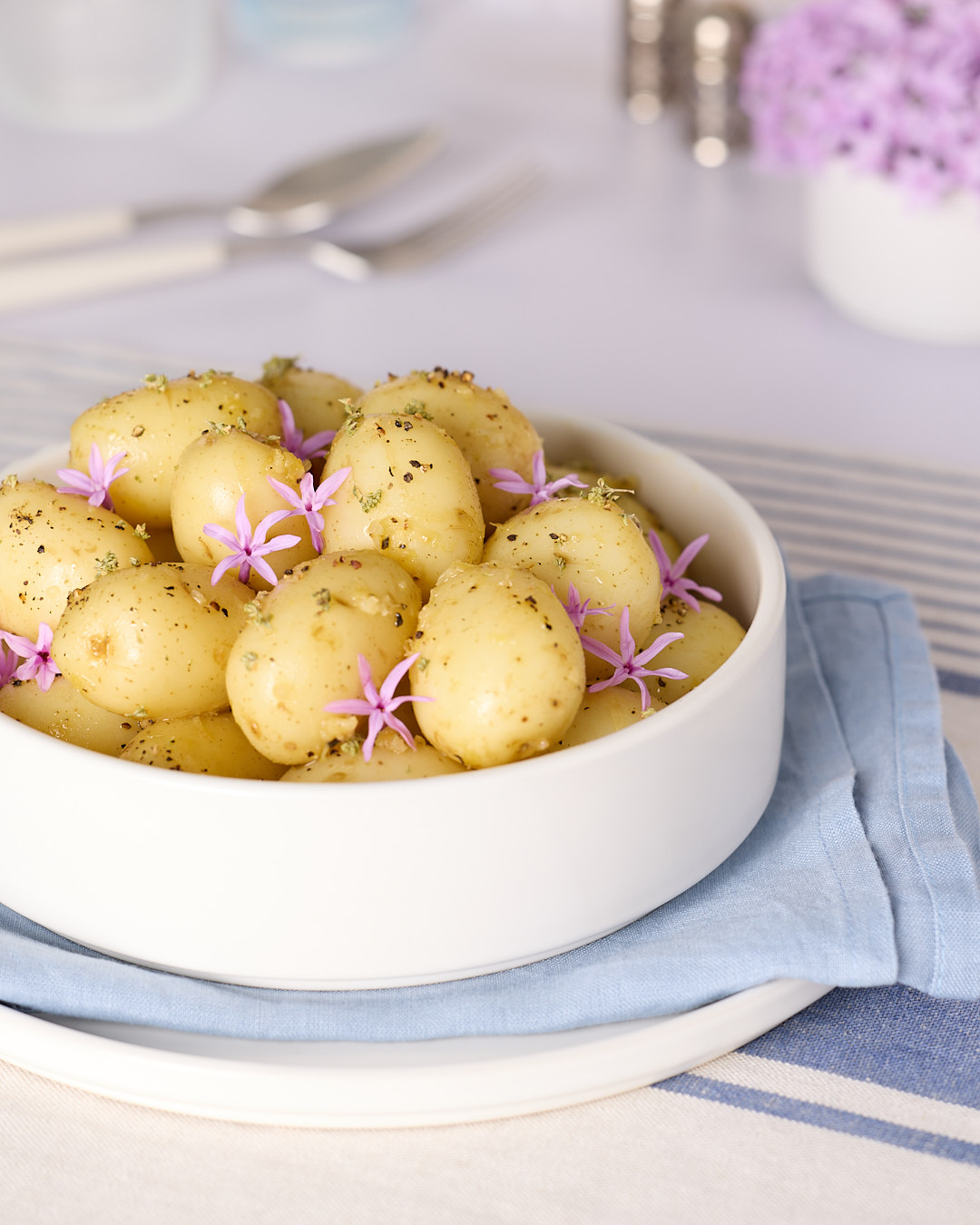
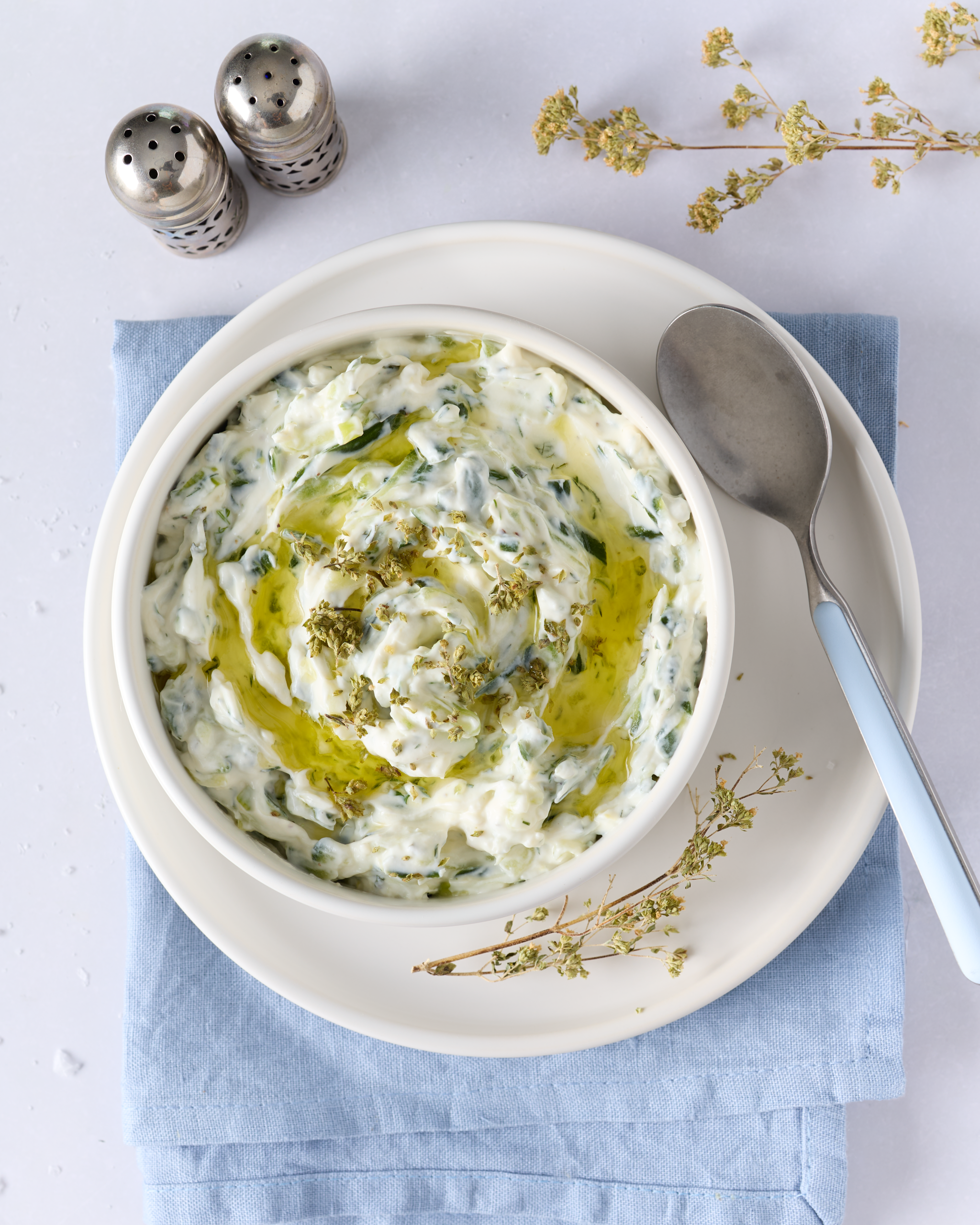
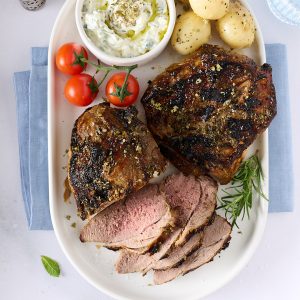
This is the lamb I make for a summer table: sliced roast lamb on a platter, my French-style potato salad (no mayo) with lemon and garlic, and a bowl of creamy Greek tzatziki on the side. The Greek-style lemon and oregano finishing sauce can be made ahead too, then spooned over the lamb as it comes out of the oven—so it tastes fresh and punchy, even if you’ve had a lot going on in the kitchen.
Let me break it down for you.
Butterflied leg of lamb
My butterflied leg of lamb recipe does not involve me showing off any butchery skills—because I have none. I can break up a joint of meat, yes, but don’t let that send your imagination galloping off toward anything impressive. And while I do own a boning knife, I’m not making claims to anything beyond basic competence in handling it.
This Greek roast lamb recipe starts with a quick stop at my local butcher for an easy-carve leg of lamb (1.5 kg -2kg). I prefer this over a butcher-butterflied leg of lamb when I want more of that carved roast lamb experience. A butcher-butterflied leg is trimmed and opened out to an even thickness, which is ideal for a fast, even cook. I absolutely buy those for an easy weeknight meal. But for this recipe, I want a little more structure.
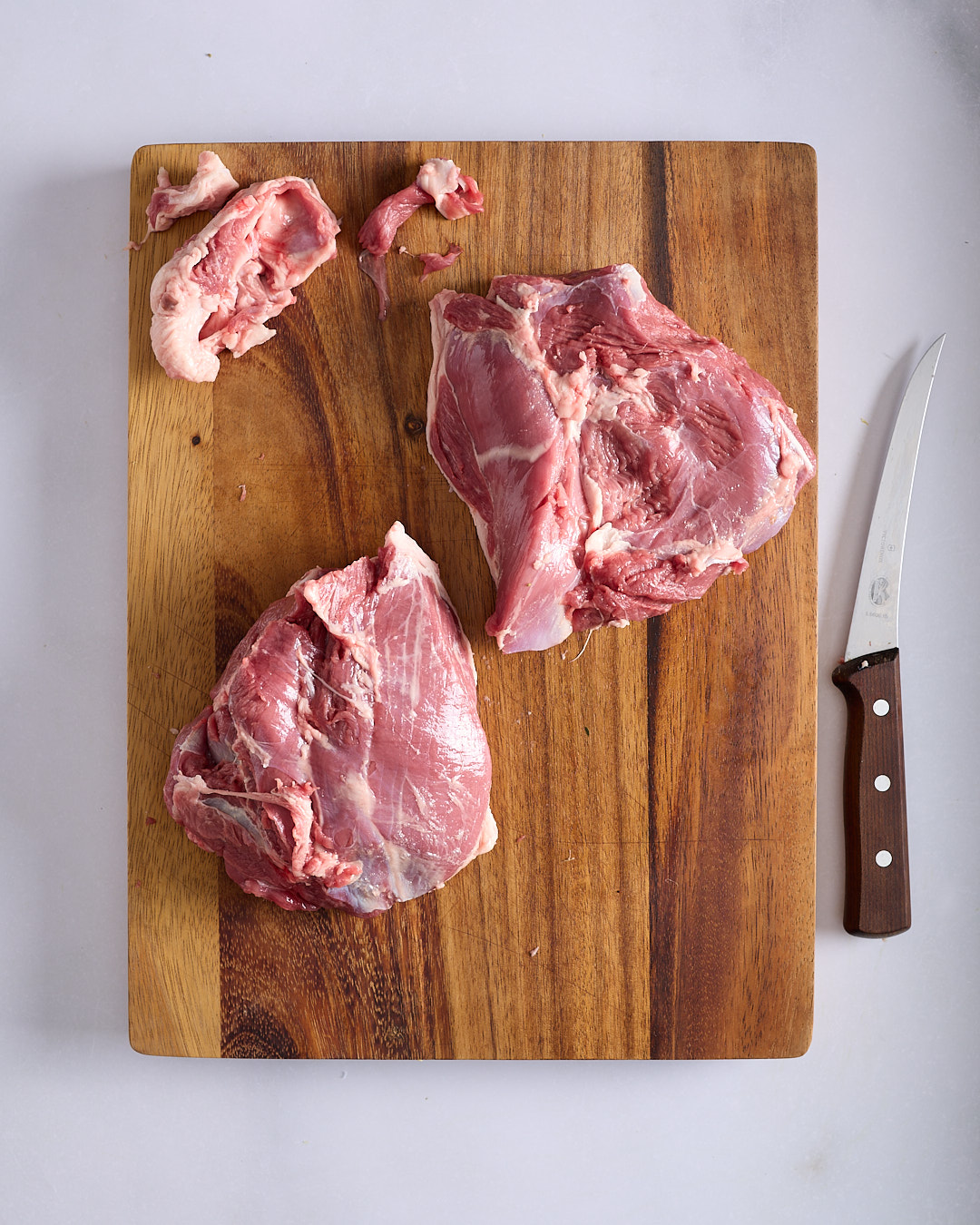
At home, I cut out the lamb shank and freeze it for another day, then trim any excess fat. When you remove the butcher’s twine and open the leg up, you’ll see two distinct muscles—one larger than the other. I stand the butterflied leg on its end, find the seam between those muscles, then cut them apart on the chopping board. The goal is two mini roasts that can cook for different lengths of time, or to different levels of doneness.
Leave the lamb out to come to room temperature while you prepare the lamb finishing sauce.
Greek inspired lamb finishing sauce
Ingredients
- 2 large lemons
- 1 tablespoon sea salt
- 2 teaspoons black peppercorns
- 3 garlic cloves
- 1 fresh bay leaf (or dry)
- 3 small sprigs fresh rosemary
- 3 sprigs dried Greek oregano
- 2 anchovy fillets
- 125ml apple cider vinegar
- 2-3 tablespoons honey
- 2-3 tablespoons extra virgin olive oil
I’ve road-tested a number of lamb “marinades” in pursuit of a more Mediterranean, Greek-inspired butterflied leg of lamb, and I haven’t loved the results. They always sound promising on paper, but in practice the flavour can end up muted, or a bit scorched, or both. Further research led me to the concept of a finishing sauce—a marinade-style sauce that’s spooned over the lamb as it comes off the heat. Same flavour idea, different timing.
Applied at the end, the garlic doesn’t sit on the surface long enough to burn, and the herbs stay aromatic and lively instead of going dull (or worse, bitter). And if there’s honey in the mix, it can do its actual job—smoothing the sharp edges of lemon and vinegar—without turning the outside of your lamb into something that looks like it’s actually been through a trial by fire.
Let me show you how to make my finishing sauce for lamb.
Greek lamb finishing sauce method
The hero of my Greek-style lamb finishing sauce is dried Greek oregano. This is a new-to-me discovery. I kept eyeing off the packages of Greek oregano on the stem at my local specialty grocer with scepticism—who would want all that inconvenient packaging when fresh from my herb garden exists? I was wrong. The common fresh oregano available in Australia can’t compete with the aromatically intense flavour of dried Greek oregano.
Strip the leaves and blossoms from a couple of sprigs of Greek oregano. Measure out 2 tablespoons for the sauce, then set any extra aside to finish your Greek-inspired butterflied leg of lamb at the end.
To get maximum flavour out of this finishing sauce for lamb, I use a spice grinder (a bullet-style blender also works). Add 1 tablespoon sea salt, 2 teaspoons black pepper, 1 bay leaf, 2 tablespoons picked Greek oregano, the leaves from 3 small sprigs of rosemary, and 2 anchovy fillets and grind until finely chopped.
Tip the ground herb mix into a mixing bowl, then stir through 2 tablespoons honey. Peel and crush 3 garlic cloves into the bowl, then zest 2 lemons over the top using a microplane.
Juice the lemons (I use a citrus juicer). Measure 125ml lemon juice, then add it to the bowl along with 125ml apple cider vinegar and 2 tablespoons extra virgin olive oil.
Using a spatula or wooden spoon, stir the sauce well. I don’t recommend blending at this stage because the goal isn’t emulsification—it’s to keep the ingredients as identifiable components as they’re brushed across hot lamb.
Taste and adjust for honey, salt, and lemon juice, keeping in mind you want the extra virgin olive oil in the background and the brightness and acidity of the lemon juice and apple cider vinegar doing the work on the lamb. This is how to make a finishing sauce for lamb that tastes lively, not greasy.
My roast butterflied lamb method
There is much debate over the best method to cook a roast. When I’m roasting a large joint of meat, I’m an advocate for the high-then-low method. I start hot so the Maillard reaction kicks off and creates a deep savoury crust, then turn the heat down to finish the roast low on a lower heat.
But for smaller cuts of meat such as chicken Marylands, pork ribs or, in this case, a broken down Greek-inspired butterflied leg of lamb, I go high heat through the whole cook. It’s important the lamb is at room temperature before it goes into the oven.
An instant-read thermometer is pretty essential as well. If you’re an expert at nudging a piece of meat to determine its doneness, you’re probably not reading this blog.
Preheat the oven to 250°C fan forced. Place the two pieces of lamb on a baking tray (it’s optional to line it with baking paper), then roast in the middle of the oven.
Have the Greek lamb finishing sauce ready with a silicone basting brush parked near the oven.
Start checking the smaller piece of lamb after 10 minutes. Keep in mind the internal temperature will continue to rise once the lamb is out of the oven. Because the pieces are relatively small, that rise may be around 5–7 degrees. The idea is to remove each piece as it reaches your preferred doneness.
Rare: remove at 45–47°C, final goal 52°C.
Medium: remove at 53–55°C, final goal 60°C.
Well done: remove at 64–66°C, final goal 71°C.
As each piece of roast butterflied lamb comes out of the oven, immediately baste it several times with the Greek lamb finishing sauce—I would almost say “bathe” it in the sauce.
Leave the lamb to rest for 10–15 minutes before serving.
The sides that make it a Greek-inspired lamb roast dinner
If you’re looking to make a Greek-inspired lamb roast dinner, these are the three elements I build the meal around: the Greek lamb finishing sauce (used up at the oven, not served), tzatziki sauce for lamb, and a lemon and garlic potato salad. They each do a different job—fresh acidity, cooling creaminess, and properly seasoned potatoes—and together they turn a simple roast lamb into a celebration-worthy dinner.
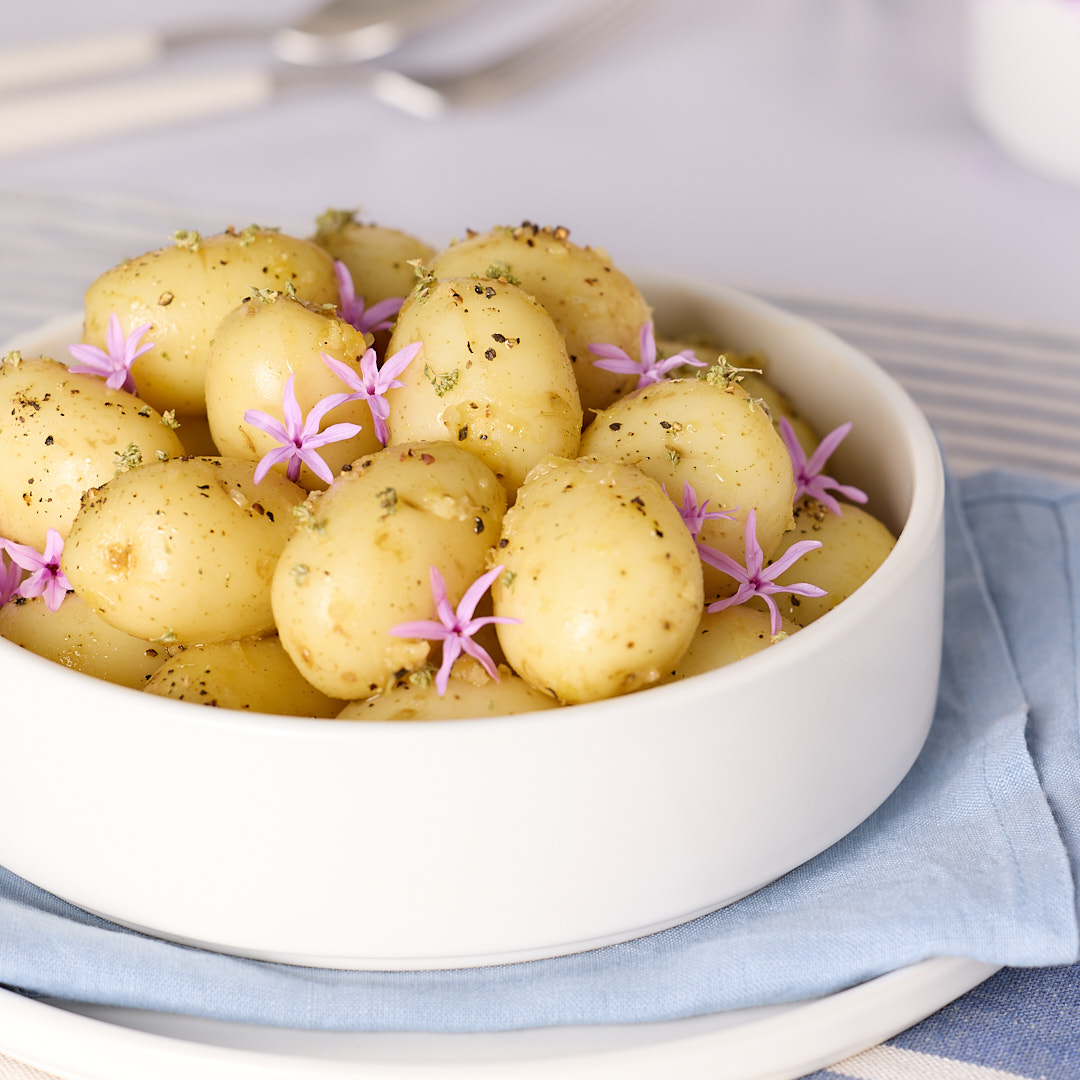
In the Greek tavernas I’ve visited, the potatoes cook at the bottom of the rotisserie, where they absorb all the fat that drips from the meat roasting above. These may be “to die for” potatoes in more than one sense. I would eat Greek rotisserie potatoes with every roast dinner if my middle-aged waistline didn’t keep objecting. So instead, I’ve gone for a lighter French-style potato salad (no mayo) with lemon and garlic to serve with my roast butterflied lamb.
While not as rich with flavour derived from fat, these potatoes are dressed while hot and left overnight with a bright lemon and garlic vinaigrette that—like the fat in the rotisserie—actually absorbs into the potatoes.
The creamy Greek tzatziki sauce is the cooling element that makes everything feel balanced. This cucumber yoghurt sauce pulls double duty alongside lamb as a sauce for both my roast butterflied lamb and my healthy potato salad recipe. At my family table, we insist each forkful contains an equal amount of lamb, potato and homemade tzatziki.
With the exception of the roast lamb, the tzatziki sauce for lamb, the French-style potato salad (no mayo) with lemon and garlic, and the Greek lamb finishing sauce can be prepared a day ahead. The only “last minute” part is brushing the finishing sauce over the lamb as it comes out of the oven to rest.
Butterflied Leg of Lamb with Greek-style Finishing Sauce
Equipment
- Roasting pan
- Instant read thermometer
- Microplane (or citrus zester)
- Spice grinder (optional, but best for the sauce)
Ingredients
Roast lamb:
- 1.5 kg – 2kg easy carve leg of lamb
Greek lamb finishing sauce:
- 2 large lemons
- 1 tablespoon sea salt
- 2 teaspoons black peppercorns
- 3 garlic cloves
- 1 fresh bay leaf (or dry)
- 3 small sprigs fresh rosemary
- 3 sprigs dried Greek oregano
- 2 anchovy fillets
- 125 ml apple cider vinegar
- 2-3 tablespoons honey
- 2-3 tablespoons extra virgin olive oil
Instructions
Get organised:
- Take the lamb out of the fridge so it can come to room temperature before roasting. This helps it cook evenly, especially at high heat.
Make the Greek lamb finishing sauce:
- Strip the leaves and blossoms from the dried Greek oregano sprigs.
- Measure out 2 tablespoons of oregano leaves/blossoms for the sauce and set aside any extra for serving.
- Add the sea salt, black peppercorns, bay leaf, 2 tablespoons of dried Greek oregano, rosemary leaves, and anchovy fillets to a spice grinder (or bullet blender).
- Grind until finely chopped, then tip into a small mixing bowl.
- Add 2 tablespoons honey, then crush the garlic cloves into the bowl.
- Zest 2 lemons over the bowl using a microplane.
- Juice the lemons. Measure 125ml lemon juice, then add it to the bowl along with 125ml apple cider vinegar and 2 tablespoons extra virgin olive oil. Stir well with a spoon.
- Taste and adjust the honey, salt and lemon juice as needed. Set aside so it’s ready at the oven.
Roast the butterflied lamb:
- Preheat the oven to 250°C fan forced.
- Place the butterflied lamb pieces in a roasting pan and roast on the middle rack.
- Start checking the smaller piece after 10 minutes. Use an instant-read thermometer and remove each piece as it reaches your preferred “remove from oven” temperature.
Temperature guide:
- Rare: remove at 45–47°C, final goal 52°C.
- Medium: remove at 53–55°C, final goal 60°C.
- Well done: remove at 64–66°C, final goal 71°C.
Finish and rest:
- As each piece comes out of the oven, immediately baste it several times with the Greek lamb finishing sauce.
- Rest the lamb for 10–15 minutes before slicing and serving.
One Response
I tried this recipe over the weekend and found it very easy to follow…. The finishing sauce is delicious and even though I didn’t quite had the correct tools, my sauce worked a charm. Has become a quick favourite of the family…