Recipes

Pork And Leek Stuffed Shells With Fennel Cream
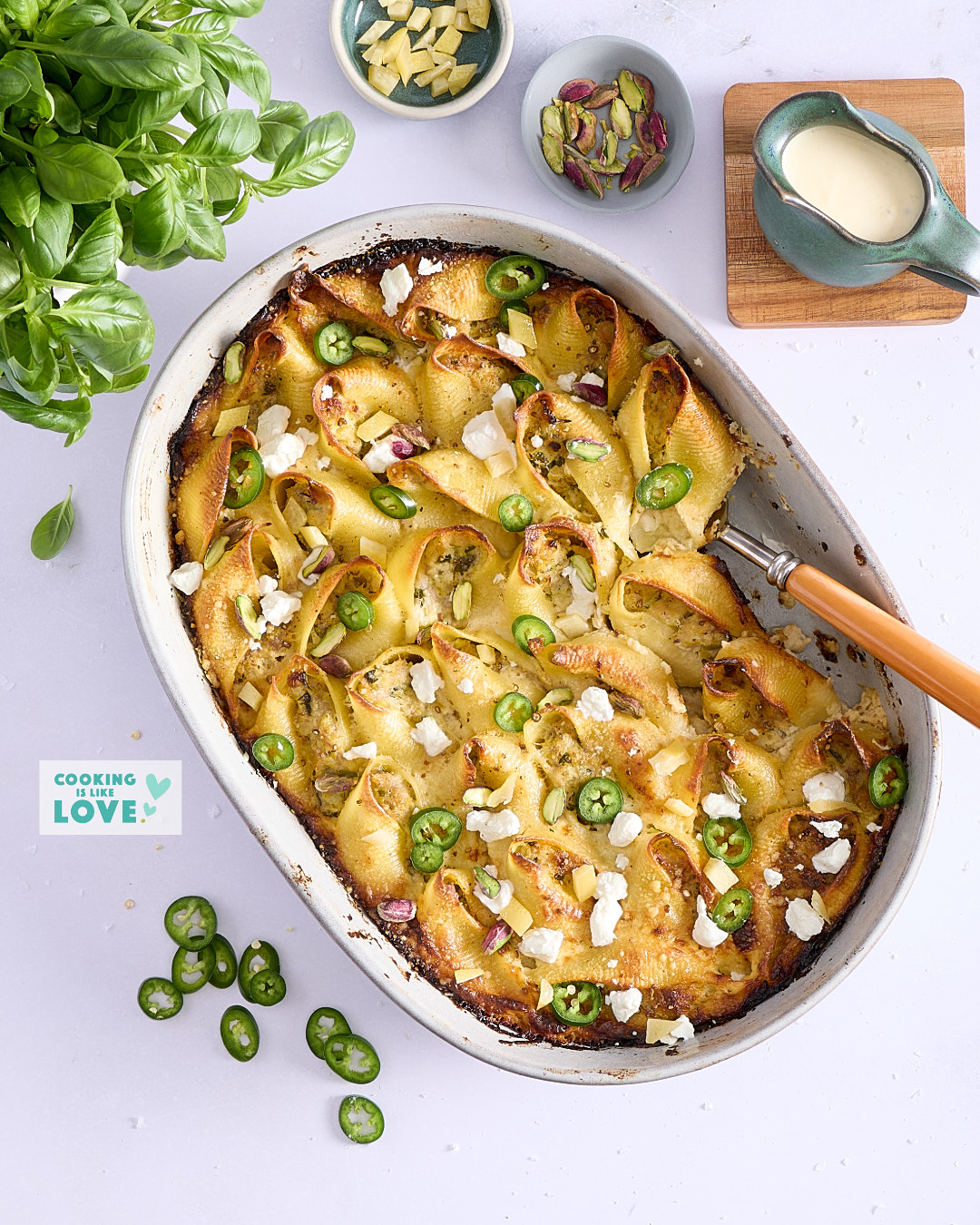
The defining flavours in my pork stuffed pasta shells recipe are fennel, leek, basil, goat’s cheese, and preserved lemon. Hand on heart, I could not have dreamt up this combination myself. 

I’ve been staring at the most delicious photo in my July 2023 issue of Gourmet Traveller for two years—have I mentioned I’ve been a GT faithful since its inception in 1988?

The recipe was for the most luscious and delicate leek and goat’s cheese tortellini with fennel sauce. The filling paired softened leeks, tangy goat’s cheese, sweet basil, and the quiet umami depth of preserved lemon—that flavour you can’t quite put your finger on—but would miss if it weren’t there. 

But tortellini? Let’s be honest. They’re dainty little pasta parcels, folded and pinched with the finesse of a Nonna’s hands, and I’ve never had the patience—or the Nonna fingers—for making them by the dozen. 

Two years of pontificating, and I think I’ve done justice to the delicacy of the GT dish with my shortcut: pork and leek stuffed shells with fennel cream. The pork doesn’t fight for attention here—it’s just the ballast, the savoury base that lets those delicate flavours shine. All the same unique elements, just baked into oversized pasta shells instead of little tortellini. A little more rustic, a little more generous, but no less elegant when it hits the table.  

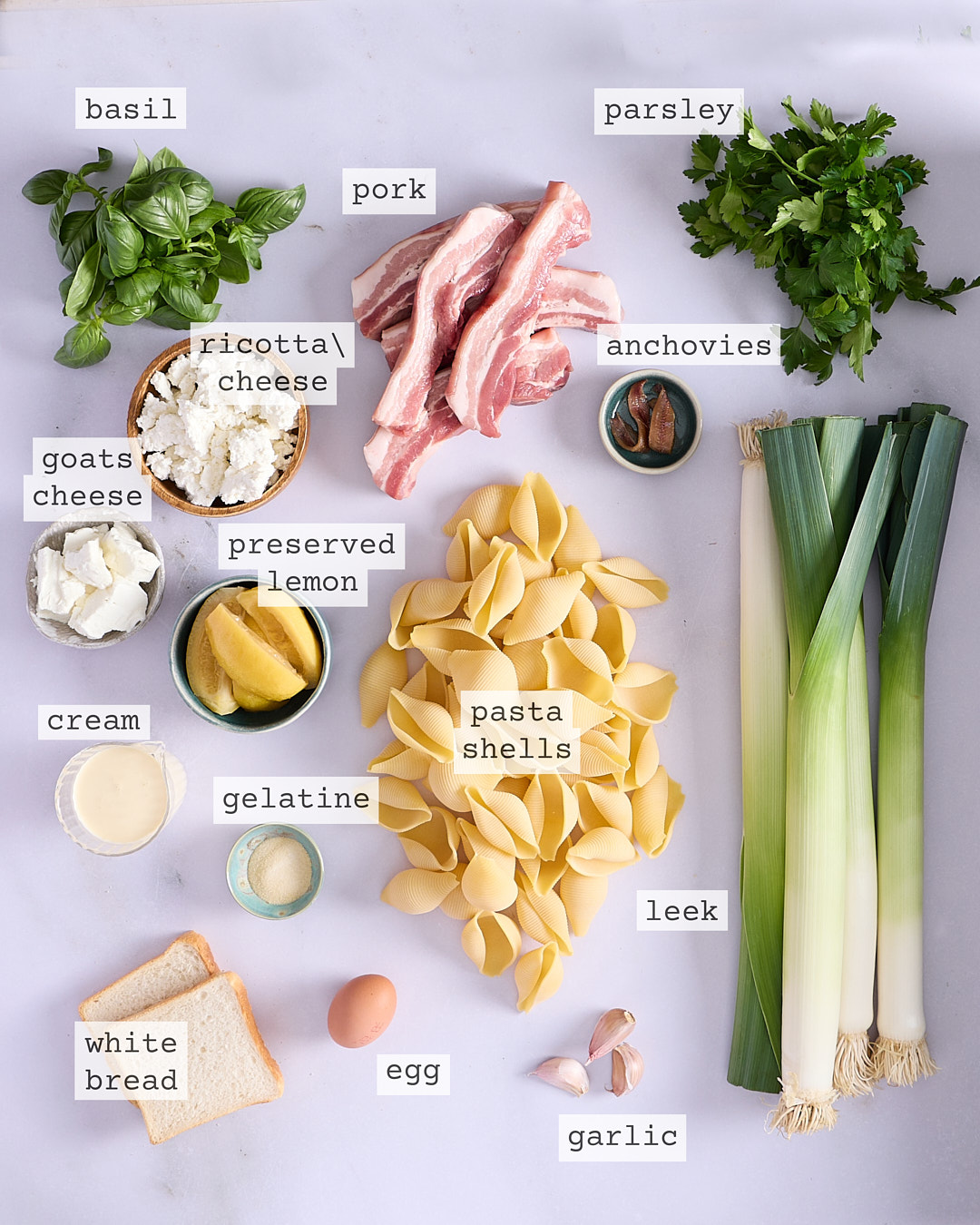
Pork and leek stuffed shell ingredients

Pork and leek stuffed pasta shell ingredients.
  • 500g large pasta shells 
  • 500g ground pork 
  • 150g traditional ricotta cheese 
  • 150g goat’s cheese 
  • ¼ cup pure cream 
  • 2 slices white bread, crusts removed 
  • 1 large egg 
  • 2 teaspoons gelatine 
  • 3 large garlic cloves 
  • 2 anchovy fillets (optional) 
  • 4 large leeks (approx. 500g) 
  • 2-3 tablespoons unsalted butter 

I use jumbo pasta shells—the Italian kind you’ll find at specialty markets and well-stocked delis. The correct Italian name for the large version of pasta shells is conchiglioniAustralian brands sell “large” dried shells, but they’re nowhere near the same thing. They don’t hold much filling, and they’ll likely vanish under the fennel cream sauce once baked. The jumbo shells are worth hunting down. But if all you can get are the smaller shells, don’t stress—this recipe still works if you reframe it as a pork meatball and fennel sauce baked pasta. Different shape, same flavour payoff. 

As for the pork, I occasionally grind my own. And yes, before you ask, I did use pork belly in the ingredient photo. Would I recommend it as your go-to source of ground pork? Probably not. These were unusually lean strips of belly, which worked here—but finding “lean” pork belly at the butcher reads more like wishful thinking than a reliable shopping list item. 

Back to the point: choose ground pork with a fat content between 10% and 15%. This is a comfort food pasta bake, not a virtuous weeknight mince dish. Extra-lean pork at 5% fat won’t deliver the richness you want in pork and leek stuffed shells with fennel cream

Fennel cream sauce ingredients

Fennel cream sauce ingredients.
  • 2 large fennel bulbs (approx. 400g, fronds reserved) 
  • 20g butter 
  • 250ml cream (35% fat content) 
  • 250ml full cream milk 
  • 75g finely grated parmesan cheese 
  • Salt and white pepper 

I find fennel a bit tricky to buy—you go out looking for a big bulb and only the scrawny ones are there. Then the next week they’re giants. So I’ve given the weight as a guide. You’re aiming for bulbs that are large but not giant, and definitely not small. Think of it as a Goldilocks moment: just right. 

If you can, pick bulbs with plenty of fennel fronds attached. Optional, yes, but I like to blitz the fresh fronds into the sauce at the end for an extra layer of flavour. 

And while we’re talking dairy, I’m a stickler for pure cream in my cooking—not the thickened stuff. Of course, the dish will survive with Aussie thickened cream if that’s all you’ve got…just don’t tell me. 

This fennel cream is what transforms the recipe from a stuffed shell bake into something restaurant-worthy. It balances the savoury pork filling and rounds out the flavours in these pork and leek stuffed shells. 

Decoration and garnish ingredients

Garnish ingredients.
  • 50g goat’s cheese, crumbled 
  • 3 tablespoons chopped preserved lemon 
  • 2 fresh green chillies, thinly sliced 
  • 50g toasted pistachios 
  • Reserved fennel fronds 
  • Micro herbs 

The garnish is optional, but it’s what makes these pork and leek stuffed shells with fennel cream feel finished. The green chilli cuts through the richness with just enough heat. The preserved lemon, diced small, works almost like an amped-up zest scattered across the top. And the pistachios bring the crunch that just feels right alongside preserved lemon. A scatter of goat’s cheese, fennel fronds, and a few micro herbs pull the whole dish together. 

Make the pork and leek filling

Prepare the leeks

Finely chopped leeks with garlic and anchovies on chopping board.

Leeks are notorious for hiding grit deep between their layers. The best way to clean them is with a soak. Trim the roots off the base and cut away the dark green tops, keeping the white and pale green sections. Split each leek in half lengthwise, then lay them cut-side down in a container of cold water, fanning the layers slightly as you go. Leave them to soak for a few minutes, then swish gently to loosen any grit. Lift the leeks out of the water—don’t pour the water off, because that just puts the dirt back on the leeks. Roll them in a tea towel to dry.

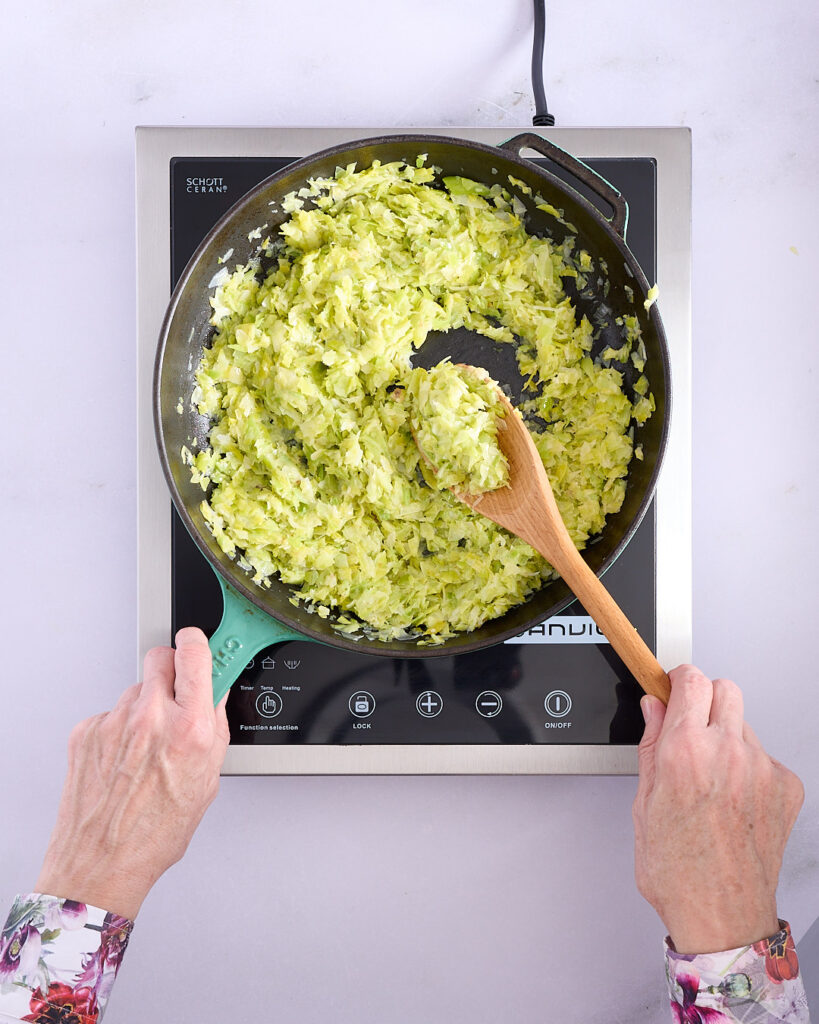
Sandra sautéing chopped leeks, garlic, and anchovies.

From here, save yourself the knife work. Leeks don’t need hand slicing—you can chop them finely in a food processor or Thermomix. Just don’t take them so far that you end up with leek purée. 

Heat 2–3 tablespoons butter in a large frying pan or wok over medium-low heat. Crush in 3 large garlic cloves, add 2 chopped anchovy fillets if you’re using them, and mash the anchovies gently with a fork. Cook until the garlic turns translucent, then raise the heat to medium and add the chopped leeks. Toss well to combine, and cook gently, stirring often, until the leeks are soft and the liquid has cooked away. Set aside to cool before combining them with the pork filling. 

This base gives the stuffing for these pork stuffed pasta shells its mellow sweetness and savoury backbone. 

Making the stuffing

Preparing the panade

Panade ingredients ready to be combined.

I used to believe that adding breadcrumbs to meatballs was basically cheating—a way my mum stretched the meat a bit further. And, to my detriment, in my “no carbs at any cost” days I tried leaving them out. The result? Meatballs that fell apart or cooked up dry as cardboard. 

Then along came J. Kenji López-Alt and his 2015 book The Food Lab: Better Home Cooking Through Science. Kenji literally answers all the “why” questions in the kitchen. It’s full of practical, science-grounded advice that makes you a better cook—no lab coat required. 

Kenji readjusted my thinking, and he was in the back of my mind as I worked on the stuffing for these pork and leek stuffed shells. His theories led me to lean into a panade. 

A panade is a classic French technique—fresh bread soaked in milk, cream, or stock, then mashed into a smooth paste. It keeps ground meat tender, juicy, and structured as it cooks.

A panade that does double duty

  • 150g traditional ricotta cheese  
  • 150g goat’s cheese 
  • ¼ cup pure cream 
  • 2 slices white bread, crusts removed 
  • 1 large egg 
  • 2 teaspoons gelatine 

My panade method pulls double duty. First, the bread, cream, egg, and gelatine create the binder for the filling—locking in moisture so it doesn’t dry out while baking inside the pasta shells. Then, by folding in the ricotta cheese and goat’s cheese at this stage, you get even distribution of both the binder and the cheeses throughout the stuffing. The result is a creamy, structured base that sets the stage for the pork, leeks, and herbs to shine. 

Here’s how I do it

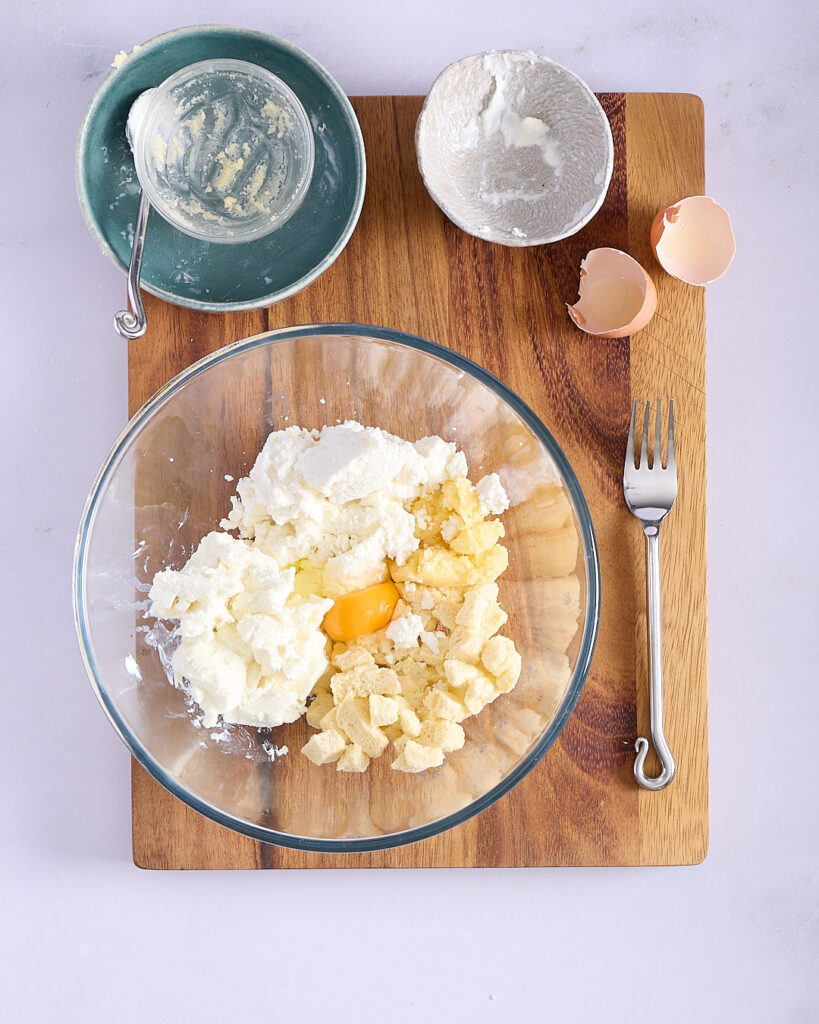
In a medium bowl, sprinkle 2 teaspoons gelatine over ¼ cup pure cream and leave it to bloom for 5 minutes. Tear 2 slices white bread into small pieces and mash them into the gelatine mixture with a fork. Add 1 large egg and continue mashing until smooth. Then fold in 150g ricotta cheese and 150g goat’s cheese, mixing until everything is evenly incorporated. Set aside until you’re ready to bring the stuffing together. 

Make the filling

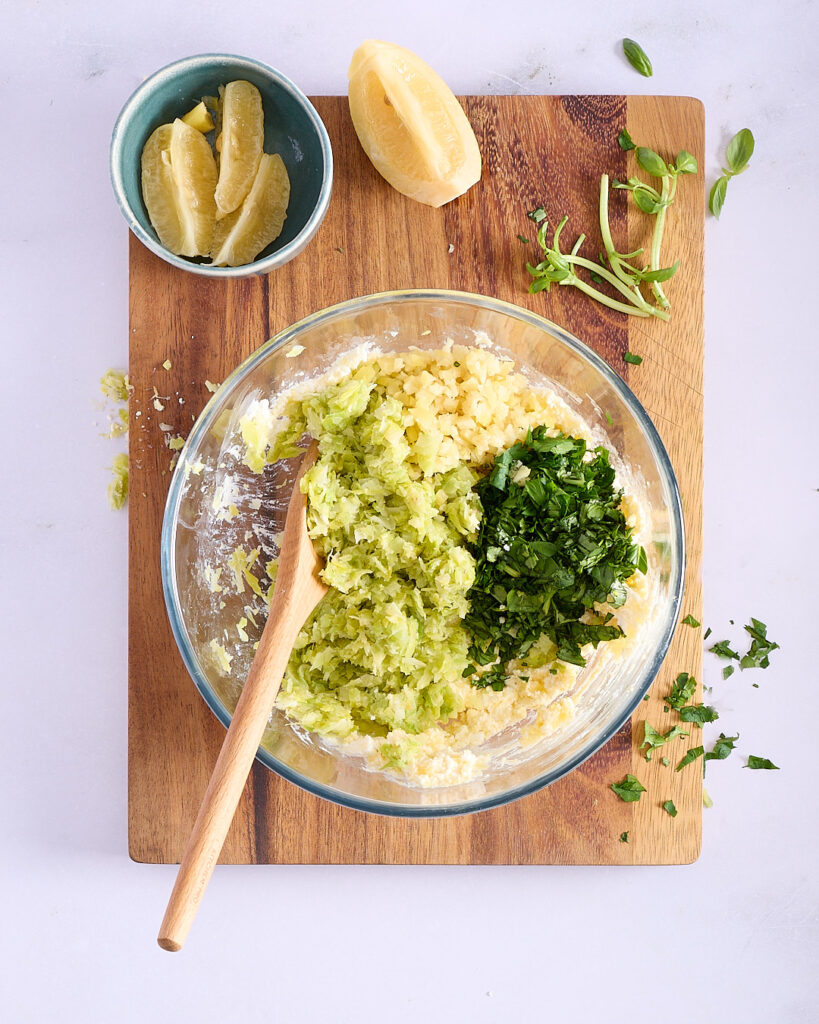
Mixing bowl with cheesy panade, cooled leeks and herbs.
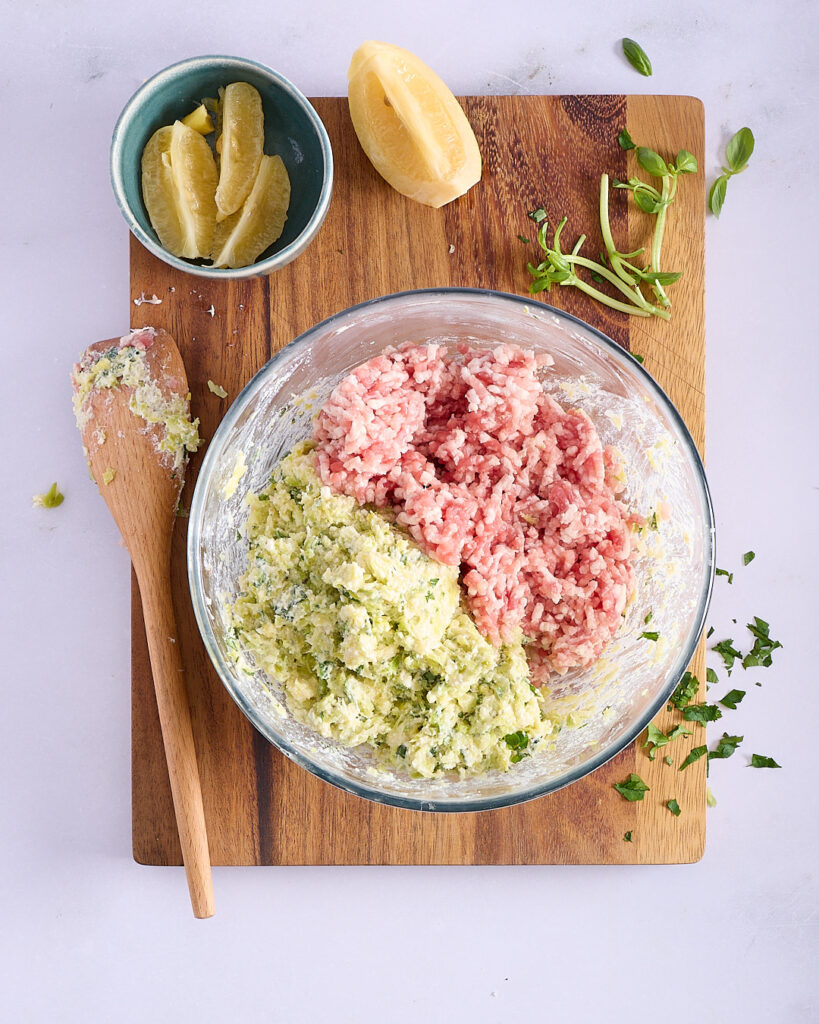
Ground pork added to bowl with leek, herb, and panade mixture.

In a large mixing bowl, combine the cheesy panade mixture with the cooled leeks, 3 tablespoons finely chopped preserved lemon peel, and 2 tablespoons each of chopped basil and parsley. Stir until evenly combined—whether you use a wooden spoon, a spatula, or just your hands, it doesn’t matter. 

Next, add 500g ground pork. Use your hands to fold it through the mixture until everything is evenly incorporated. Mix it well enough that the filling holds together, but don’t overwork it. If you do, the texture can firm up more than you want once the shells bake. 

Cook off a small spoonful in a frying pan or even the microwave, then taste and adjust with salt and pepper. It’s worth testing again if you’re unsure—it’s the only chance you’ll get before the filling is sealed inside the shells. 

Once you’re happy with the flavour, spoon the mixture into 2 large piping bags. Secure the tops with elastic bands and refrigerate until you’re ready to assemble your pork and leek stuffed shells with fennel cream. 

Make the sauce and cook the pasta shells

Here’s where my fairly simple pork and leek stuffed shells start to channel the authority of Gourmet Traveller: the luxurious fennel cream sauce.

The fennel cream sauce

  • 2 large fennel bulbs (approx. 400g, fronds reserved) 
  • 20g butter 
  • 250ml cream (35% fat content) 
  • 250ml full cream milk 
  • 75g finely grated parmesan cheese 
  • Salt and white pepper
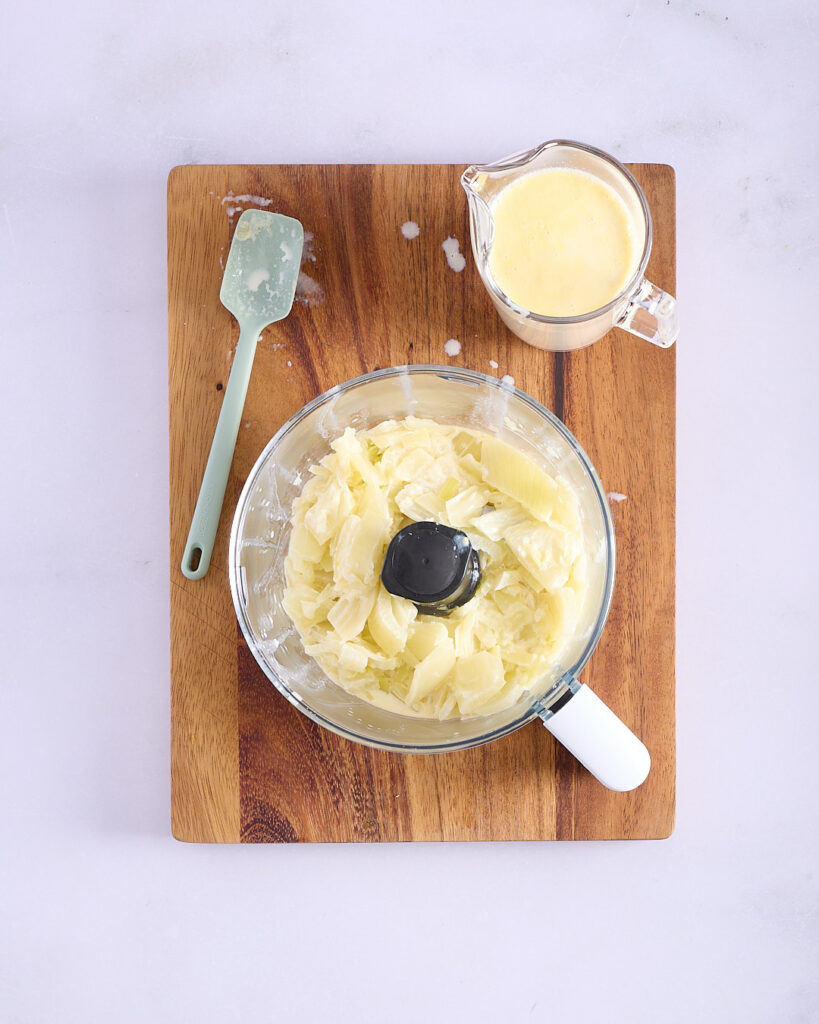
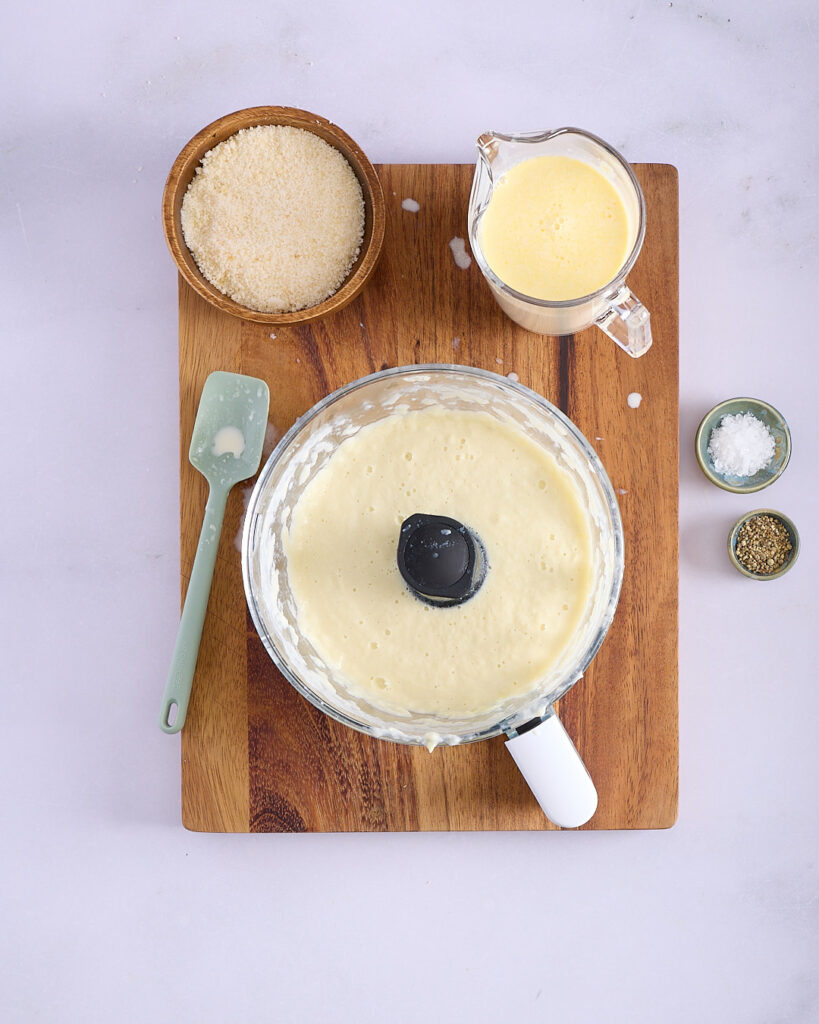
Ready to blend hot cream mixture and cooked fennel.
Processed fennel with parmesan cream sauce.

Trim 2 large fennel bulbs, removing the stalks and base but reserving the fronds. Quarter the bulbs and place them in a large saucepan with 20g butter, 250ml cream, and 250ml milk. Cover and bring to a boil over medium heat, then reduce and simmer until the fennel is very tender. 

Lift out the fennel with a slotted spoon, leaving the liquid in the pan. Transfer the fennel to a blenderfood processor, or Thermomix with 75g of finely grated parmesan and a few of the reserved fennel fronds (chopped). Process to a smooth paste, then gradually add the hot cream mixture until you have a thick but pourable sauce. Taste and season with salt and white pepper. Refrigerate until you’re ready to finish assembling the pork stuffed pasta shells dish.

Cook the pasta shells

Bring a large pasta pot of well-salted water to the boil. Add 500g pasta shells and cook for about 10 minutes, until flexible but still very al dente. Drain in a colander, rinse immediately under cold water, and toss lightly with oil to prevent sticking. 

Bringing it all together

Assembly and baking

Let me show you how to assemble this baked pork and leek stuffed shells with fennel cream dish. 

Preheat the oven to 190°C conventional (170°C fan forced) with the rack in the middle of the oven. 

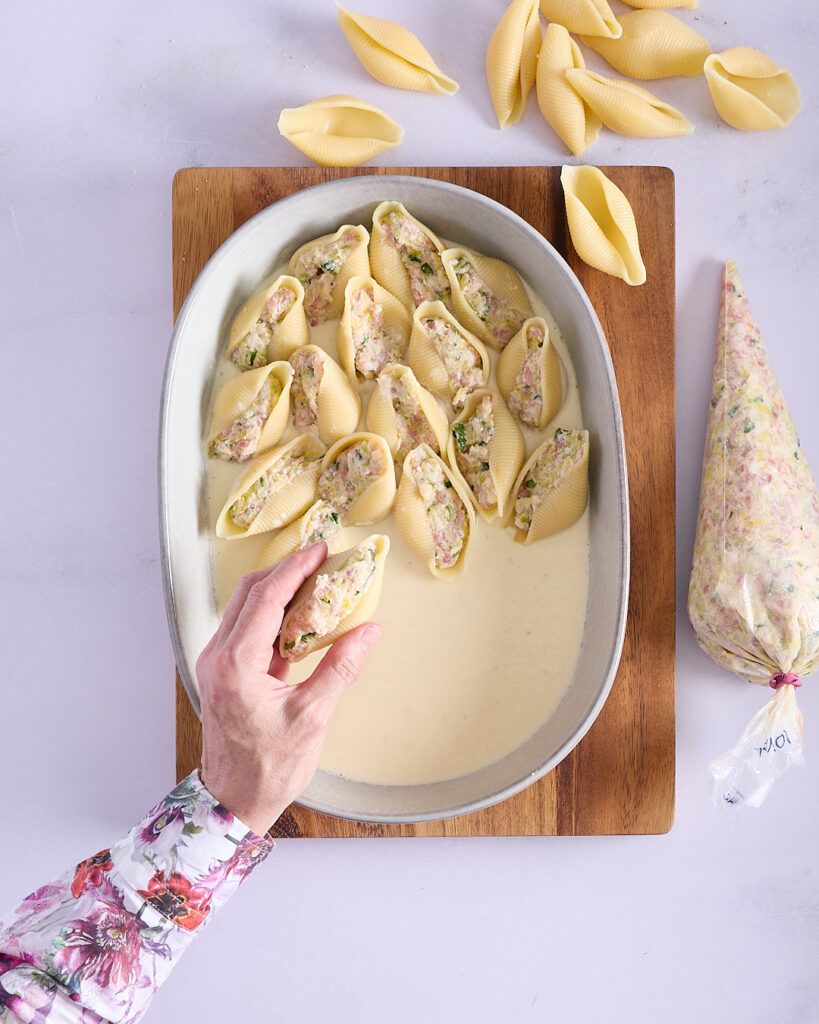
Sandra placing stuffed pasta shells into stoneware dish.

I’ve used a 36cm x 26cm x 7cm oval stoneware baking dish—any large, fairly deep roasting pan will work fine. You want depth to contain the fennel sauce but not so much width that the shells are spread too thin. Yup, it’s another Goldilocks moment: just right. 

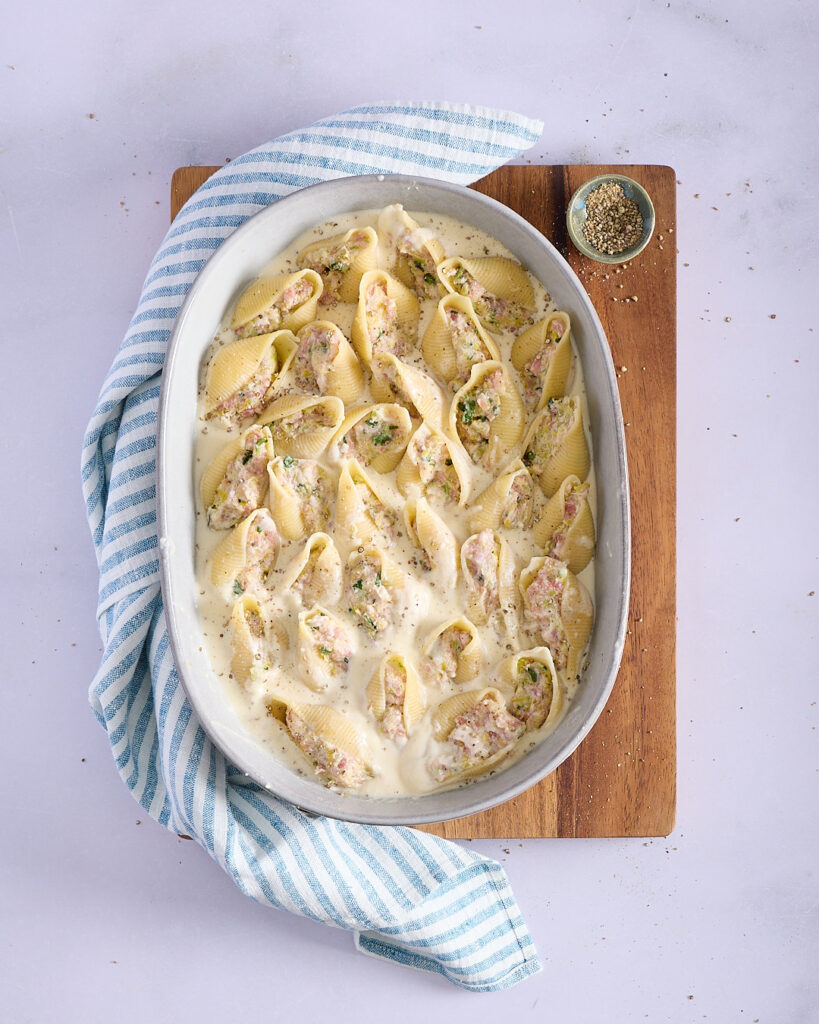
Grease the pan with oil, then pour about one-quarter of the fennel sauce into the base. Pipe the pork filling into the pasta shells, filling them completely. Arrange them upright in a single snug layer, leaning against each other, with half of each shell sitting above the sauce. Pour the remaining fennel sauce carefully between the shells until it comes about halfway up the sides. Reserve any leftover sauce to serve separately. 

Ready to bake stuffed pasta shells with fennel cream.

Cover the baking dish with foil sprayed with oil on the shiny side. Bake for 60–70 minutes in stoneware (less if you’re using stainless steel or metal) until the pork reaches an internal temperature of 90°C. Remove the foil, increase the oven to 220°C conventional (200°C fan), and bake for a further 10–15 minutes until the tops of the shells are golden. 

Resting, garnishing and serving

Allow the pork and leek stuffed shells with fennel cream to rest uncovered for 30 minutes before serving so the sauce has time to set. 

Garnish with 50g crumbled goat’s cheese, 3 tablespoons preserved lemon, 2 thinly sliced green chillies, 50g toasted pistachios, reserved fennel fronds, and micro herbs. 

Serve warm with any extra fennel sauce on the side.

Pork And Leek Stuffed Shells With Fennel Cream

The defining flavours in my pork stuffed pasta shells recipe are fennel, leek, basil, goat’s cheese, and preserved lemon. Hand on heart, I could not have dreamt up this combination myself.
I’ve been staring at the most delicious photo in my July 2023 issue of Gourmet Traveller for two years—have I mentioned I’ve been a GT faithful since its inception in 1988? The recipe was for the most luscious and delicate leek and goat’s cheese tortellini with fennel sauce. The filling paired softened leeks, tangy goat’s cheese, sweet basil, and the quiet umami depth of preserved lemon—that flavour you can’t quite put your finger on, but would miss if it weren’t there.
Prep Time 1 hour 30 minutes
Cook Time 1 hour 30 minutes
Servings 6 people

Equipment

  • 36cm x 26cm x 7cm oval baking dish (or similar deep roasting pan)
  • Digital scales
  • Large pasta pot
  • Large frying pan or wok
  • Large mixing bowl
  • Food processor (or blender)
  • Colander
  • Piping bags (2 large, for stuffing shells)
  • Instant read thermometer (optional)
  • Microplane (optional, for fresh nutmeg)

Ingredients  

Stuffed pasta shells:

  • 500 g large pasta shells (jumbo if possible)
  • 500 g ground pork (10–15% fat)
  • 150 g traditional ricotta cheese
  • 150 g goat's cheese
  • ¼ cup pure cream
  • 2 slices white bread (crusts removed)
  • 1 large egg
  • 2 teaspoons gelatine
  • 3 large garlic cloves
  • 2 anchovy fillets (optional)
  • 4 large leeks (approx. 500g)
  • 2 –3 tablespoons unsalted butter (for cooking leeks)
  • 3 tablespoons finely chopped preserved lemon rind
  • 2 tablespoons chopped sweet basil
  • 2 tablespoons chopped flat leaf parsley

Fennel cream sauce:

  • 2 large fennel bulbs (approx. 400g, fronds reserved)
  • 20 g butter
  • 250 ml cream (35% fat content)
  • 250 ml full cream milk
  • 75 g finely grated parmesan cheese
  • Salt and white pepper

Garnish:

  • 50 g goat's cheese (crumbled)
  • 3 tablespoons finely diced preserved lemon
  • 2 thinly sliced fresh green chillies
  • 50 g toasted pistachios
  • Reserved fennel fronds
  • Micro herbs

Instructions 

Prepare the leeks:

  • Trim the roots and dark tops from the leeks, keeping the white and pale green parts.
  • Split lengthwise and soak in cold water, cut side down, fanning the layers to release grit. Swish gently, then lift out (don’t pour the water off). Dry in a tea towel.
  • Chop finely in a food processor.
  • Heat 2–3 tablespoons butter in a large frying pan or wok over medium-low heat.
  • Add crushed garlic and anchovies (if using), mash gently, and cook until garlic is translucent.
  • Add the chopped leeks, toss, and cook gently until softened and the liquid has evaporated.
  • Set aside to cool.

Prepare the panade:

  • In a medium bowl, sprinkle 2 teaspoons gelatine over ¼ cup cream and leave to bloom for 5 minutes.
  • Tear the bread into small pieces and mash into the gelatine mixture with a fork.
  • Add the egg and continue mashing until smooth.
  • Stir in the ricotta cheese and goat’s cheese until evenly combined.

Make the filling:

  • In a large mixing bowl, combine the panade, cooled leek mixture, 3 tablespoons preserved lemon, and chopped basil and parsley. Mix evenly.
  • Add the ground pork and fold through with your hands until combined—don’t overwork.
  • Cook a small spoonful to taste, then season stuffing with salt and pepper as needed.
  • Transfer raw pork stuffing to 2 piping bags, secure with elastic bands, and refrigerate until needed.

Make the fennel cream sauce:

  • Trim 2 fennel bulbs, reserving the fronds, and quarter the bulbs.
  • Place in a large saucepan with butter, cream, and milk.
  • Cover, bring to a boil, then reduce heat and simmer on low heat until the fennel is very tender. Remove with a slotted spoon, leaving liquid in the pan.
  • Blend fennel with parmesan and some chopped fronds to a smooth paste.
  • Gradually add the hot cream liquid until a thick but pourable sauce is formed.
  • Season with salt and white pepper.
  • Refrigerate until required.

Cook the pasta shells:

  • Bring a large pasta pot of well-salted water to a boil.
  • Add the pasta shells, stir, and cook about 10 minutes, until flexible but still very al dente.
  • Drain shells in a colander, rinse under cold water, and toss lightly with oil to prevent sticking.

Assemble and bake:

  • Preheat oven to 190°C conventional / 170°C fan forced.
  • Grease a 36 × 26 × 7cm baking dish (or similar).
  • Spread one-quarter of the fennel cream sauce in the base.
  • Pipe filling into the pasta shells and arrange upright in a snug layer, half-exposed above the sauce. Pour more sauce carefully between shells until it comes halfway up their sides. Cover with foil sprayed with oil on the shiny side. Bake 60–70 minutes (stoneware) or until the pork reaches 90°C internal. Remove foil, increase oven to 220°C conventional / 200°C fan, and bake 10–15 minutes until golden.

Rest, garnish and serve:

  • Rest uncovered for 30 minutes before serving to let the sauce set.
  • Garnish with goat’s cheese, preserved lemon, green chillies, pistachios, fennel fronds, and micro herbs.
  • Serve with any extra fennel sauce (warmed) on the side.

Just before you cook with abandon…

Preparing preserved lemon: Use the rind only. Remove the pulp, rinse lightly if very salty, and finely dice the rind before adding to the filling or garnish.
Why resting stuffed shells matters: Straight from the oven, the fennel cream is loose and the filling molten. Resting 30 minutes uncovered lets the pasta absorb sauce and the filling firm up. The shells stay hot but serve neatly without collapsing.
Pasta shell size: Jumbo pasta shells work best—they hold the filling and stand upright. Smaller shells from Australian supermarkets will bake, but you’ll lose structure and balance against the fennel cream sauce.
Fat content of pork: Choose mince with 10–15% fat. Extra-lean pork dries out; too much fat makes the sauce greasy.
Leftover shells and sauce: If your baking pan is smaller than mine, you may have some stuffed shells and fennel sauce left over. Don’t waste them—make a one- or two-person bake in a small dish. Once cooled, it can be frozen for another time.
Storage and leftovers: Refrigerated leftovers should be stored promptly once cooled and eaten within 2–3 days. The baked shells also freeze well. Cool completely, wrap tightly, and freeze for up to 3 months. Reheat gently in the oven, covered, with a splash of water or extra sauce to stop them drying out.
Thermomix method for the fennel cream sauce: Cut parmesan cheese into chunks, and place in bowl – measuring cup in place - grate 15-20 sec/speed 10. Remove cheese and set aside. Add quartered fennel bulbs, butter, cream, and milk to the bowl. Cook 25–30 minutes at 100°C, reverse speed 2 - measuring cup off - until fennel is very tender. Pour off the cream mixture into a 1 litre pouring jug, leaving the fennel behind in the bowl. Blend the fennel, parmesan cheese and chopped fennel fronds 30 seconds on speed 7 until smooth. With blades running on speed 3, gradually pour reserved liquid back in until sauce is thick but pourable. Season with salt and white pepper.

Leave a Reply

Your email address will not be published. Required fields are marked *

Recipe Rating


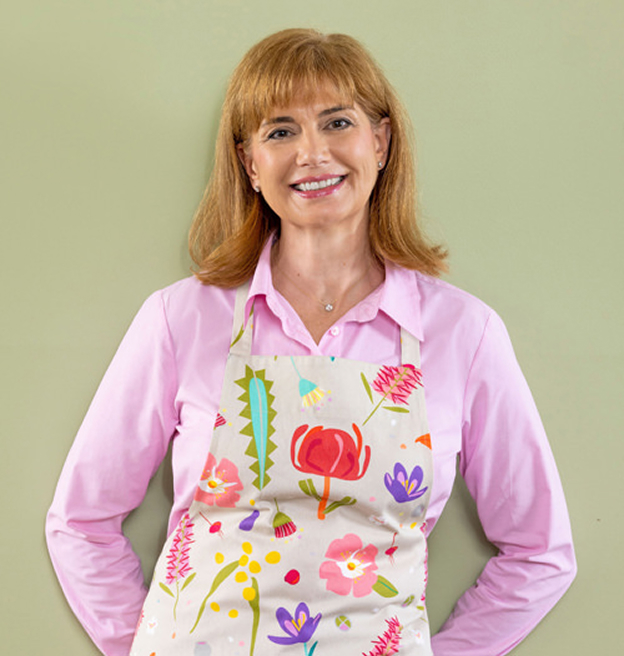
Hi, I'm Sandra!

I live by the words of Harriet Van Horne and I will be exploring every possible way to bring Harriet’s words to life in my kitchen.

Recipes

Discover delicious featured food recipes! From quick meals to gourmet delights, Sandra offer inspiring dishes for every occasion. Explore, cook, and enjoy flavorful creations today.

You might also like..

Salsa Verde Roast Chicken

One Pan Moroccan Chicken with Rice

Easy Apple Fruit Mince Filo Tarts

Pink Peppercorn Grapefruit Shortbread

Subscribe

Subscribe to my newsletter for a chance to win a FREE APRON (drawn monthly) as well as cooking tips, recipes, offers and exclusive content.

"*" indicates required fields