Nora-approved: Pink peppercorn and grapefruit shortbread
I know my pink peppercorn and grapefruit shortbread recipe reads like a very grown-up biscuit. But hand on heart, these passed the “Grandma, can I have another cookie?” test with my 3-year-old granddaughter, Nora. Whether you serve these at a fancy afternoon tea or as a sharp, buttery accompaniment to a dessert, if a toddler can handle the botanical complexity, your guests certainly can.
This recipe pairs 2 ingredients that are practically biological siblings. Intuitively, you’d think pink peppercorns and grapefruit have nothing in common. But when it comes to the science of ingredients, they’re cut from the same cloth. Both grapefruit peel and pink peppercorns contain a high concentration of limonene—the compound that makes citrus smell fresh—and pinene, which produces that resinous, sophisticated scent of pine needles.
Essentially, the pink peppercorns and grapefruit peel create a botanical bridge. Their floral, peppery, and bitter notes combine into a seamless flavour profile where the individual components of the pairing are not identifiable. It doesn’t matter if you can’t put your finger on why this melt-in-your-mouth shortbread is so different; it only matters that there’s enough left for you after Nora has had her share!
Let me break it down for you.
Pink peppercorn and grapefruit shortbread biscuit ingredients
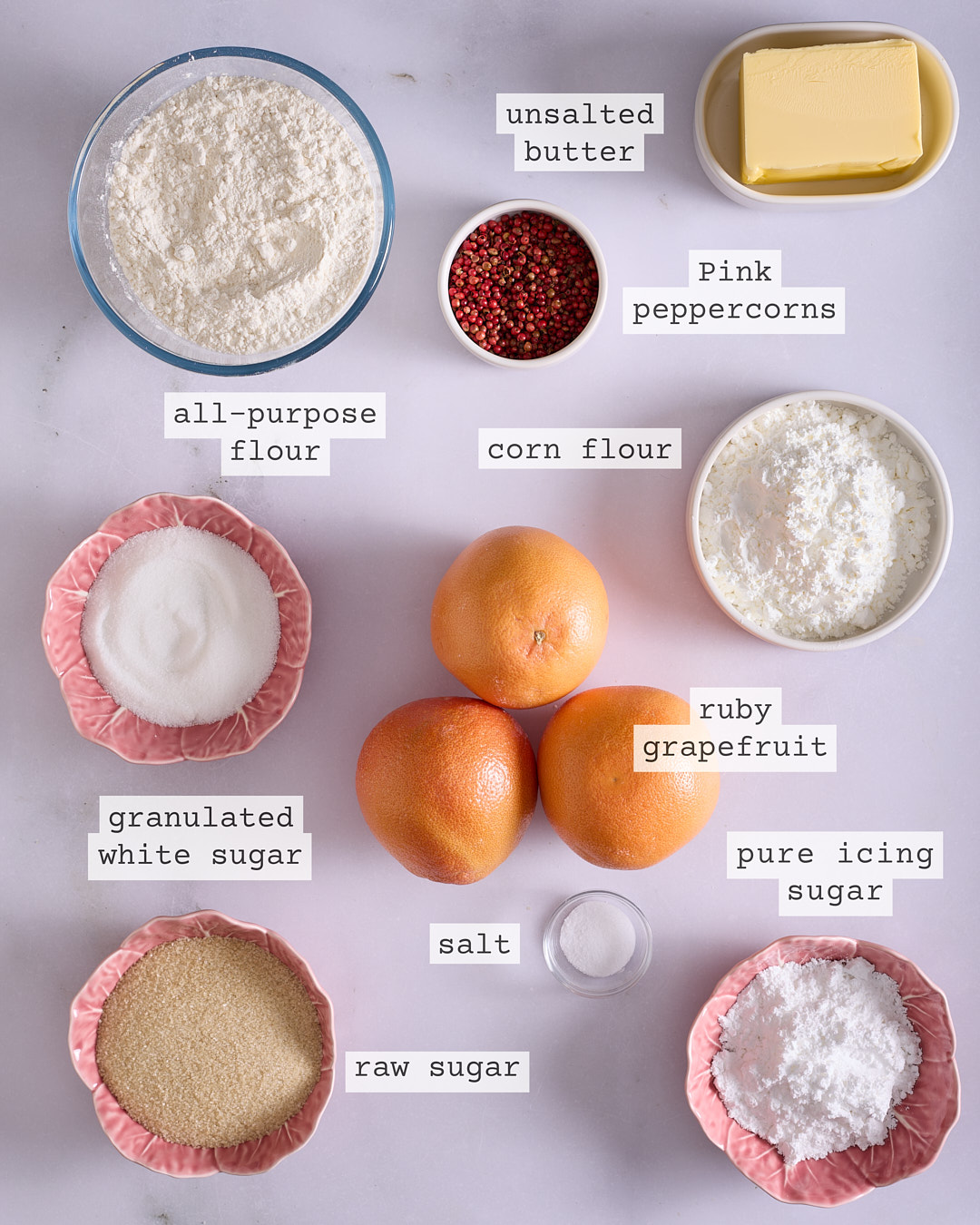
- 345g unsalted butter
- 90g granulated white sugar
- 75g pure icing sugar
- 375g all-purpose flour
- 120g cornflour
- 1 1/2 teaspoons salt
- 2 tablespoons pink peppercorns
- 2-3 ruby grapefruit
My chefy tricks - rolling the dough
Pink peppercorns are not from the same family as true peppercorns; being a dried berry. They’re indigenous to South America but made their way to California in the 19th Century via Jesuit missionaries.
By the 1970s French chefs started embracing pink peppercorns for their lighter, more citrusy flavour as part of the Nouvelle Cuisine movement, and American chefs soon followed.
I was a university student working in hospitality in the early 1980s when pink peppercorns finally landed in Saskatoon—the self-appointed Nouvelle Cuisine capital of Saskatchewan. While Crêpes Suzette were becoming a bit run-of-the-mill, the moment my boss introduced strawberry and pink peppercorn crepes flambéed table-side, I was convinced I’d reached the absolute zenith of the prairie restaurant scene. It was about as high-end as life gets when the horizon is completely flat.
Now, I look back on those pink peppercorn days in much the same way I reflect on the Birkenstocks I set out wearing off to Australia for my gap year in 1984. On arrival, I immediately found myself being made fun of for my “hippie sandals” by my flip-flop-wearing future sisters-in-laws.
Well, who’s laughing now? I’m sitting here typing out this blog in my Birkenstocks. And talk about a full-circle moment: as a contestant on Season 6 of the Great Australian Bake Off, our first technical challenge was to bake a version of our judge’s (Rachel Khoo) wedding cake – her Raspberry and Pepper Cake—decorated with pink peppercorns.
If you live long enough, the trends circle back around, and it’s okay to be—not old—but definitely a good vintage.
A serious note regarding tree nut allergies: pink peppercorns belong to the Anacardiaceae family, which includes cashews and pistachios. They contain similar proteins that can trigger an allergic reaction in sensitive individuals. If you are baking for someone with a known nut allergy, omit the peppercorns from this recipe.
And the rest
I use both 90g granulated white sugar and 75g pure icing sugar in my pink peppercorn and grapefruit shortbread recipe because they behave differently in the dough. Pure icing sugar dissolves quickly and gives the shortbread that fine, melt-away crumb, while granulated sugar adds a touch of structure and snap—important when you’re baking cut-out biscuits free-standing on a tray, not pressed into a tin.
The 120g cornflour is the other quiet trick: it keeps the texture tender by limiting gluten development, and it helps the biscuits hold their shape in the oven so you keep clean edges instead of spread.
Get organised
I’m an adherent to the French cooking principle of mise en place—everything in its place. Having your ingredients and equipment ready before you start isn’t just for professional kitchens; it’s how you keep home baking calm and consistent.
Measuring, prepping and setting everything out before the first step really does put the “easy” into any recipe.
For this recipe the 345g unsalted butter needs to be at room temperature.
Not just shortbread with grapefruit zest
Preparing the grapefruit
While these botanical shortbread biscuits get their first citrus notes from fresh grapefruit zest in the dough, the real punch comes from the edges. Before baking, the biscuits are rolled in a peppery citrus sugar that includes finely ground, dehydrated ruby grapefruit peel.
This recipe requires 2–3 ruby grapefruits. I’m not a fan of the standard yellow variety for this; you want the deeper, more complex notes of a pink or ruby grapefruit. If your greengrocer only has small ones, grab 3–4. If you find those giant, heavy specimens, 2 will be plenty.
The dough itself needs 2 teaspoons of fresh zest. When I say a teaspoon, I mean a “packed” teaspoon—really press it in there. I use a microplane to ensure I only get the fragrant zest and leave every bit of the bitter white pith behind. Once you’ve measured out your 2 teaspoons for the dough, seal the zest in a container and refrigerate it until you’re ready to mix.
The citrus and peppery sugar crust
This is where the magic happens. To create that decorative, flavour-packed edge, you’ll need to grind your ingredients into a fine powder. A spice grinder is the ideal tool here, but if you don’t have one, a personal blender or smoothie blender works brilliantly—the high-speed blades make short work of the peel. If you’re going completely low-tech, a mortar and pestle will do the job for the peppercorns, but you’ll need some serious elbow grease to get the dehydrated peel down to a matching fine dust.
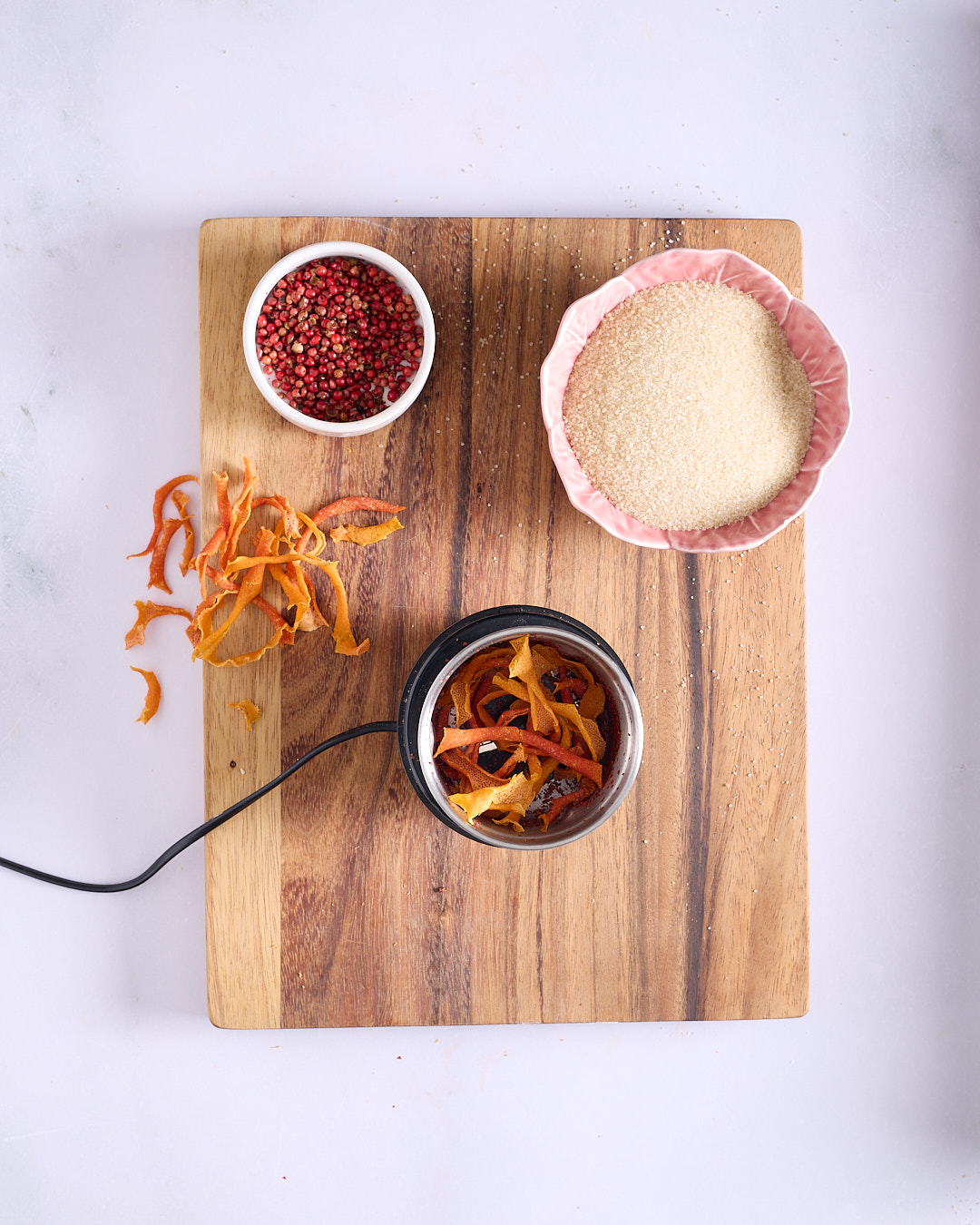
Start by preparing the peel for dehydration. Using a sharp vegetable peeler, carefully remove the rind from the remaining grapefruit in long strips. Be meticulous about leaving the white pith behind—as any lawyer will tell you, the evidence of your mistakes will be found in the bitterness of the final product.
I use a food dehydrator set at 65°C to dry the peel the day before I bake. This is usually the same day I prep the pink peppercorn shortbread dough, which needs an overnight rest in the fridge anyway. If you don’t have a dehydrator, most modern ovens or air fryers have a dehydration mode. If your equipment doesn’t go as low as 65°C, set it to its lowest possible temperature and check the peel every five minutes. Once it looks like it’s starting to dry, turn the oven off and let it finish in the residual heat. You want the peel completely dry and crisp to the touch but not browned or burnt. If you take it too far, it becomes unpleasantly bitter.
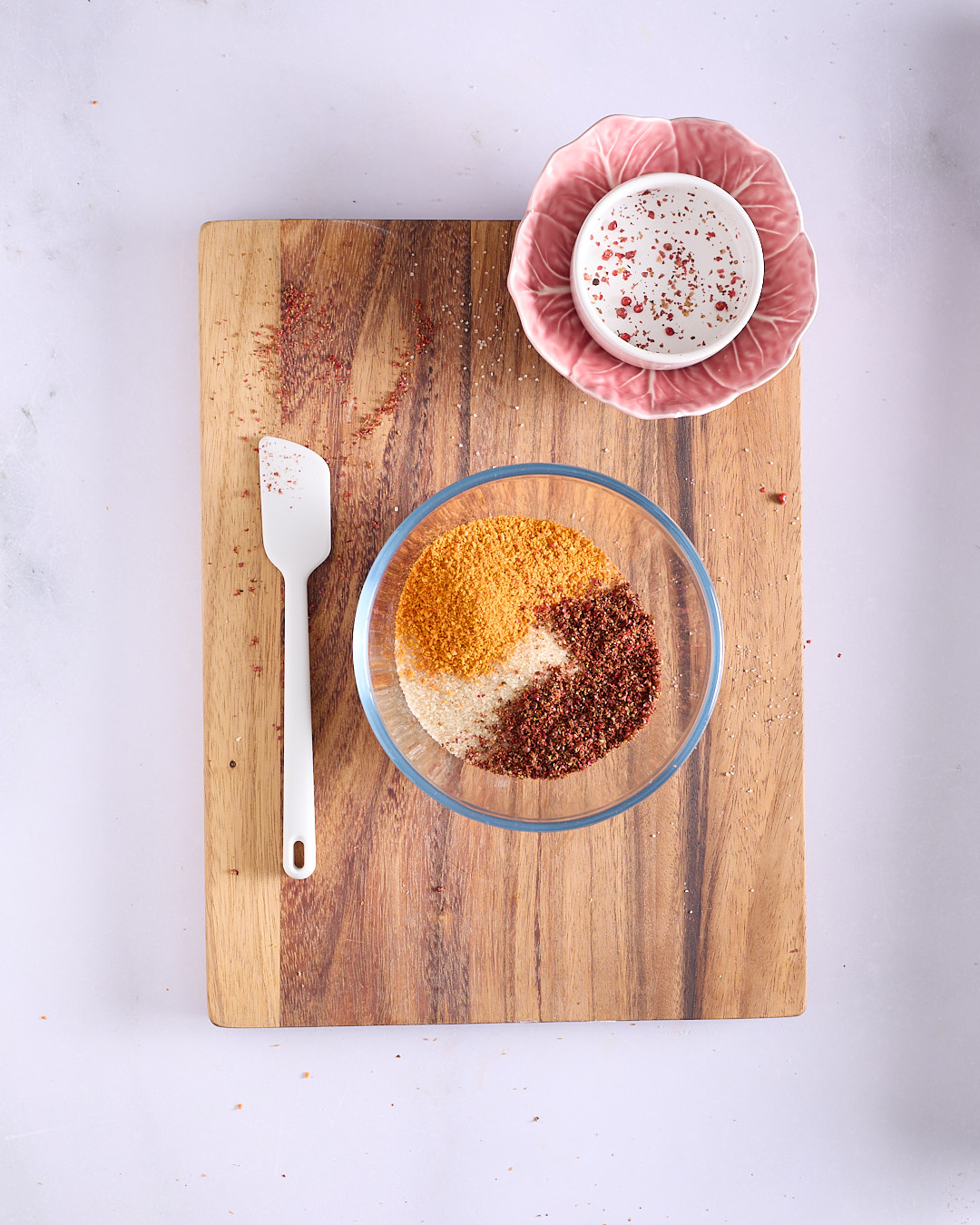
Once the peel is bone-dry and cooled, whiz it in your spice grinder or personal blender until it forms fine particles—do not take it as far as dust or powder—you want to see the particles. Do the same with your pink peppercorns. Because pink peppercorns are actually brittle berries (drupes) rather than hard peppercorns, they pulverise very quickly, so keep an eye on them.
In a bowl, mix 200g of raw sugar with 4 teaspoons of your ground pink peppercorns and all of that ground grapefruit dust. Keep the citrus pepper sugar in a tightly sealed container on the bench until you’re ready to cut out the pink peppercorn and grapefruit shortbread, no need to refrigerate.
What about the leftover grapefruits?
What about the leftover grapefruits? It’s a fair question—we’ve stripped them of their dignity and their skins, so what now? I originally developed this pink peppercorn shortbread recipe to be served as part of a sophisticated dessert trio, alongside a yoghurt coeur à la crème with grapefruit and strawberry compote.
If you’re planning to bake these pink peppercorn and grapefruit shortbread biscuits for a solo appearance, I recommend juicing the remaining peeled fruit for your breakfast. It’s a sharp, refreshing reward for the person who did all the peeling.
Making the botanical shortbread dough
These pink peppercorn shortbread biscuits can absolutely be made by hand. But if I can use a stand mixer and avoid a sore arm or a broken wooden spoon—it’s a pretty dense dough—I’m choosing the machine every time. And no, you’re not going to end up with tough shortbread, because we’re not doing the full creaming method here.
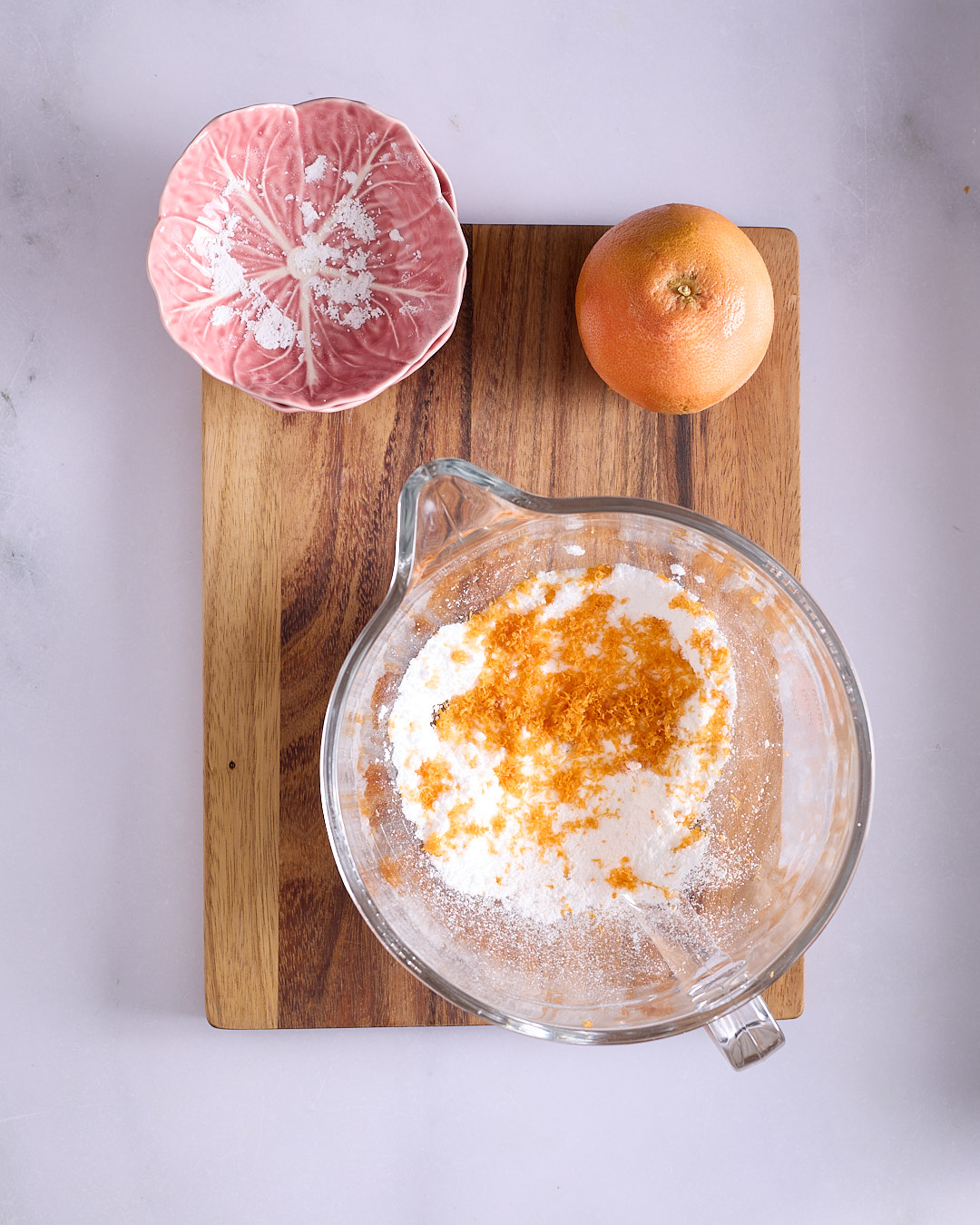
Weigh 90g granulated white sugar into the stand mixer bowl. Place a fine sieve over the bowl, remember to zero out the digital scales, and then weigh 75g pure icing sugar into the sieve. Sift it in. Add the 2 teaspoons of reserved fresh grapefruit zest. Using the paddle attachment, start on low and increase the speed to medium. Beat until the perfumed oils of the grapefruit are released and completely incorporated into the sugar. This technique ensures an even and more pronounced citrus hit in these citrus and pink peppercorn biscuits.
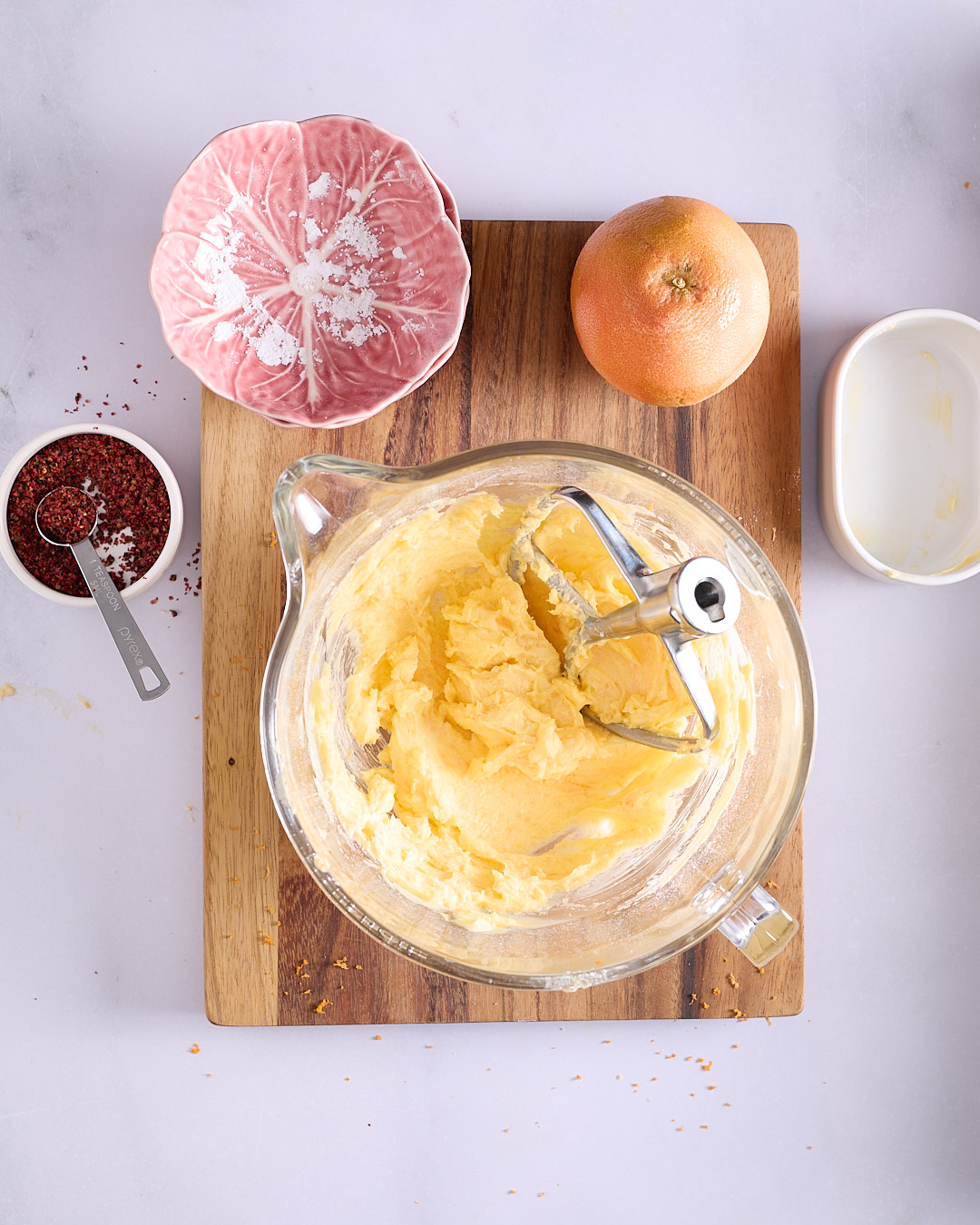
Next, weigh 345g room temperature unsalted butter into the bowl and beat the butter and sugars just until smooth, glossy, and combined. This is a grapefruit shortbread recipe, not a sponge cake—aim for buttery yellow and cohesive, not pale and airy.
In a separate bowl, sift together 375g all-purpose flour, 120g cornflour, and 1 ½ teaspoons table salt.
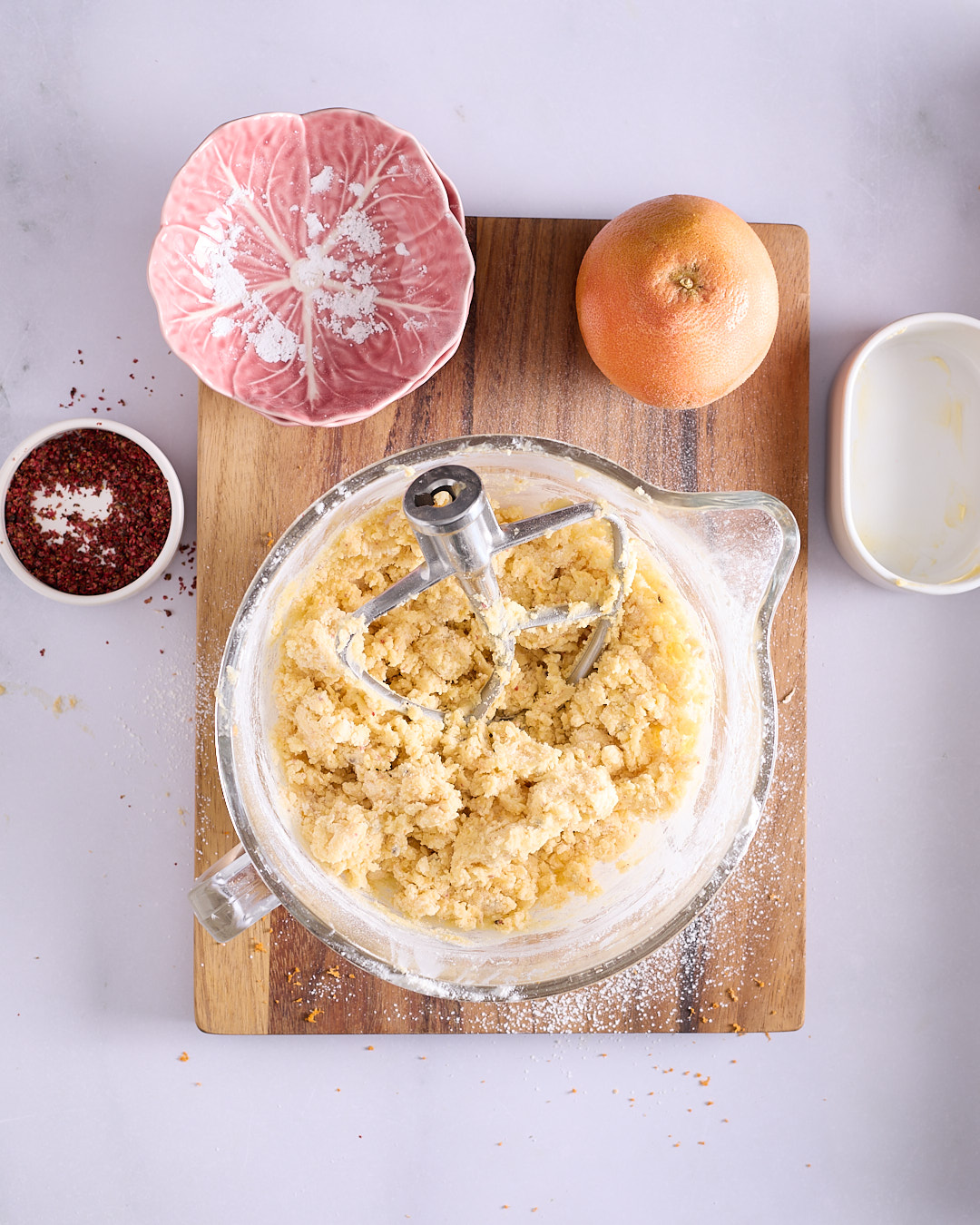
Add the flour mixture to the butter and sugar in 3 additions on low speed, scraping down the bowl between each. Add the next batch while you can still see a little flour from the previous one; this keeps mixing time short and helps your pink peppercorn and grapefruit shortbread dough stay tender instead of getting overworked.
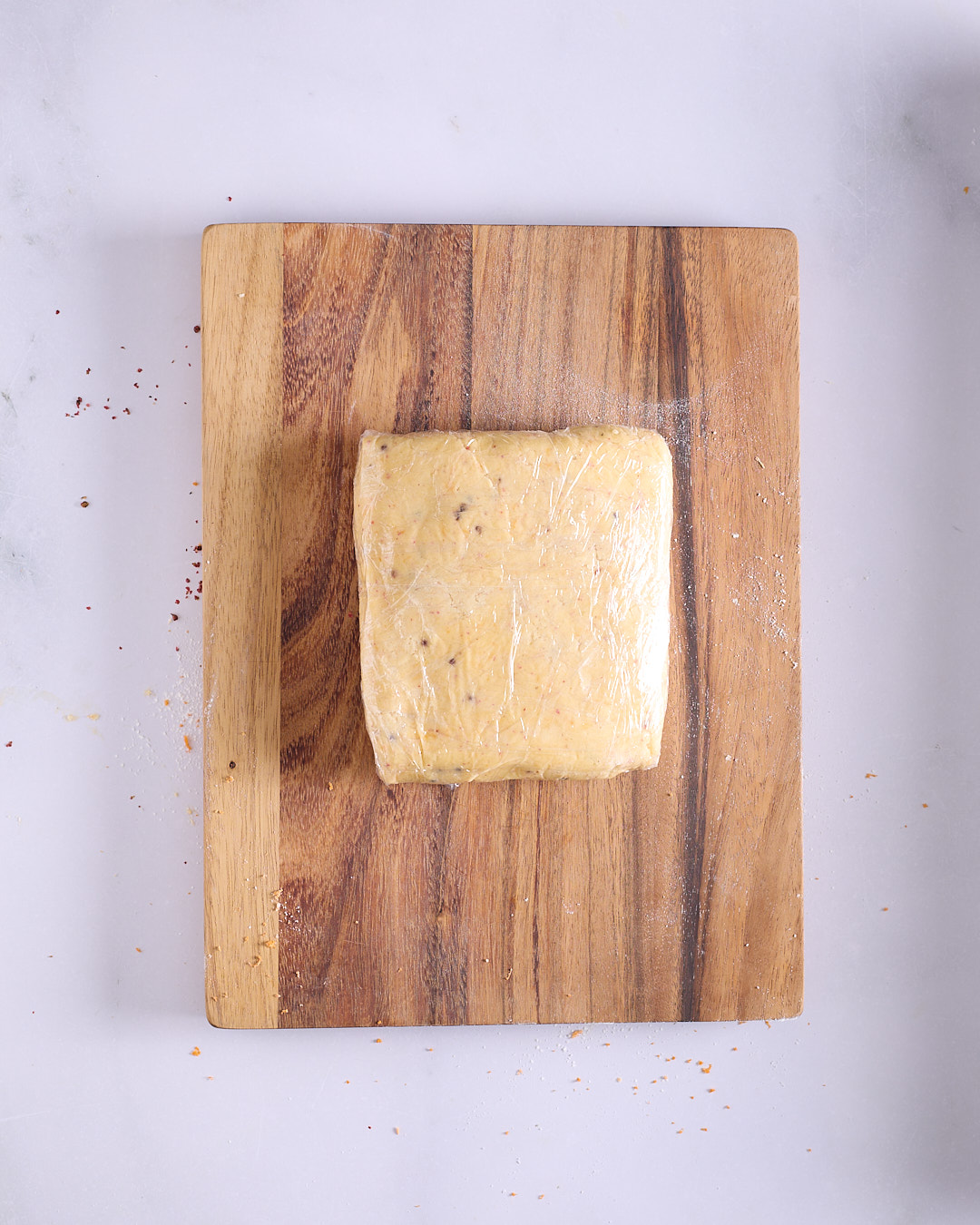
Stop the mixer when the dough is still a little shaggy, then tip it onto the bench and bring it together by hand. I use a bench scraper to gather, then cut-and-stack the dough a few times before pressing it into a rectangle about 5cm thick.
Wrap the dough tightly in plastic wrap and chill for at least 1 hour, preferably overnight.
Chilled dough helps control spread, but there’s a deeper ‘why’ for this step in any grown-up biscuit recipe:
- Hydration phase – Flour is thirsty. This long rest allows the starch to fully absorb the moisture, making the dough cohesive rather than crumbly.
- Gluten relaxation – Any handling makes the dough tight. Resting lets the gluten proteins relax so your botanical shortbread won’t shrink or distort in the oven.
- Maillard reaction – Resting allows enzymes to break starches down into simple sugars, which provides better fuel for even browning and a richer flavour.
Chilling the dough overnight also makes this a great make-ahead recipe. And yes, you can freeze the dough at this stage, though I prefer freezing it after it has been rolled and cut.
Rolling and cutting the shortbread dough
My chefy tricks - rolling the dough
My method for cut-out shortbread with no spread involves a short stint in the freezer, so plan ahead and make space for a tray. It’s the difference between thick, clean-sided pink peppercorn shortbread biscuits and a tray of “rustic” biscuits that have lost their shape.
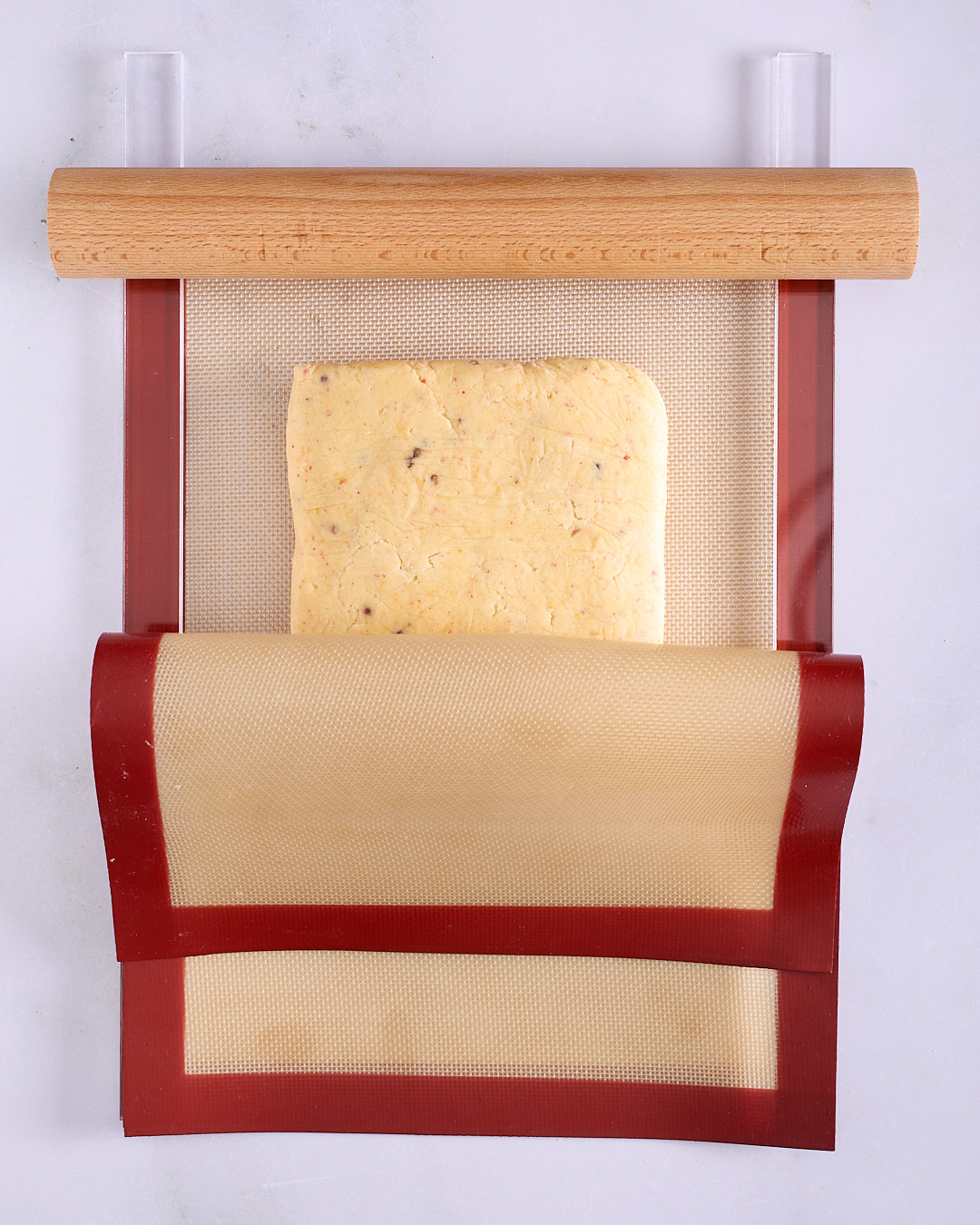
I roll the dough between 2 silicone baking mats with 8mm rolling guides on either side. This keeps the thickness perfectly even and stops you from the common mistake of rolling the middle thinner than the edges. Once it’s rolled, I slide the whole sheet of dough—still sandwiched between the mats—onto the biscuit tray and put it in the freezer for about 15 minutes until very firm. It doesn’t need to be frozen solid; it just needs to be cold enough that it feels stiff when you press it.
Equipment and substitutions: Use a large rolling pin, 2 silicone baking mats (or non-stick baking paper), two 8mm rolling guides (or two 20cm x 8-10mm hobby wood strips from Bunnings), and a rimless biscuit tray (or a rimmed biscuit sheet used upside down).
Cutting out the biscuits
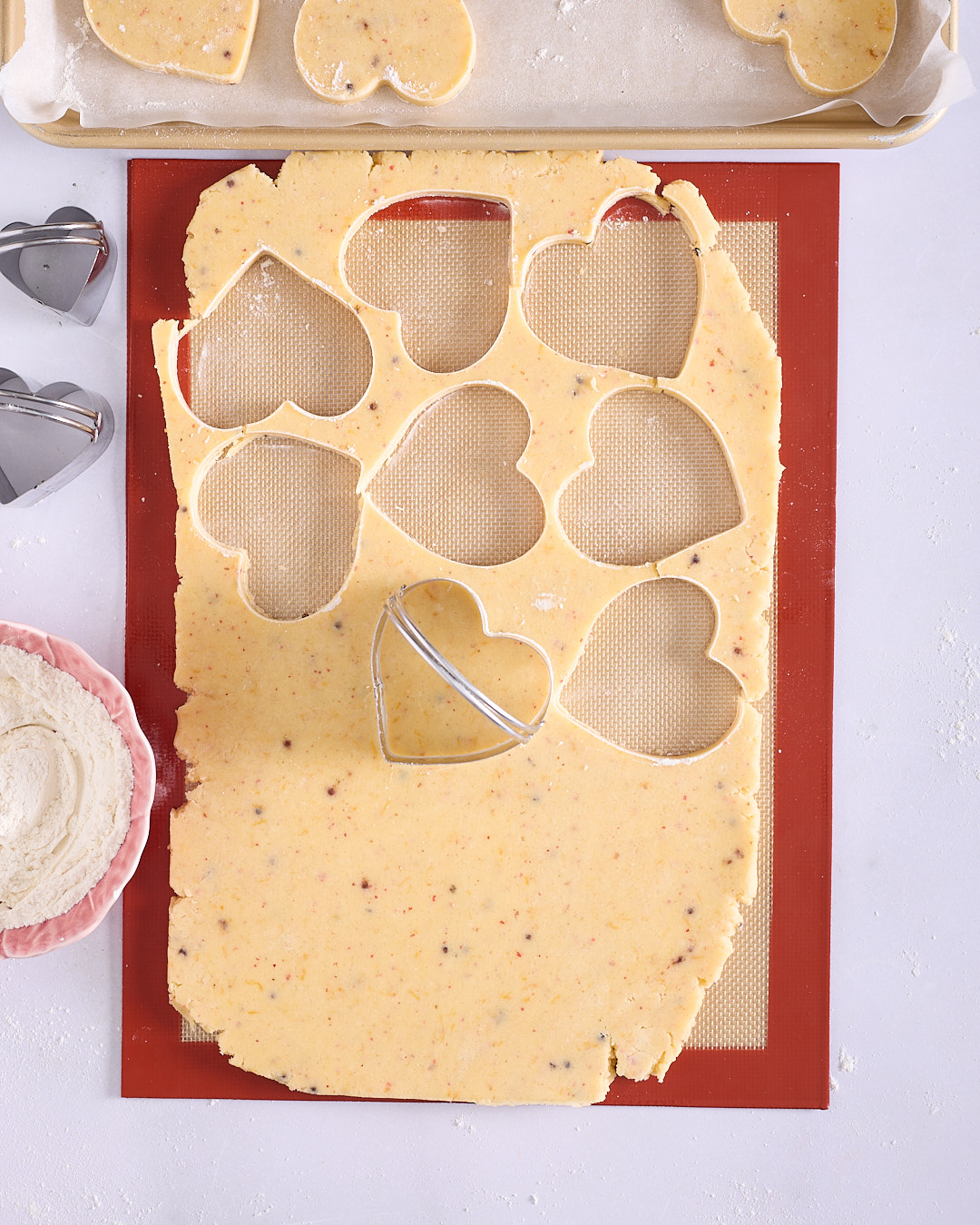
Fill a shallow bowl with a little all-purpose flour for dredging the cutter. Line a large biscuit tray with baking paper.
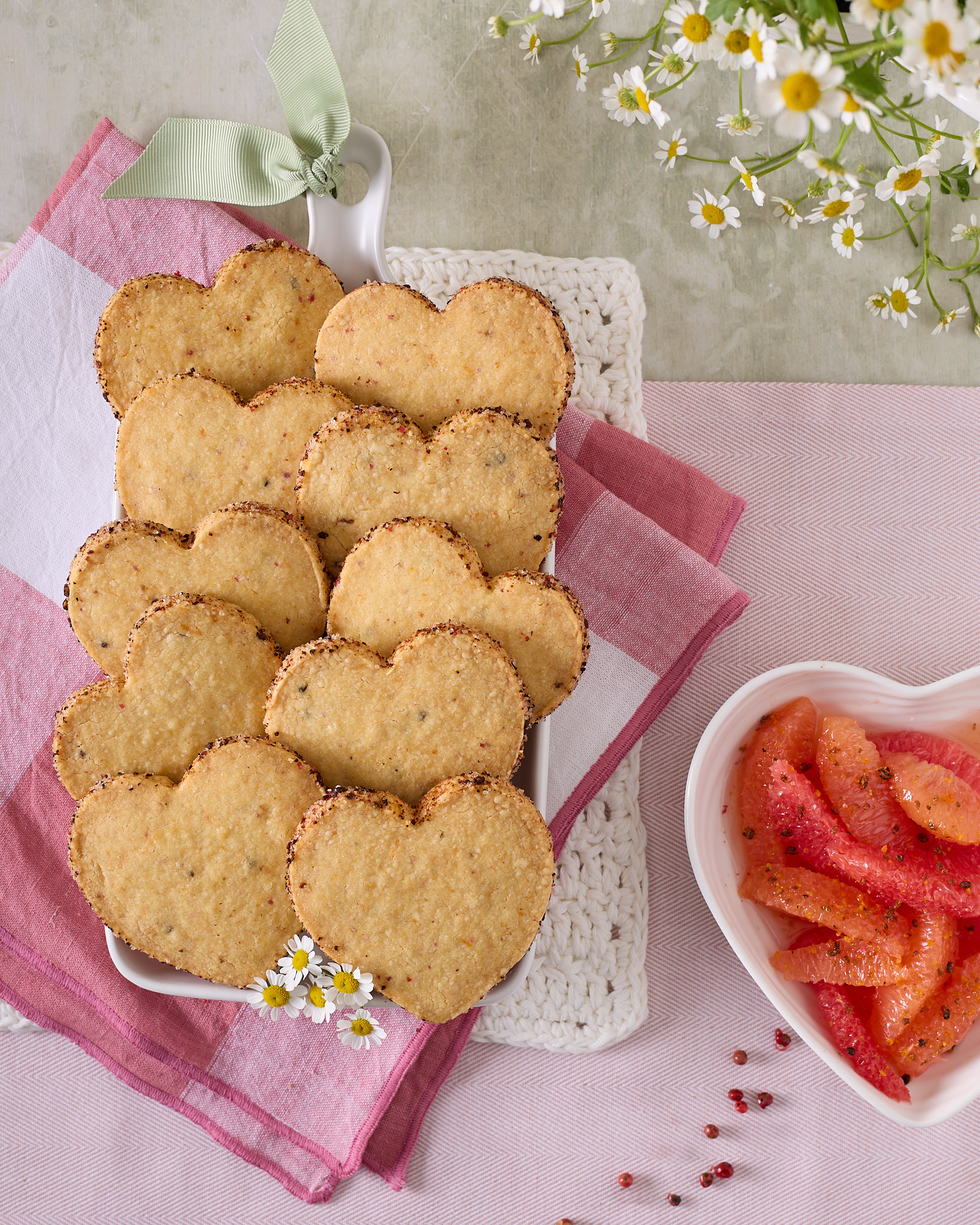
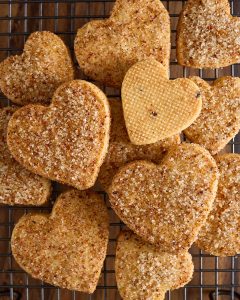
I’ve chosen a 7.5cm wide stainless steel heart-shaped cookie cutter for this bake. With this size, the grapefruit shortbread recipe makes about 20 biscuits. You can swap in any shape you like, but I’d stick with a clean edge that can support the raw sugar decorative crust. I don’t recommend using a plastic cookie cutter when you’re working with chilled dough; they’re prone to snapping before you’ve finished the batch.
Cut as many biscuits as you can from the chilled dough, working quickly so it stays cold. Dip the cutter into flour between each cut and tap off the excess—too much flour will bake onto the surface and dull the finish.
If the dough is very firm and you’re struggling to press straight down, use the flat side of a bench scraper to apply even pressure across the cutter, or press down with the base of a small pot. Try not to twist the cutter; twisting drags the edges and ruins that sharp, patisserie-style side.
As you cut, transfer each biscuit to your prepared biscuit tray with an offset spatula so you don’t mark the dough with your fingers. Once the tray is filled, put the cut biscuits back into the freezer while you deal with the scraps. Let the remaining dough sit for a few minutes so it’s pliable again, then gently press it back into a rectangle and repeat the roll, chill, cut sequence. It’s a bit of a rhythm: roll, chill, cut, freeze.
Decorating your pink peppercorn and grapefruit shortbread
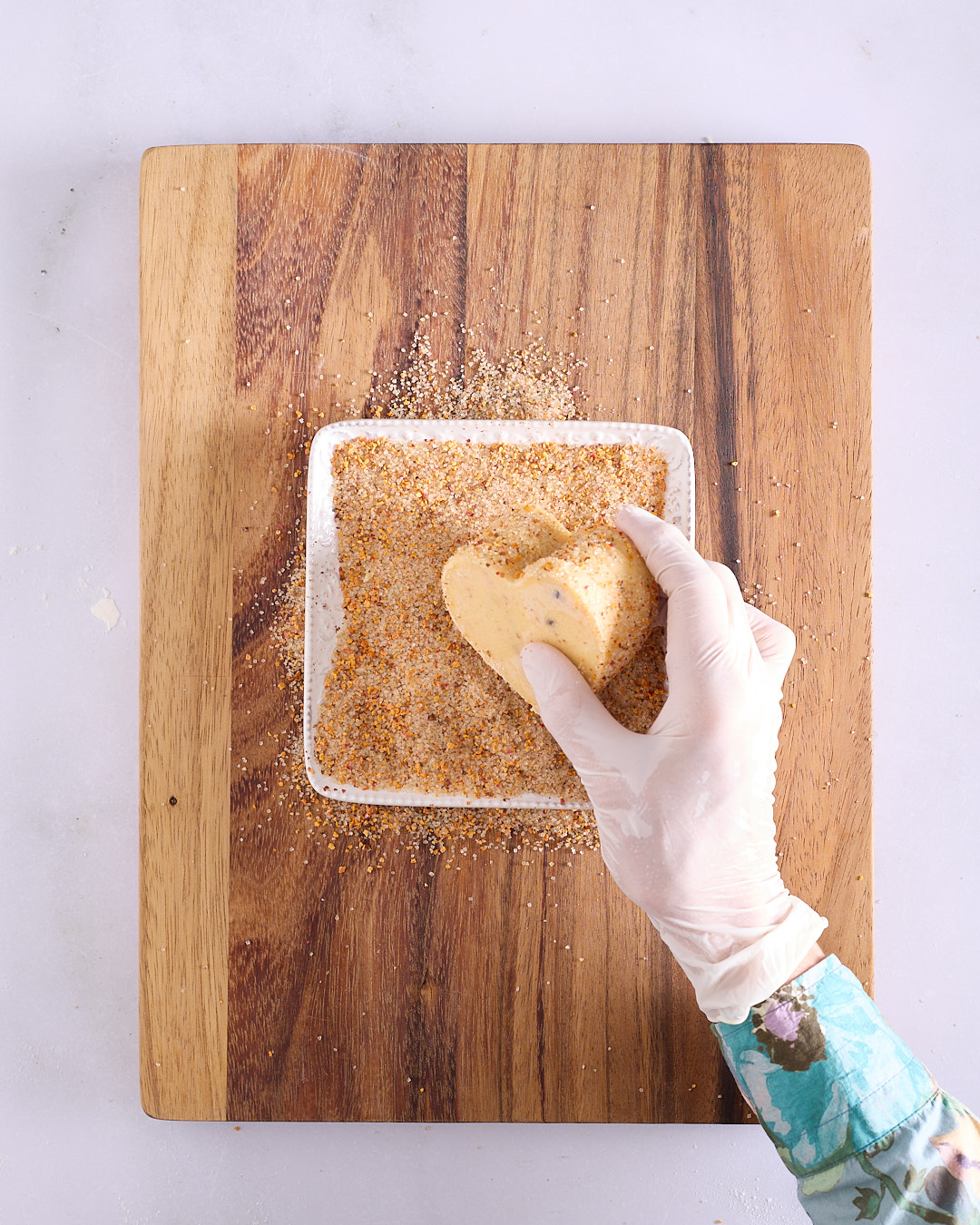
Place the prepared citrus pepper sugar mix in a shallow bowl. I use plastic gloves for this next step to keep my fingerprints off the botanical shortbread dough.
Remove the pre-cut biscuits from the freezer and gently stack 3–4 biscuits together. Keep them lightly pressed together as you roll the edges of the stack through the citrus pepper sugar mix. You may need a couple of passes to completely cover the edges. Try to avoid getting sugar on the faces of the top and bottom biscuits in the pile.
Gently separate the pink peppercorn shortbread biscuits, return them to the prepared biscuit tray, and freeze them for 15 minutes (or refrigerate for 30 minutes) until firm.
Baking these shortbread with grapefruit zest
Preheat the oven to 165°C conventional or 155°C fan forced and position the rack in the middle of the oven.
I bake my pink peppercorn and grapefruit shortbread biscuits from frozen on a tray lined with a professional air mat (a perforated-style baking mat designed to improve airflow and heat circulation under the dough) or a silicone mat. Both help stop the biscuits from spreading as they cook.
If you don’t have those, baking the cut-out biscuits from frozen on a baking paper-lined biscuit tray is perfectly fine. The freezing ensures the outside of the biscuits sets first, stabilising the shape and preventing a buttery blowout while the centre finishes cooking.
Bake for 20 minutes at 165°C conventional or 155°C fan forced. This timing is based on biscuits rolled to 8mm and cut into 7cm hearts—if you change the thickness or the shape, you’ll need to adjust your bake time accordingly.
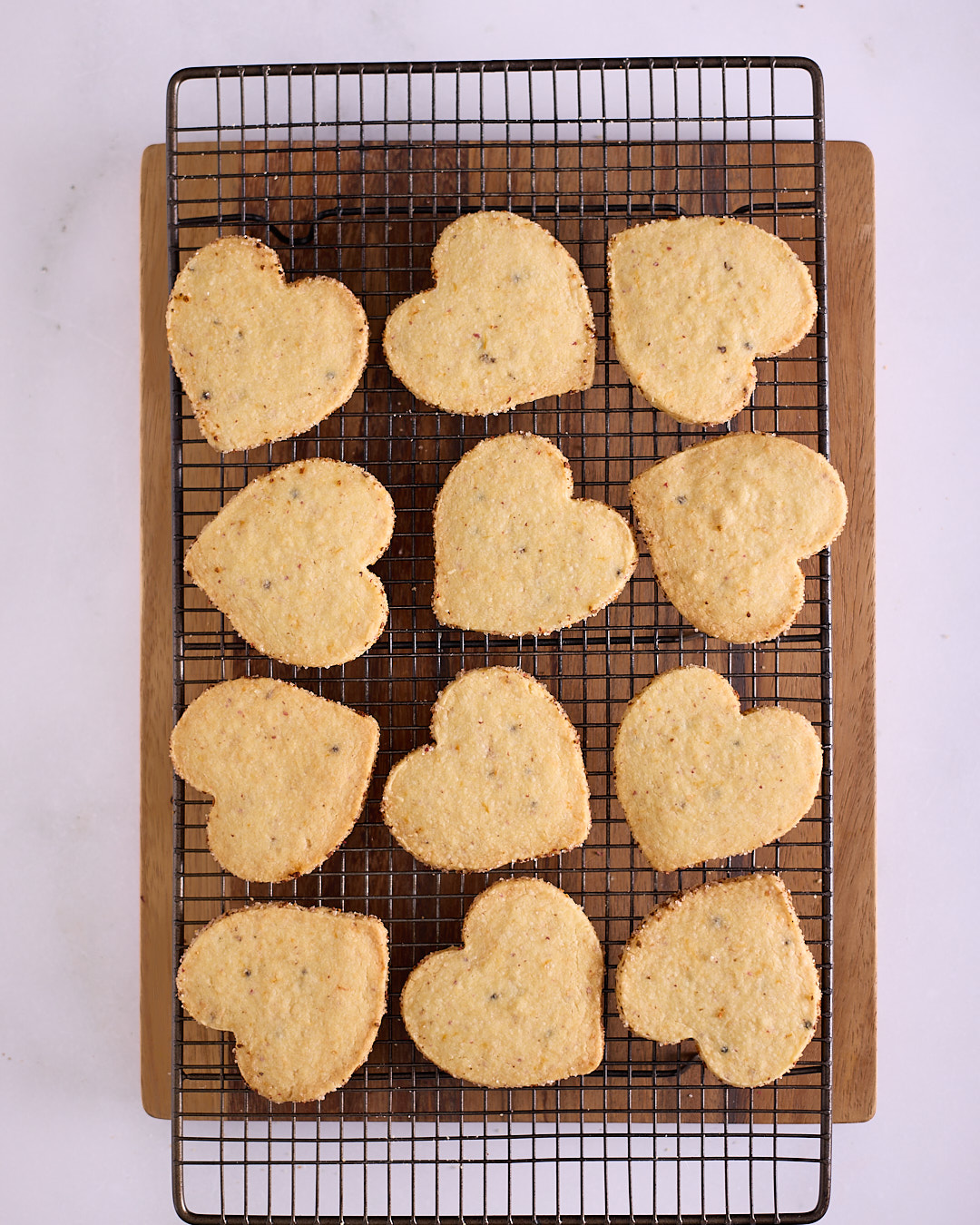
Turn the biscuit tray 180° midway through the bake to promote even browning. I like my pink peppercorn shortbread to be slightly golden. I find pale shortbread often has a slight ‘raw flour’ mouthfeel that ruins the experience.
Leave the biscuits on the tray until they’re completely cool before moving them; they are incredibly fragile while warm and will crumble if you’re too impatient.
The perfect trio
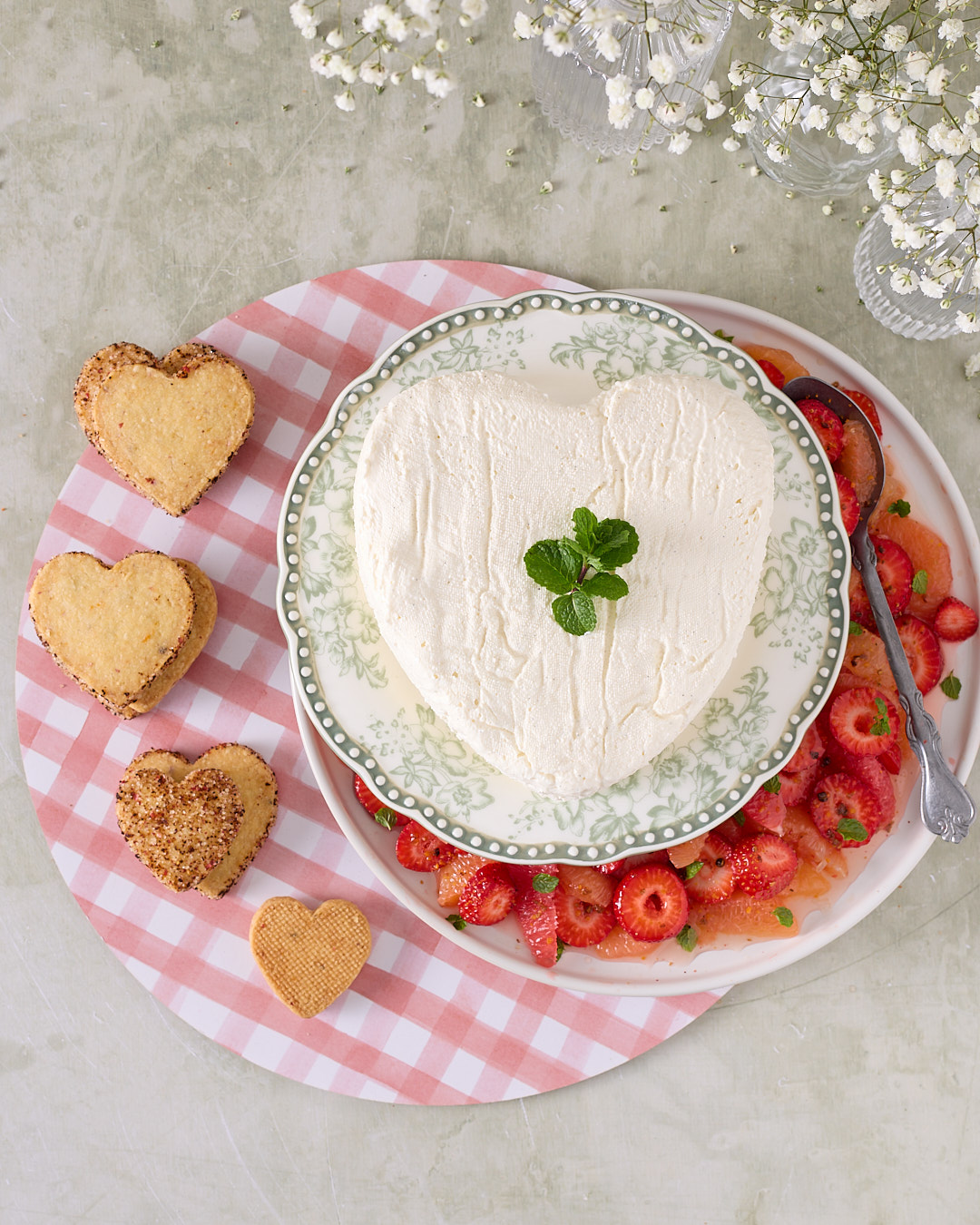
If you’re taking the time to bake some botanical shortbread biscuits, why not go all the way and build a showstopper dessert. I developed this recipe intentionally to be served with my yoghurt coeur à la crème and a grapefruit, strawberry, and pink peppercorn compote. It is a sophisticated end to a meal that proves you don’t need a professional pastry kitchen to produce something that looks and tastes extraordinary.
Pink Peppercorn Grapefruit Shortbread
Equipment
- Digital kitchen scales
- Microplane
- Spice grinder (or personal blender / smoothie blender)
- Food dehydrator (optional)
- Stand mixer
- Paddle attachment
- Silicone baking mats (optional)
- Air mat (optional)
- 8mm rolling guides or 20cm x 8-10mm hobby wood strips (optional)
- 7.5cm heart-shaped cookie cutter
Ingredients
- 345 g unsalted butter (room temperature)
- 90 g granulated white sugar
- 75 g pure icing sugar
- 375 g all-purpose flour
- 120 g corn flour
- 1 ½ teaspoons table salt
- 2 tablespoons pink peppercorns
- 2-3 red grapefruits
- 200 g raw sugar (for the decorative sugar edge)
Instructions
Prepare the grapefruit:
- Using a microplane or fine grater, zest 1 grapefruit until you’ve measured out 2 packed teaspoons of zest, seal the zest in a container and refrigerate until required.
- Using a sharp vegetable peeler, remove the rind from the grapefruits in long strips, avoiding the white pith.
Prepare the citrus and peppery sugar crust:
- Dehydrate the peel in a food dehydrator or oven set at 65°C until completely dry (snaps when bent).
- Once cooled, grind the dried peel and the pink peppercorns separately in a spice grinder or personal blender until they form fine particles – do not take it as far as dust or powder – you want to see the particles. The peppercorns should look like coarsely ground pepper.
- In a sealable container, mix the 200g raw sugar with 4 teaspoons of the ground pink peppercorn and all of the ground grapefruit peel.
- Keep the citrus pepper sugar in a tightly sealed container on the bench until you’re ready to cut out the pink peppercorn and grapefruit shortbread; no need to refrigerate.
Make the shortbread dough:
- In the bowl of a stand mixer, weigh the 90g granulated sugar.
- Sift in the 75g pure icing sugar and add 2 packed teaspoons of fresh grapefruit zest.
- Using the paddle attachment, beat on medium speed for 3–4 minutes until the perfumed oils are released and the sugar is fragrant.
- Add the 345g room temperature unsalted butter and beat just until smooth and combined. Do not over-cream; you want a cohesive yellow paste, not a pale, airy cake batter.
- In a separate bowl, sift together the 375g flour, 120g cornflour, and 1 1/2 teaspoons salt.
- Add the dry ingredients to the mixer in 3 additions on low speed, mixing only until the dough is shaggy.
- Turn the dough out onto the bench and use a bench scraper to gather it, using a ‘cut and stack’ motion a few times until it forms a neat block.
- Press into a rectangle about 5cm thick, wrap tightly in plastic, and chill in the fridge overnight.
Roll, cut, and decorate:
- Preheat your oven to 165°C conventional or 155°C fan forced.
- Set up your silicone baking mats with 8mm rolling guides, if using. Otherwise, roll the dough between two layers of baking paper.
- Roll the chilled dough to an even 8mm thickness.
- Slide the rolled dough (still between the mats) onto a biscuit tray and freeze for 15 minutes until firm.
- Using a 7.5cm heart-shaped cookie cutter, cut out the biscuits, working quickly while the dough is cold. Dredge the cutter in a shallow bowl of all-purpose flour between each cut, tap off the excess flour.
- Use an offset spatula to transfer the hearts to a separate baking tray.
- Once the tray is filled, put the cut biscuits back into the freezer.
- Let the remaining dough sit for a few minutes so it’s pliable again, then gently press it back into a rectangle and continue the process of cutting out biscuits - repeat the roll, chill, cut sequence.
- Working in batches, gently stack 3–4 frozen biscuits together and roll the edges through the prepared citrus pepper sugar until fully coated. Wear plastic food preparation gloves to avoid marking the biscuit dough.
- Separate the decorated biscuits and place them onto a biscuit tray lined with an air mat or baking paper, leaving space for heat circulation.
- Freeze the cut biscuits for a final 15 minutes before baking.
Bake:
- Bake the frozen biscuits at 165°C conventional or 155°C fan forced for approximately 20 minutes, turning the tray 180° midway through.
- The biscuits should be a light golden colour to ensure the flour is fully cooked.
- Leave the biscuits on the tray until they are completely cool; they are incredibly fragile while warm.