Recipes

Grilled Lamb Backstraps
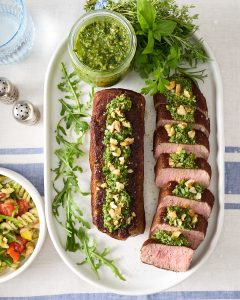
Sliced lamb roast topped with spoonfuls of mixed herb walnut pesto and chopped walnuts.

This grilled lamb backstraps recipe is the final instalment in my “how I cook lamb” series, and it’s the kind of cooking I love most: fast, high heat, minimal fuss, and a proper rest at the end. 

Recipe? You may well askand you’d be right. This is simply my method for cooking what I consider to be the best cut of lamb to be had. And the proteinin this case, lamb backstrapis doing exactly what I expect of it. It’s the perfect vehicle for my mixed herb pesto and the best companion for my Provence-style kitchen sink pasta salad.  

I cook lamb backstraps on my teppanyaki plate, but a BBQ or cast iron grill pan will do the job just as well. 

This one is deliberately simple. No marinade. No spice rub. I season with salt and pepper only when the lamb comes off the grill, then let it rest properly before slicing. 

Lamb backstraps

Two raw lamb backstraps on baking paper in a white enamel tray on a white bench, with a small bunch of fresh herbs above and a basil sprig beside.

Lamb backstrap is the lean, boneless eye of the loinalso sold as lamb loin or eye of loinwhich is exactly why it cooks so quickly and why it needs a bit of attention once it hits the heat. It typically sits around 5–8g fat per 100g, so there isn’t much fat to protect it, and there’s no connective tissue to “forgive” you if it goes too far. 

The goal is a fast cook over fairly hot, medium-high heat, then an early pull-off point so it stays juicy. 

For this grilled lamb backstraps recipe I use 600–650g total lamb backstraps, which comfortably serves four when sliced and served alongside a good side dish and sauce. 

Make ahead – Mixed herb pesto

Close-up of a jar of mixed herb walnut pesto topped with olive oil on a light bench, with soft-focus fresh herbs in the background.

This recipe is deliberately simple, but it does rely on one thing doing a lot of heavy lifting: my mixed herb pesto. It’s not a basil-only pestoit’s a more generous, garden-herb version that’s punchy, vivid, and built to be spooned over hot grilled meat without tasting flat or oily. It’s the condiment for these grilled lamb backstraps, and it also turns my Provence-style kitchen sink pasta salad into a proper side dish rather than “pasta, but make it a bit green.” 

I serve the lamb with a spoonful of pesto over the top and an extra scatter of roughly chopped walnuts. The walnuts aren’t just decorationthey give a bit of crunch, echo what’s already in the pesto, and make the whole plate feel finished. If you’ve got the pesto made ahead and sitting in the fridge, the rest of this meal is basically just hot grill, quick rest, slice, and serve. 

Grilled lamb backstraps method

Two grilled lamb backstraps resting on baking paper in a white enamel tray, seasoned with salt and pepper, with a small vine of cherry tomatoes and a parsley sprig.

I have become a fan of the cast iron grill press whether I’m standing at the BBQ or in my kitchen. And with lamb backstraps, that contact matters. This cut is lean and cooks quickly, so you want deep browning without dragging out the cooking time. A weight helps you get that caramelised crust faster and more evenly, especially if your backstrap has a slight curve or your grill pan has ridges. 

This is still a very simple method: hot grill, quick sear, turn, and a short rest. If you like a thermometer moment, it’s a helpful one here because backstrap doesn’t have much fat to cushion an overcook. Pull it early and let carryover heat and resting do the rest. 

Prep the lamb backstraps: Pat dry 600–650g lamb backstraps with paper towel. This is the simplest way to help them brown properly on the grill. 

Heat the grill: Heat your teppanyaki grill plate, BBQ, or cast iron grill pan over medium-high heat until it’s properly hot. You want immediate sizzle when the lamb hits the surface. 

Grill the lamb backstraps: Place the lamb backstraps onto the hot grill and, if using, press down with a cast iron grill press for about 30 seconds to encourage full contact and even browning. Cook on the first side until well caramelised (3–4 minutes). Turn and brown the second side, then briefly roll the backstraps onto their edges to colour the sides as well. I am all for a medium cooked backstrap, but go rare if you prefer. I would not recommend well done it will lose all its moisture by that point. If you’re using an instant-read thermometer (optional), aim to remove the lamb at 45–47°C for rare (final goal 52°C) or at 53–55°C for medium (final goal 60°C). 

Season and rest: Transfer the grilled lamb backstraps to a heatproof serving platter, then season generously with sea salt and freshly cracked black pepper while the surface is still hot. Rest for 10 minutes before slicing and serving. 

Pesto-coated fusilli pasta salad on a large white platter with rocket, cherry tomatoes, cannellini beans, walnuts, green olives, and semi sundried tomatoes, with a jar of green herb pesto and serving spoons on a blue-and-white striped tablecloth.

I serve these grilled lamb backstraps sliced thickly, with a generous spoonful of mixed herb pesto over the top and my Provence-style kitchen sink pasta salad on the side. The salad does what a good side dish should do: it brings brightness, crunch, and a bit of vinegar-and-salt energy so the lamb can stay simple and properly lamby. It also means the whole meal feels like it has a planeven though it’s really just “grill some excellent meat” and “toss together everything good in the fridge.” And yes, the main event is still the condiment: that mixed herb pesto.

Grilled Lamb Backstraps

Sliced lamb roast topped with spoonfuls of mixed herb walnut pesto and chopped walnuts.
Recipe? You may well ask—and you’d be right. This is simply my method for cooking what I consider to be the best cut of lamb to be had. And the protein—in this case, lamb backstrap—is doing exactly what I expect of it. It’s the perfect vehicle for my mixed herb pesto and the best companion for my Provence-style kitchen sink pasta salad.
I cook lamb backstraps on my teppanyaki plate, but a BBQ or cast iron grill pan will do the job just as well.
This one is deliberately simple. No marinade. No spice rub. I season with salt and pepper only when the lamb comes off the grill, then let it rest properly before slicing.
Prep Time 30 minutes
Course Main Course
Cuisine Australian, Mediterranean
Servings 3

Equipment

  • Teppanyaki grill plate, BBQ, or cast iron grill pan
  • Cast iron grill press (optional)
  • Heatproof serving platter
  • Instant read thermometer (optional)

Ingredients  

  • 600 – 650g lamb backstraps (serves 4)
  • Sea salt
  • Freshly cracked black pepper
  • Mixed herb pesto (optional to serve)
  • Walnuts roughly chopped (optional to serve)

Instructions 

Prep the lamb backstraps:

  • Pat dry 600–650g lamb backstraps with paper towel. This is the simplest way to help them brown properly on the grill.

Heat the grill:

  • Heat your teppanyaki grill plate, BBQ, or cast iron grill pan over medium-high heat until it’s properly hot. You want immediate sizzle when the lamb hits the surface.

Grill the lamb backstraps:

  • Place the lamb backstraps onto the hot grill and, if using, press down with a cast iron grill press (optional) for about 30 seconds to encourage full contact and even browning.
  • Cook on the first side until well caramelised (3–4 minutes).
  • Turn and brown the second side, then briefly roll the backstraps onto their edges to colour the sides as well.
  • I am all for a medium cooked backstrap, but go rare if you prefer. I would not recommend well done—it will lose all its moisture by that point.
  • If you’re using an instant-read thermometer (optional), aim to remove the lamb at 45–47°C for rare (final goal 52°C) or at 53–55°C for medium (final goal 60°C).

Season and rest:

  • Transfer the grilled lamb backstraps to a heatproof serving platter, then season generously with sea salt and freshly cracked black pepper while the surface is still hot.
  • Rest for 10 minutes before slicing and serving.

Just before you cook with abandon…

Make ahead: You can make the mixed herb pesto ahead and keep it in the fridge under a thin layer of olive oil. That’s the whole point of this meal — once the condiment is sorted, the lamb is a fast cook.
Don’t overcook this cut: Lamb backstrap is lean (around 5–8g fat per 100g) and cooks quickly. Medium-high heat, early pull-off, and a proper rest will keep it juicy. Well done will not.
Temperature guide (optional but useful): If you’re using an instant-read thermometer, remove the lamb at 45–47°C for rare (final goal 52°C) or at 53–55°C for medium (final goal 60°C). Carryover heat does the finishing.
Season after grilling: Season with sea salt and freshly cracked black pepper only once the lamb comes off the grill, while the surface is still hot. It keeps the exterior crisp and the seasoning stays on the meat, not on your grill plate.
Why you rest grilled meat: Rest the backstraps for about 10 minutes before slicing. It lets the fibres relax and the juices redistribute, so you don’t lose them all onto the board.
Serving idea: Serve with mixed herb pesto and Provence-style kitchen sink pasta salad. Extra chopped walnuts over the pesto are optional, but they make sense.

Keyword gilled lamb backstraps, grilled lamb backstraps recipe, lamb backstrap, mixed herb pesto

Leave a Reply

Your email address will not be published. Required fields are marked *

Recipe Rating


Hi, I'm Sandra!

I live by the words of Harriet Van Horne and I will be exploring every possible way to bring Harriet’s words to life in my kitchen.

Recipes

Discover delicious featured food recipes! From quick meals to gourmet delights, Sandra offer inspiring dishes for every occasion. Explore, cook, and enjoy flavorful creations today.

You might also like..

Truffled Mushroom Cannelloni

Thai Green Pawpaw Salad

Christmas Fruit Mince Tarts

Salsa Verde Sauce

Subscribe

Subscribe to my newsletter for a chance to win a FREE APRON (drawn monthly) as well as cooking tips, recipes, offers and exclusive content.

"*" indicates required fields